FrugalMonkey Discount Travel News

Tag: tourist attractions

  • Avoid the Crowds at the World’s Top Tourist Attractions

    Crowds are the enemy of any frugal traveler. They only slow you down, forcing you to spend time in queues and being jostled about rather than enjoying the sites you’ve paid good money to see. Many of us think they’re part of seeing any major tourist attraction, but we’ve got a few sneaky secrets for avoiding them.

    The Grand Canyon, United States

    Most tourists base themselves in Las Vegas and catch the bus to Nevada. That means the Grand Canyon doesn’t get really busy until the middle of the day. If you can arrive much earlier, you’ll get prime position at this natural wonder. The best way to do this is stay closer to the canyon, and leave your accommodation first thing in the morning. El Tovar Hotel, Yavapai Lodge, and Bright Angel Lodge and Cabins are all less than a mile away.

    The Grand Canyon is also busiest during summer, when families from across America take their kids on road trips to this local treasure. You’ll enjoy relative peace and quiet if you visit during cooler weather.

    The Great Wall, China

    Once the temperature drops, Chinese attractions like the Great Wall become deserted. If you can brave the chilly December weather, make sure you grab your winter woollies to enjoy this great wonder without the crowds.

    If you’d prefer not to shiver, then try to visit the part of the wall where few people venture. Most people visit the Great Wall from Beijing. You’ll see less crowds if you take the trip to Jinshanling and tackle the bridge from that end. This section is much more relaxed than the one near the capital.

    The Louvre, France

    The first secret to avoiding the crowds at this Parisian art institution is to snag a Paris Pass. While most travelers will wait an hour or more to enter, this tourist pass allows you to skip the queue. These passes are a little expensive, with adult passes starting at 105 euros, but they’re well worth it if you plan on hitting up a few of the city’s other museums during your stay.

    Once you’re inside, if you really want to avoid the crowds make sure you give the Mona Lisa a wide berth. Let’s face it, you’ve seen it in so many books you can probably already picture it in your mind. So many people that see it say they were disappointed, so why risk it? You’ll find far fewer people around the other exhibitions, including the impressive Ancient Egypt collection.

    The Louvre is also busiest during the day, especially on weekends. You’ll find it’s much quieter on Wednesday and Friday evenings, when the museum stays open until 9:45 pm.

    Petra, Jordan

    Don’t trail through the front gates like so many tourists to Petra. If you really want to appreciate the wonders of this ancient city, spend the night with the Ammareen tribe at their Bedouin-style camp about four miles away. The tribe will take you on an early-morning walk from their campsite through the hills around Petra to the famous Monastery. You’ll arrive well before the other tourists, so you can appreciate its beauty without needing to jostle for position.

    Stonehenge, England

    Just like the Grand Canyon, you’re best staying close by this ancient monument so you can visit at dawn or dusk. Mandalay Guest House, Travelodge Amesbury Stonehenge, and The Antrobus Arms Hotel are all a short drive away.

    Stonehenge is also at its busiest during the summer solstice. It experiences a lull right after this pagan holiday, which is perfect for crowd-avoiders to take advantage of. Up-close tours are also available, but if you follow our tips you can happily save the money.

    The Pyramids, Egypt

    When most of us think of the Egyptian pyramids, we think of the Great Pyramid of Giza. Perhaps that’s why some three million travelers visit this pyramid each year. You could become one of them, or you could see two pyramids that are every bit as well preserved at the less popular complex of Dashur.

    At any time you could be one of thousands at Giza, but it’s not uncommon to have the Red and Bent Pyramids all to yourself. They are the third and fourth tallest pyramids in Egypt respectively.

    The Great Wall of China
    The Great Wall of China

    So don’t just accept that seeing the world’s most popular attractions means fighting off the crowds. With a little planning it’s possible to avoid them entirely and make the most of your visit.

  • The World’s 10 Best Waterfalls

    Stopping to admire a cascading waterfall is a great reward for a hard day hiking the trails. And best of all, it doesn’t cost anything to pause and appreciate these natural wonders. In this article we tell you where you can find the world’s 10 best waterfalls.

    Bridal Veil Waterfall, New Zealand
    It takes less than an hour to hike from New Zealand’s Treetop Lodge to the majestically misty Bridal Veil Waterfall. The forest that surrounds it is some 800 years old, so the walk is just as impressive as your final destination. It’s all part of what the locals call Wai-O-Tapu Thermal Wonderland, a steamy stretch of parkland with bubbling hot sulfur streams.

    Mele Cascades, Vanuatu
    Waterfalls aren’t usually on the top of the wish lists of thrill-seeking travelers, but Mele Cascades in Vanuatu deserves to be. Adrenalin junkies can abseil down the face of the falls, while those with weaker hearts can splash about at the bottom. What a fun way to cool down after enduring the steep climb to the summit! There is an entrance fee of 1500 vatu, but at around $16.50US it’s not exorbitant for the experience.

    Bang Pae Waterfall, Thailand
    Bang Pae Waterfall is the largest fall on Thailand’s popular tourist island, Phuket. It drops down some 55 feet from a cliff face to pools below. Many are small, but a few are large enough for swimming if you feel like a dip. While you’re there, keep your eyes peeled for some of the furry locals. The Bang Pae Waterfall is home to the Gibbon Rehabilitation Project, a scheme which reintroduces domesticated apes to the wild.

    Barron Falls, Australia
    Travel down the McDonald Track in Queensland’s Barron Gorge National Park to see the thundering power of the Barron Falls. You won’t be able to get up close and personal with this natural wonder, but you’ll get a great view from the nearby Wrights Lookout. If you’d prefer to save your legs you can also see the falls from the Kuranda Scenic Railway or the aerial tram known as the Skyrail. It’s little more than a trickle during the crowd-pleasing dry season though, so visit during the wet season (November to April) to see it in all its glory.

    Zoe Falls, Australia
    The Australian state of Queensland punches well above its weight when it comes to waterfalls. If Barron Falls didn’t give you your fill, take the trip to Zoe Falls on the idyllic Hinchinbrook Island. The waterfall cascades down into a crocodile-free saltwater swimming hole. It’s the perfect spot for a break from the steamy conditions of the 20-mile Thorsborne Trail.

    Dudhsagar Falls, India
    This is another waterfall for our lazier readers. You can access it by hiking for close to seven miles along Goa’s Kulem Route, but if that sounds like too much effort you can just catch a train! The local railway passes right by the impressive 984-feet fall. If you’ve got the time and energy though, it’s worth taking the trail so you can stop to admire its beauty. Just be prepared for one serious trek!

    Dettifoss, Iceland
    Dettifoss is regarded as the centerpiece of Jökulsárgljúfur, Iceland’s equivalent of North America’s Grand Canyon. It’s Europe’s most powerful waterfall, but its appeal is about more than sheer force. It’s impressive to watch glacial meltwaters rushing down the 145 feet precipice. If Dettifoss makes you hungry for more you’re in luck; it’s surrounded by three more large waterfalls.

    Plitvice Waterfalls, Croatia
    This beautiful network of falls makes the lush green forests of Northern Dalmatia that much more beautiful. Forget about sweating it out on difficult tracks. The locals have built boardwalks which take you over, under, and around these impressive cascades. These pathways make it easy to explore the area, so you needn’t be a fitness junkie to visit!

    Cachoeira do Buracao, Brazil
    You might not be able to pronounce it, but you should definitely visit Cachoeira do Buracao if you’re ever in Brazil. The striking waterfall drops some 262 feet down enormous circular cliff faces. No wonder its name translates to Big Hole Waterfall! The water below is also perfect for swimming.

    Niagara Falls, North America
    Niagara Falls, North America

    Niagara Falls, North America
    No list of the world’s best waterfalls would be complete without mentioning Niagara Falls. However the inclusion of this Great Lakes tourism highlight may be cheating just a bit, as Niagara is actually three falls that run along the border of the United States of America and Canada. That’s to take nothing away from them though. There’s a reason why these beautiful falls are the best known in the world. Cross the Rainbow Bridge to travel from one side of the Horseshoe Falls to the other, take the Maid of the Mist boat ride, or join one of the many organized Niagara Falls tours. A tour is the most expensive option, but it can make a visit to this popular tourist attraction run more smoothly.

    While man is capable of creating impressive buildings and artworks, these waterfalls remind us of the natural wonders worth appreciating on our vacations. Just remember to travel responsibily, and leave these natural marvels in pristine condition so they remain just as beautiful for generations to come!

  • More Affordable Attractions in Hong Kong – Hidden Gems in Chinese City

    Most visitors to Hong Kong spend their time shopping up a storm or hitting the casinos in nearby Macau. These tourists leave the Chinese region with a large hole in their finances, and little sense of Hong Kong’s culture. We’ve looked at some great tourist attractions in Hong Kong before, but in this article we highlight some more of Hong Kong’s hidden gems, the affordable experiences that offer a true taste of the region.

    Hong Kong might be famous for its high-tech buildings, but it’s also a sanctuary for nature lovers. Nearby Lantau Island is an oasis located just a short bus trip from Hong Kong International Airport. Make sure you take the trail all the way up to Lantau Peak, a stunning lookout with views of the Shek Pek reservoir below. It’s a favorite spot to see sunrise, but you’ll need to set off early as it takes around two hours to reach the summit! The island is also rich in history, with ancient temples, forts, and other architectural remnants.

    A trip to Wetland Park is another treat for admirers of the natural world. The 60-hectare reserve is home to herons, egrets, and kingfishers, so it’s a must-see for bird watchers. The salt-water crocodile Pui Pui is another crowd favorite. Admission costs $30HK, which is the equivalent of roughly $3.80US.

    Hong Kong’s beaches are also often overlooked in favor of the city’s sights. However they’re a must for frugal tourists, as you can spend a few days wiling away the hours without spending a cent! The water at Deepwater Bay and Stanley Beaches is quite polluted, so you’re best enjoying time on the sand and the free BBQ pits. If you insist on a dip, head to cleaner waters at Lo So Shing and Silvermine Bay Beaches.

    History buffs will love the Hong Kong Museum of History, a museum which teaches visitors about the city’s history from the Stone Age through to the handover from the United Kingdom to the People’s Republic of China in 1997. Standard tickets cost just $10HK, or $1.30US, but that fee is waived every Wednesday!

    If you’re an early riser, make sure you start the day off like the locals with a Tai Chi class. This peaceful form of exercise is the perfect way to relax in the middle of the bustling city. It might seem daunting to master the fluid movements, but they’re much simpler than they look! The Hong Kong Tourism board runs free beginners Tai Chi classes at the Tsim Sha Tsui Waterfront and The Peak Tower every weekday except Tuesday from 8 am. Bookings are essential though; call the Hong Kong Tourism Hotline on +852 2508 1234 to reserve your place.

    Riding an escalator doesn’t sound very thrilling on paper, but the Hong Kong Central-Mid-Level Escalator is no ordinary escalator. Set above the street level, the escalator system is around 2625 feet long and rises some 443 feet! A one-way trip takes around 25 minutes, making it one of the longest escalator journeys you’re likely to take. Best of all, it’s completely free to ride!

    Hong Kong's Lantau Island
    Hong Kong’s Lantau Island

    And no matter what time of year you visit, the locals are probably celebrating one of China’s many festivals. From Chinese New Year in February through to the hiking holiday dubbed the Cheung Yeung Festival in October, there’s likely to be a party happening in Hong Kong. It’s usually free or close to it to join in the celebrations.

  • Free Dublin Attractions – See Ireland’s Capital for Less

    Dublin has so many attractions that you’ll never be bored. However many of them come with hefty admission fees and hidden extras. There’s no need to spend a fortune in the Irish capital though. This article offers plenty of ways to pass the time that won’t cost you a cent!

    Every town has a City Hall, but don’t think Dublin’s is just another building. This architectural marvel was built between 1769 and 1779, so it’s steeped in history. A free tour will tell you all its tales, but you can also explore independently. Make sure you bring your camera (or your Smartphone if you’re traveling light!) and scale the half-spiral staircase to the uppermost level. The paintings and tile mosaics you’ll find here are worth the walk!

    After City Hall make sure you visit its neighbor, Dublin Castle. This beautiful building was originally constructed for England’s King John in 1204. A fire in 1673 destroyed all but the Record Tower, but the building was rebuilt slowly over the following centuries. Today it’s used for state receptions, although it’s also enjoyed some time as a film star. You might have seen it in Barry Lyndon, Michael Collins, or the television series The Tudors. While guided tours of the castle cost a few euros you can look around many areas for free.

    St. Stephen’s Green is a winner for the entire family. The Guinness family built the public park for their beloved Dublin back in the 19th century. It’s like a little oasis in the middle of the city, with grassy spots for picnicking and a pond full of hungry ducks. Spending a few hours here will cost you far less than shopping on nearby Grafton Street!

    If you’ve enjoyed the open space of St. Stephen’s Green, a visit to Howth Harbor should be next on your itinerary. Wander around the cliffs and soak up the vistas and smog-free fresh air. Keep your eyes peeled for the seals that relax by the harbor waiting for fishing boat scraps. Just don’t visit on Sundays if you’re bothered by big crowds.

    Museums and art galleries are always a great option for frugal travelers. Dublin has its fair share of these buildings housing some of Europe’s greatest treasures. The National Museum celebrates local history with its displays of Irish silver and glassware, Bronze Age artifacts, and War of Independence mementos. The focus shifts from man to beasts at the Natural History Museum. The embalmed creatures and buffalo and deer trophies are a bit creepy, but a visit will teach you plenty about Ireland’s living and extinct wildlife.

    Art buffs are also well catered for in Dublin. If you only see one art museum make it the National Gallery, which features more than 2000 works. Irish landscapes make up the bulk of the pieces, but there are also works from other significant European art movements. If the work of the masters seems a bit stuffy then The Hugh Lane Municipal Gallery of Modern Art may be more your speed. It features pieces by modern Irish artists and other leading artisans, including those in the original collection of its late Irish art collector namesake. For extra value, visit on a Sunday between April and June to enjoy the free summer concerts.

    But many of Dublin’s best artworks aren’t found inside galleries. The city’s streets have many public sculptures that make for great photo opportunities. Stop by the tall Spire on O’Connell Street,  the James Joyce statue on Earl Street, and the moving monument to victims of torture in Archbishop Ryan Park, to name but a few.

    St Stephens Green Dublin
    St Stephens Green, Dublin

    Dublin is known for its churches, but don’t be discouraged by the entry fees that St. Patrick’s and Christ Church Cathedrals charge. Some of the lesser known parishes are just as beautiful, and admission is free. The Byzantine style University Church, Carmelite influenced Our Lady of Mount Carmel, St. Ann’s, and St. Mary’s Pro-Cathedral should be on every frugal traveler’s itinerary.

    Dublin’s flat streets are made for walking, so make sure you pack a good pair of shoes to help you see as many sights as you can during your Irish stay!

  • Theme Park Budget Tips – Save Money at Fun Parks

    If you’re a thrill seeker or a parent, major theme parks are a must for your vacation itinerary. Whether you’re visiting one of the world’s iconic Disneylands or the famous theme parks on Australia’s Gold Coast, these places guarantee days of fun for the whole family. However these tourist attractions can drain your finances faster than you can say Mickey Mouse. The exorbitant entry prices will mean a day of rides will never come cheaply, but by following our advice you can keep your costs down.

    It’s probably tempting to indulge in the atmosphere of the on-site accommodation, but most of these hotels and resorts are expensive. If you’re traveling in a motor home you can enjoy the same buzz, albeit with less luxuries, by staying in the parking lot. You’ll avoid peak hour traffic and be in prime position when the gates open each day! Alternatively consider budget hotels or campsites nearby. You’ll spend a little time in transit, but the savings are worthwhile.

    Theme parks are always popular, but some days are quieter than others. Most visitors spend time there during school vacations, on weekends, and on public holidays like Christmas Day and Thanksgiving. Things tend to slow down on Tuesdays and Wednesdays. That’s when the queues will be shorter so you’ll see the most value for your dollar.

    The price of admission is a necessary evil, but there are still ways to save. Look for bundled deals which allow you to visit several nearby theme parks for a low price. Some hotels also offer packages which bundle day passes with your room. The popular Entertainment Books and leading auto clubs also offer discounted or two-for-one passes for many local theme parks. You could also save simply by booking your tickets online from the theme park’s website before you arrive. And if you’re visiting for four days or more, you may find an annual pass is the most affordable option.

    The mark-ups on food and beverages in the world’s theme parks are enormous. It’s much smarter to stash a few snacks and sandwiches in your knapsack before you set off. Low GI-snacks like dried fruit and packets of nuts and popcorn will keep everyone satisfied for longer. A water bottle is another great idea, as you can refill it at drinking fountains during the day. You’ll also feel full for much of the day if you indulge in a fry-up breakfast before you arrive.

    The Batwing Spaceshot at Movie World, Australia
    The Batwing Spaceshot at Movie World, Australia

    Souvenirs can also drain the budget, particularly if you’re traveling with kids. It’d be mean to suggest they can’t take home something emblazoned with their favorite character. They key here is to restrict the purchases, perhaps by setting a budget or allowing them to buy just one item. They’ll think more carefully about what they really want, and you won’t leave the gift shop, or the park itself, with a massive bill.

  • Frugal Travel in Hong Kong – Cheap Attractions in Asia

    Hong Kong is regarded as one of the jewels of the East, a vacation destination where you can shop up a storm and live in luxury. However it’s still possible to enjoy this exotic Asian country on a budget with several free or frugal tourist attractions.

    One of Hong Kong’s greatest quirks is the world’s longest escalator. You can take it from Victor Harbor right up into the hills. It runs in a different direction depending on the time of day, but if you’re only there for the journey you won’t mind too much where it takes you!

    The Man Mo Temple will help you get your culture and history fix. This holy place at Central features statues of Chinese gods, coiled incense rings, and a wood-fired oven where worshippers burned money to send it to their relatives in the afterlife. While entry is free, small donations are gratefully accepted.

    Public transport is an affordable way to get from point A to point B, but Hong Kong’s more unusual transport options can also be enjoyed for the experience. A ride on the Star Ferry is one of the best ways to see Victor Harbor, and one of the cheapest. The ten-minute voyage will set you back just 30 cents.

    Riding Hong Kong’s historic trolley cars can also be a real thrill, especially if you take a prime position on the top deck. For just 25 cents you can enjoy a great view from high above the buzzing Admiralty and Central districts. The ride is particularly beautiful at night when the city is illuminated with neon and street lights.

    Victor Harbor in Hong Kong
    Victor Harbor in Hong Kong

    While you’re out in the evening make sure you don’t miss the free light show, which brightens the buildings of Central at 8 pm nightly.  The music is a bit corny, but the synchronized lights should mesmerize children and adults alike. Arrive at the Avenue of Stars or Hong Kong Cultural Center early for the best view.

    And it’s always free to explore Hong Kong’s alleyways and wander around Hong Kong Park. This is a country best enjoyed on foot, so why not set off and see where your travels take you?

  • See Sydney’s Historic Buildings for Less with Travel Through Time Pass

    Sydney is one of Australia’s oldest cities, so it’s no surprise to learn it’s home to some of the country’s most historic buildings.

    //

    You can see these sites for less with the Historic Houses Trust Ticket Through Time.

    This discounted admission pass allows travelers to visit all 12 museums overseen by the trust. These include the Hyde Park Barracks, Governor’s House, and the Museum of Sydney. You won’t need to rush through them either, as the pass gives tourists three months to appreciate the ancient architecture, stroll about the meticulous gardens, and discover the stories of these prominent sites.

    The passes cost $30 for adults, $15 for children and concession card holders, and $60 for families visiting Sydney. With most buildings charging between $8 and $10 for individual adult admissions, those savings can add up quickly.

    Sydney's Government House
    Sydney's Government House

    But it’s worth visiting the Historic Houses Trust website and planning your visit first. The Mint and Government House are both free to visit, so if you don’t want to see much more than these you’ll come out ahead by buying individual passes.

    The package is a great idea for history buffs though, or anyone wanting to learn more about what makes Sydney the city it is today. Buy your Ticket Through Time from any Historic Houses Trust building except Government House.

    [Image Source: Neal Jennings/Flickr]

  • Asia’s Quirky Natural Wonders – Outdoor Experiences in China, Japan, and Thailand

    When many people think of Asia they think of shopping up a storm in the cities and discovering the continent’s cultural heritage in temples and museums.

    But some of Asia's most interesting attractions are actually outdoors. Just outside Kunming in China you'll find the Shilin Stone Forest, a forest which really isn't a forest at all, at least not in the way that most of us imagine. Rather than trees, the forest features thousands of differently shaped stones which appear to grow from the ground. Apparently the area was a shallow sea some 270 million years ago, but as the earth moved over time the water retreated and the limestone structures emerged. Visitors can discover attractions like the Major Stone Forest, Strange Wind Cave, and Subterranean Stone Forest over this 400 square kilometer space. If you can visit in June, it's worth making a trip during the Torch Festival. The native Sani people demonstrate wrestling, lion-dancing, and bull-fighting, and legend says it’s the best time to meet Mr or Miss Right! [caption id="attachment_4231" align="alignright" width="150" caption="The Shilin Stone Forest"]Shilin Stone Forest[/caption] For interesting animals and plants, look to the Bonin Islands off the Japanese coast. These 30 different islands were formed long ago by an ancient volcano, and have since evolved in their own unique ways. The islands are home to more than 14 different animals and 100 unique plant species including the protected Ogasawara damselfly, the Japanese Woodpigeon, and the Bonin Flying Fox. Access is difficult though, so you’ll need to be keen. The Ogasawara Maru liner leaves from Tokyo Bay four or five times each month, and takes around 25 hours to reach its destination. Tourists can feel like royalty traveling on the backs of elephants in northern Thailand. The elephants will take you through the forests and hilltribe villages of Chiang Mai, Chiang Rai, and Kanchanaburi. There are rides to suit your time and budget, from a half-hour walk to a five-day expedition. The elephants are all well trained and love people, so you needn't worry about being on the back of a petulant pachyderm! Asia offers plenty of natural beauty and experiences for tourists; you've just got to know where to look!
    [Image Source: Kent Wang/Flickr]

  • Uluru, Australia’s Own Natural Outback Wonder

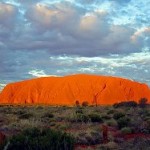
    Uluru or Ayers Rock; whatever you call it the great big rock in the Northern Territory’s Red Center is the heart of Australia’s Outback.

    Standing an imposing 318 meters high and with a circumference of 9.4 kilometers, it’s not hard to see why so many tourists make the trek to the world’s largest monolith every year. More than simply a massive rock, Uluru is a site of great religious and cultural significance.

    Uluru at sunset
    Uluru at sunset

    Many visit Uluru with dreams of scaling to the top, but tourists shouldn’t be so hasty. The Aboriginal people who originally lived there regard Uluru as a sacred site, and encourage visitors to respect this by refraining to climb. If that doesn’t convince you, there are some practical considerations to think about. Scaling Uluru is the equivalent of climbing a 95-storey building. The path is long, and in many places treacherous. More than 35 people have died during the two-hour journey, so unless you are very fit I wouldn’t even consider it. It’s also worth noting that many people are disappointed once they reach the top. After all, you’re standing on the only attraction in an otherwise deserted area.

    Many people say Uluru is best visited at sunrise or sunset. This is when the colors of the rock rapidly change in a sort of natural light show. It’s a beautiful spectacle, but if you’re hoping for a quiet moment to enjoy it you may be disappointed. Large numbers of tourists turn out to view Uluru at these times so it can become very crowded, especially during school vacation times.

    The only accommodation on site is the Ayers Rock Resort. Staying in the resort is very pricey, but its campground has fair prices.

    A less expensive alternative for travelers with a car is Curtin Springs Wayside Inn, located 85 kilometers away. Unpowered camping sites are free, although showers cost extra due to water shortages. Three-day passes to Uluru-Kata Tjuta National Park cost $25. It may disappoint busy travelers that cheaper single-day passes are not available, but there is always the option to stay longer to make the most of the money. After all, the world moves slowly in the Northern Territory so it makes sense for travelers to do the same.

  • Animals Great and Small at Auckland Zoo, New Zealand

    International favorites and local oddities are all on show at Auckland Zoo. This family tourist attraction is adjacent to Western Springs Reserve, a stone’s throw from Auckland’s central business district.

    New Zealand's national bird, the kiwi
    New Zealand's national bird, the kiwi

    The Pridelands, home to a pride of five lions, giraffes, and zebras, and the rare Sumatran tigers of Tiger Territory always draw a crowd. The zoo is also home to Burma, New Zealand’s only Asian elephant and an underwater viewing area for California sea lions and New Zealand fur seals. More New Zealand natives are found in the nocturnal house, including kiwis, tuatara lizards, and the Southern Boobook owl or morepork as it is commonly known. New Zealand’s Australian neighbors also have a place in the Aussie Walkabout, where visitors can walk through an enclosure with emus, wallabies, and kangaroos.


    Little ones can enjoy an animal encounter in the Kidzone, which features pigs, rabbits, goats, sheep, chickens, and many other farmyard friends.

    Auckland Zoo is active in conservation efforts in New Zealand and abroad. The zoo is particularly committed to captive breeding programs for the native kiwi and tuatara. The zoo is also active in educating school children about the environment and its animal kingdom. These efforts look to make the next generation more aware of the world around them.

    Auckland Zoo opens at 9:30 am every day but Christmas Day. Adult passes cost $19 while children, seniors, and students enjoy discount rates. Further discounts are available for families and social groups. Parking is available on site for drivers, who will find the zoo well signposted. The Explorer bus also travels from Auckland Museum every hour between 10:30 am and 3:30 pm each day.