When most people think of vacationing in Thailand they imagine shopping up a storm in Bangkok or lazing by the beach in Koh Samui.
But the Asian country also has a rich history just waiting to be explored.
The best place for history buffs to discover is Kanchanaburi Province, home to the famous River Kwai. This is the site the Japanese Imperial Army invaded during the Second World War, and there are many remnants of this tragic time in Thai history.
Visitors can take a train ride along the stretch of the Thai-Burma Railway commonly known as the Death Railway. The Japanese soldiers used this passage to carry supplies to their troops in Burma. The train trip leads to the famous Bridge on the River Kwai. Immortalized by the Hollywood film, prisoners of war built the bridge so the railway could cross the water. Many prisoners lost their lives here, and seeing it today is a sobering reminder of the horrors of war.
If you want to learn more about the Death Railway and the River Kwai, make sure you call in to the Hellfire Pass Museum. Located at Konyu Cutting, otherwise known as Hellfire Pass, this museum features artifacts from the period which tell the story of the Thai-Burma railway in unflinching detail.
[caption id="attachment_3440" align="alignright" width="150" caption="The famous bridge over the River Kwai"][/caption]
There is a memorial walking trail on site which takes travelers alongside one of the old railway tracks. At four kilometers long it's not a trip for tourists short on time, but it's a journey worth making for the gorgeous valley views from Kwae Noi Lookout.
By all means, enjoy Thailand's shopping opportunities and soak up some rays. But make sure you take the time to see some of the country’s historical sites as well. They're the memories you’ll have long after your sun tan fades.
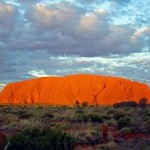
Uluru or Ayers Rock; whatever you call it the great big rock in the Northern Territory’s Red Center is the heart of Australia’s Outback.
Standing an imposing 318 meters high and with a circumference of 9.4 kilometers, it’s not hard to see why so many tourists make the trek to the world’s largest monolith every year. More than simply a massive rock, Uluru is a site of great religious and cultural significance.
Uluru at sunset
Many visit Uluru with dreams of scaling to the top, but tourists shouldn’t be so hasty. The Aboriginal people who originally lived there regard Uluru as a sacred site, and encourage visitors to respect this by refraining to climb. If that doesn’t convince you, there are some practical considerations to think about. Scaling Uluru is the equivalent of climbing a 95-storey building. The path is long, and in many places treacherous. More than 35 people have died during the two-hour journey, so unless you are very fit I wouldn’t even consider it. It’s also worth noting that many people are disappointed once they reach the top. After all, you’re standing on the only attraction in an otherwise deserted area.
Many people say Uluru is best visited at sunrise or sunset. This is when the colors of the rock rapidly change in a sort of natural light show. It’s a beautiful spectacle, but if you’re hoping for a quiet moment to enjoy it you may be disappointed. Large numbers of tourists turn out to view Uluru at these times so it can become very crowded, especially during school vacation times.
The only accommodation on site is the Ayers Rock Resort. Staying in the resort is very pricey, but its campground has fair prices.
A less expensive alternative for travelers with a car is Curtin Springs Wayside Inn, located 85 kilometers away. Unpowered camping sites are free, although showers cost extra due to water shortages.
Three-day passes to Uluru-Kata Tjuta National Park cost $25. It may disappoint busy travelers that cheaper single-day passes are not available, but there is always the option to stay longer to make the most of the money. After all, the world moves slowly in the Northern Territory so it makes sense for travelers to do the same.
Japan has a reputation as the world’s technological center. But many tourists to the Asian nation are just as impressed with the country’s natural wonders. One of the most magnificent is the caldera of Mount Aso.
The caldera of Mount Aso at Kyshu, Japan
You’ll find this active volcano at the heart of the island of Kyushu. Its caldera is one of the largest in the world, measuring 25 kilometers across. In fact, the caldera contains the town of Aso and several more volcanic peaks. These include Nakadake, an awe-inspiring active crater. Tourists are warned that the crater’s gases can be intense, so people with respiratory complaints including asthma shouldn’t visit. At some times the crater may be closed to the public altogether due to these poisonous fumes.
But that shouldn’t discourage tourists, as there is plenty more to see. The grassy plains of Kusasenri-ga-hama are not far from Nakadake.
You can enjoy this rural setting on horseback, with riding tours running from early March to mid December. Kusasenri-ga-hama is also home to the Aso Volcano Museum which details the area’s history.
Komezuka is a small volcanic cone on the northern side of Nakadake. There are easy walking trails, although none take you right to the summit’s apex. Most visitors will be happy with the views they get from the top of the paths though.
The Nakadake Crater is a 30 to 40 minute bus ride from JR Aso train station. Buses run regularly every, with one leaving every one or two hours. The buses travel to Asosan Nishi Station, where travelers can connect with a ropeway for a short ride. If you’d rather stretch your legs, it takes 30 minutes to walk from the station to the crater. The crater is also accessible by car, although drivers will need to pay a toll as they near Nakadake. A parking lot is located conveniently beside the site.
No trip to China would be complete without visiting The Great Wall, a man-made marvel regarded as one of the great wonders of the world.
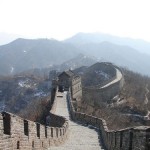
Known as Changcheng, or long wall, to the locals, the Great Wall travels for some 6700 kilometers following the southern edge of inner Mongolia. In its journey it stretches through deserts, mountains, and grasslands. It was originally built more than 2000 years ago as separate walls dividing the warring states of Yan, Zhao, and Qin. Then during the Qin Dynasty, the emperor joined the walls to fend off the invading Huns. Today some parts of the wall are in ruins, but its historical significance and sheer size ensure tourists continue to visit.
One of the best places to appreciate the wall is Mutianyu in Huairou Country. This location, 60 kilometers north-east of Beijing, is adorned by beautiful trees and shrubbery. It’s one of the most commercialized sections of the wall, but don’t let that deter you. The souvenir shops may be a little tacky, but hotels and restaurants are welcome modern-day conveniences. The popularity of this location has also seen authorities restore the wall to its former glory with original bricks. This is one of the few parts of the Great Wall which appears as it would have all those years ago.
As Mutianyu is set high in the mountains, it’s only accessible by cable car. One can take you to the top for sightseeing, while the other is for tobogganing. Both take approximately 10 minutes to reach the summit.
If you’re after more than a quick day-trip to the Great Wall, consider joining a guided tour. Many local tour companies such as World Expeditions and Kumuka Worldwide offer Great Wall expeditions of varying lengths for beginner hikers and experienced trekkers.
 [/caption]
There is a memorial walking trail on site which takes travelers alongside one of the old railway tracks. At four kilometers long it's not a trip for tourists short on time, but it's a journey worth making for the gorgeous valley views from Kwae Noi Lookout.
By all means, enjoy Thailand's shopping opportunities and soak up some rays. But make sure you take the time to see some of the country’s historical sites as well. They're the memories you’ll have long after your sun tan fades.
[/caption]
There is a memorial walking trail on site which takes travelers alongside one of the old railway tracks. At four kilometers long it's not a trip for tourists short on time, but it's a journey worth making for the gorgeous valley views from Kwae Noi Lookout.
By all means, enjoy Thailand's shopping opportunities and soak up some rays. But make sure you take the time to see some of the country’s historical sites as well. They're the memories you’ll have long after your sun tan fades.

 As Mutianyu is set high in the mountains, it’s only accessible by cable car. One can take you to the top for sightseeing, while the other is for tobogganing. Both take approximately 10 minutes to reach the summit.