FrugalMonkey Discount Travel News

Tag: Asia travel

  • Spa Vacations for Less – Pamper Getaways on a Budget

    A long soak in a jacuzzi and a luxurious massage sounds like the sort of vacation experiences out of the reach of frugal travelers. But why should budget conscious tourists miss out on all the fun? This article introduces you to several spa resorts that cost a lot less than you’d think.

    If you’re looking for a cheap spa vacation, it’s worth taking a trip to Asia. Indulgence is a way of life here, and it doesn’t cost a lot. In Japan they even offer spa experiences in their hostels! You’ll find Spa Hostel Khaosan in Beppu, a friendly Japanese city renowned for its natural hot springs and picturesque beach. The shared dorms and private rooms are pretty plain, but chances are you’ll spend most of your time winding down in the hostel’s own hot spring bath. That natural pool is definitely worth the measly $33 US you’ll pay for the cheapest room.

    For a little more money you can stay at Banpu Resort and Spa, an idyllic spot located on Thailand’s Koh Pu Peninsula. The word resort makes us think of big bucks, but its log cabins start at just $40 US a night. If the sea and garden views aren’t enough to relax you then try taking a dip in the pool. You’ll pay a little extra to indulge in the Thai massages or reflexology sessions, but your muscles will argue they’re worth the splurge.

    More expensive again but still not unreasonable is Febri’s Hotel and Spa in Bali. Its rooms start from $77 US, but your dollar buys a lot including access to the Jacuzzi, steam room, and sprawling swimming pool. If that calm water feels a bit tame for you, the famous South Kuta Beach is only a short walk away.

    Asia really has the market cornered on affordable spa experiences, but Samai Center Hotel-Spa in Ecuador is a great option for anyone wanting to stay a little closer to home. From $70 a night you can experience all the good vibes that radiate from this eco-friendly resort. Its wooden lodges are made from organic materials, and its restaurant serves local seasonal fare, including many items grown in the onsite veggie garden. The resort runs many workshops designed to give you a new lease on life, from Feng Shui classes to meditation programs.
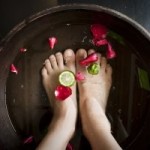
    Spa Foot SoakAnd finally, if you can afford the flight it’s worth checking it to Spa Lodge Backpackers in Rotorua, New Zealand. Just like Spa Hostel Khaosan, this friendly hostel makes use of the hot springs its city is famous for. The natural geothermal spa will do wonders for your aching muscles, especially after an action packed day of extreme Kiwi adventures! Dorm rooms start at around $20 US, and the hostel even offers discounts for weekly visits in winter!

    So don’t dismiss that spa getaway out of hand. If you do your research and plan ahead, it could cost a lot less than you think. Just remember to consider the costs of the treatments, as they can add up quickly!


  • Asia’s Best Lunches – Affordable Local Traditional Dishes

    During a busy day sightseeing in Asia, lunch often tends to be an afterthought. Too many of us resort to Western-style junk food and overpriced meals at tourist attractions. They’re not just costly; they’re also unsatisfying. A much better option is to eat like the locals do and enjoy some of the Eastern continent’s best meals on the go.

    Singapore’s chili crab doesn’t sound like the best meal to eat on the run, but this Asian delicacy is not to be missed. The mud crab is cooked in a thick tomato chili sauce. This certainly gives the dish some heat, but the sweet crab meat ensures it’s not overpoweringly spicy. The sauce makes the dish a bit messy, but it’s so good that most tourists won’t mind a stained shirt. Crab is generally an expensive meat, but the competition between hawkers and kopi tiam at the East Coast Seafood Center keeps the prices reasonable.

    While in Vietnam make sure you try the country’s famous noodle soup, pho. The rice noodles are traditionally served in a broth with beef or chicken, and a variety of traditional Asian vegetables and spices. Most Vietnamese restaurants serve pho, but you’ll save money buying it from street vendors or market stalls.

    Japan’s bento boxes have come a long way over the last century, with the original lacquered lunch boxes giving way to more modern, disposable versions. The philosophy remains the same though, with each one containing an organized meal of rice, meat or seafood, and vegetables. You’ll find this balanced and affordable Japanese lunch at the country’s convenience stores, bento outlets, and train stations.

    Pho noodle soup
    Pho noodle soup

    And finally in Bali they have padang, a traditional curry sold at local market stalls. You’ll find a variety of padang in Bali, from classics like beef and tapioca leaves to the more adventurous fish head variety. Each one is served wrapped up in a banana leaf to help you eat it on the run.

    So next time you’re thinking of settling for a burger and fries in Asia, why not be a bit more adventurous and sample some of the local cuisine? Your stomach and wallet will thank you!

    [Image Source: Rob Sinclair/Flickr]

  • Tipping in Asia – Money Customs in Eastern Tourist Spots

    Tipping is a way of life for anyone living in North America or Europe. But in Asia the practice is less common, and the etiquette surrounding it can cause confusion.

    This guide will tell you what gratuities are expected in Asia's major tourist centers. Tipping is most common in Thailand, where it is expected in all establishments that don't apply a service charge to the bill. It's typical to tip 10% of your restaurant bill, but you may give 15% for outstanding service. There is no need to tip Bangkok street vendors, or staff at food halls and noodle huts. Massage therapists and salon employees are also generally given 10% of your treatment cost as a tip. Thais tend to round up their taxi fare, offering the odd amount of baht as a tip, although you may be more generous if the driver helps you with your bags. Porters should also be tipped; while there are no rules for this 20 baht per bag is a good guide. The Japanese consider the practice of tipping rude, so do not leave extra yen under any circumstances. Instead, reward good service by saying the appreciative phrase "gochisou sama deshita" with a smile. Tipping is also restricted in Singapore, so keep your change in your pocket. Most large hotels and restaurants will add a 10% service charge to your bill, but workers in other establishments and taxi drivers will refuse any extra payment.Keyboard with three money keys Tipping is not expected in China, Vietnam, Indonesia, Malaysia, and The Philippines, but workers in these countries will not be offended if you leave a gratuity. Employees of hotels and restaurants in large cities are used to international tourists leaving tips, but the practice may confuse workers in smaller establishments. Don't be surprised if they chase you to return your change! While the Western concept of tipping is not practiced in India, the country has a similar custom called baksheesh. This idea encourages wealthy people to give to those less fortunate. Hotel porters will expect some rupees for their service. Restaurant staff won't anticipate these kinds of kickbacks, but they'll certainly appreciate a gift of 5-10% of the total bill.

  • Capsule Hotels in Asia – Small Rooms for Less

    Most of us spend money on lavish hotel suites when all we really need is a soft place to sleep.

    Capsule hotels, which are springing up around Asia, help tourists save cash by only charging for the essentials. The busy Asian country of Japan opened its first capsule hotel, the Capsule Inn, in Osaka in 1979. However today, capsule hotels can now be found in other tourist hot spots including China, Malaysia, and other Asian countries. Typically each fiberglass capsule measures a minuscule two meter by one meter. That isn't a lot of space for living, but it should do for sleeping and soaking up the room's high-tech facilities. Capsules typically have a small bed and power for operating its television, light, and alarm clock. To meet the demand from busy Asian businessmen, rooms also tend to have wireless internet access. There's no space for bathroom facilities, but communal washrooms help travelers feel fresh. [caption id="attachment_4974" align="alignright" width="150" caption="A capsule hotel in Japan"]capsule hotel in Japan photo[/caption] Capsules are stacked side by side and one on top of the other, something like pet cages at a boarding kennel. Curtains or fiberglass doors help guests maintain their privacy, and luggage is stored in lockers to ensure it doesn't clutter the capsules. Given their tiny rooms, capsule hotels aren't the place for bunkering down with a family, or even a significant other. But if you're traveling solo and hoping to save cash, the affordability and novelty of these rooms can be appealing. Expect to pay between $10 and $25 US for a 10 hour stay, or a little more for a full day, far less than you will at a backpackers' hostel or other budget room.
    [Image Source: Lhoon/Flickr]

  • Awesome Architecture in Asia – The Most Beautiful Buildings in the East

    A visit to Asia wouldn’t be complete without taking in the breathtaking architecture of the continent’s palaces, temples, and castles.


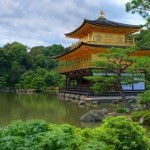
    From holy places of worship to monuments made for royalty, here are some of the more beautiful buildings in the Orient. China's Summer Palace was first built in 1750 as the Garden of Clear Ripples. It suffered major attacks during the Anglo-French allied invasion and Boxer Rebellion, but was always restored to its former glory. The striking pavilions, halls, and temples of this World Heritage site are complemented by rolling hills and beautiful water features. The Shogun Ashikaga Yoshimitsu must have been a lucky man. Japan's Kinkaku-ji, or the Golden Pavilion as English speakers call it, was built as his retirement home in 1397. He lived out his days in the magnificent gold-leaf adorned three-tier building. On his death the pavilion in Kyoto was converted to a Zen temple, according to Yoshimitsu's wishes. Looking at the clear reflection of the Golden Pavilion on the ground's mirror pond may be as close to enlightenment as most of us will get. [caption id="attachment_4485" align="alignright" width="150" caption="The Golden Pavilion in Kyoto, Japan"]The Golden Pavilion in Kyoto, Japan[/caption] Changeokgung Palace is one of South Korea's five grand palaces, but it's the one that most princes of the Joseon Dynasty liked the best. It's not hard to see why. Its secret garden was a favorite place for archery games and fireworks displays, with its lotus ponds and landscaped lawns. The building itself strives to blend in to its natural surrounds, a revolutionary idea for 1405. Sadly much of the palace was destroyed during the Japanese occupation of Korea, so only about a third of its structures remain. It may not have the rich history of the other buildings we’ve mentioned, but that's no reason to dismiss Coconut Palace in The Philippines. This palace was built under the order of former First Lady Imelda Marcos for Pope John Paul II's 1981 visit. The octagon-shaped building is an excellent example of Filipino design, with its body of hardwood and materials derived from the coconut. There are even more coconuts inside, with coconut chandeliers and furniture inlaid with coconut shells. This quirky building is easily accessible for tourists as it's part of Manila Bay's cultural center complex. So make sure you get out of the bustling cities while you're traveling around Asia; there are some stunning architectural marvels just waiting to be explored.

    [Image Source: Neepster/Flickr]

  • Climb Mount Everest – Trek World’s Tallest Mountain

    There are few greater challenges on earth than scaling Mount Everest, the tallest summit in the world.

    With a height of 8848 meters, this is not a mountain trek for the faint hearted. Mount Everest, part of the Himalayan mountain range, touches the borders of China, Tibet, and Nepal. It is the ultimate goal of most mountaineers, and a journey to the top should not be taken lightly. Up to 15 trekkers die on their expeditions each year, while many more succumb to frostbite and low oxygen levels. This isn't a summit one scales without some serious training. Most mountaineers practice climbing smaller peaks with similar conditions, including high alpine terrain and ice falls, for at least two years before tackling the Himalayan summit. You’ll also need to see your doctor to ensure you’re at peak physical fitness before attempting the journey. [caption id="attachment_4269" align="alignright" width="150" caption="Mount Everest in the Himalayas"]Mount Everest in the Himalayas[/caption] The years spent training should be enough for you to raise the sort of cash you'll need, because this expedition is not cheap. An independent voyage can cost as much as $25, 000, while a package tour will set you back around $60, 000. It seems expensive, but $10, 000 of this goes to climbing permits alone. When you add travel, provisions, oxygen, insurance, and equipment into the equation it's easy to see how the dollars add up. May and October are the best times to scale Mount Everest, as this avoids winter snowstorms and summer monsoons. The dangerous journey is probably not one you want to take alone. Tour companies including Jagged Globe and 7Summits regularly organize treks to Mount Everest which help to minimize the risks of this hazardous journey. It's still not a trip one should take lightly, but there are few thrills that compare to the achievement of scaling the granddaddy of the world's famous Seven Summits.

    [Image Source: Ilkerender/Flickr]

  • Sheraton Opens New Shine Spas in China and Vietnam

    Sheraton hotels and resorts around Asia are amongst the first in the world to experience the chain’s latest spa concept, Shine for Sheraton.

    The retreats are designed to feel upscale and luxurious, yet more approachable and accessible than your average day spa. The spas come hot on the heels of Sheraton’s reported $6 billion spend on brand revitalization, but it seems the investment will be worth it for guests who love to be pampered. The Shine for Sheraton spas deliver five signature treatments. These are classic offerings: a massage, a facial, manicure and pedicure, a full body treatment, and a treatment for two. That sounds like a great option for couples honeymooning or simply enjoying a romantic retreat. Sheraton spas will use products from global skincare brand Germanine de Capuccini to ensure their guests enjoy only the most luxurious treatments. [caption id="attachment_4259" align="alignright" width="150" caption="Plunge Pool at the Sheraton Maldives Full Moon Resort & Spa"]Plunge Pool at the Sheraton Maldives Full Moon Resort & Spa[/caption] The Shine for Sheraton spas sound like easy places to relax, with their marble, mahogany, and polished metal surrounds rendered in warm cream, burnished gold, and cobalt blue shades. These hues and materials were specifically chosen to create an atmosphere that feels playful, yet opulent. "Introducing the Shine spa experience across our portfolio on the heels of our $6 billion revitalization effort will be an invaluable, welcome addition to the Sheraton guest experience," Hoyt H. Harper II, senior vice president for Sheraton, said in a press statement. "With this global roll-out, we plan to make spa a cornerstone of the Sheraton brand experience, one that guests will truly embrace as part of their lifestyle." The Shine for Sheraton service is currently available at selected new Sheraton hotels in China and Vietnam, along with the Maldives and the Slovak Republic. It will be rolled out to 12 other Sheraton hotels around the globe over the next 15 months, including the Sheraton Shanghai Hongkou and Sheraton Beijing Dongcheng.

  • Asia’s Quirky Natural Wonders – Outdoor Experiences in China, Japan, and Thailand

    When many people think of Asia they think of shopping up a storm in the cities and discovering the continent’s cultural heritage in temples and museums.

    But some of Asia's most interesting attractions are actually outdoors. Just outside Kunming in China you'll find the Shilin Stone Forest, a forest which really isn't a forest at all, at least not in the way that most of us imagine. Rather than trees, the forest features thousands of differently shaped stones which appear to grow from the ground. Apparently the area was a shallow sea some 270 million years ago, but as the earth moved over time the water retreated and the limestone structures emerged. Visitors can discover attractions like the Major Stone Forest, Strange Wind Cave, and Subterranean Stone Forest over this 400 square kilometer space. If you can visit in June, it's worth making a trip during the Torch Festival. The native Sani people demonstrate wrestling, lion-dancing, and bull-fighting, and legend says it’s the best time to meet Mr or Miss Right! [caption id="attachment_4231" align="alignright" width="150" caption="The Shilin Stone Forest"]Shilin Stone Forest[/caption] For interesting animals and plants, look to the Bonin Islands off the Japanese coast. These 30 different islands were formed long ago by an ancient volcano, and have since evolved in their own unique ways. The islands are home to more than 14 different animals and 100 unique plant species including the protected Ogasawara damselfly, the Japanese Woodpigeon, and the Bonin Flying Fox. Access is difficult though, so you’ll need to be keen. The Ogasawara Maru liner leaves from Tokyo Bay four or five times each month, and takes around 25 hours to reach its destination. Tourists can feel like royalty traveling on the backs of elephants in northern Thailand. The elephants will take you through the forests and hilltribe villages of Chiang Mai, Chiang Rai, and Kanchanaburi. There are rides to suit your time and budget, from a half-hour walk to a five-day expedition. The elephants are all well trained and love people, so you needn't worry about being on the back of a petulant pachyderm! Asia offers plenty of natural beauty and experiences for tourists; you've just got to know where to look!
    [Image Source: Kent Wang/Flickr]

  • Explore Asia’s National Parks – Natural Paradises in the East

    When international travelers think of Asia they think of technological innovation, a bustling lifestyle, and all that delicious food.

    While Asia's cities buzz, its national parks are a real draw card for tourists looking to get back to nature. The following parks, many of which are UNESCO World and Natural Heritage sites, are amongst Asia's best. The Three Parallel Rivers Protected Areas in China's Yunnan Province is somewhat of a lost paradise. Here 16 indigenous groups live simple lives, free of the stresses of the modern world. Many offer accommodation for visitors who come to the area to see the gorges, glaciers, and enormous rivers. While much of Hong Kong is a thriving metropolis, one fifth of the nation belongs to the trails of Tai Tam Country Park. This area is steeped in history; tourists can explore ancient forts and towers while admiring the ocean views and diverse flora. There are also several areas for barbecues and picnics, so why not make a day of it? Many ecological experts consider Shiretoko National Park to be Japan's last surviving wilderness. It's a haven for marine and land animals, so make sure you keep your eyes peeled for the brown bears, dolphins, and seals that live there.
    Sightseeing boats regularly leave from the mainland to take tourists closer to the warm Kamui Wakka Falls. Or you could travel to the falls on foot and soak yourself in the hot springs. You might not know it, but if you're a James Bond fan you're already acquainted with Thailand's Ao Phang Nga National Park. This gorgeous natural oasis was featured in the spy flick The Man with the Golden Gun. You can hire small boats to explore the area and its natural rock formations and limestone pillars which emerge almost mythically from the ocean. It's the kind of locale you'll want to linger at, and with bungalows and camping sites available you can. The buzzing cities of Asia are alluring, but if you'd like a change of pace the continent's national parks can deliver it.

  • Dim Sum Dining – Eat Like a Local in Hong Kong

    Hong Kong offers a range of restaurants to suit all palettes, but if you want to eat like the locals make sure you try Dim Sum.

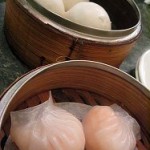
    Dim Sum dumplings in steamer baskets
    Dim Sum dumplings in steamer baskets

    Dim Sum is about more than cuisine; it’s a cultural experience which will show you the real Hong Kong. While dining in the Western world is a private affair, Dim Sum restaurants encourage diners to share large tables and make new friends. As you might imagine, the restaurants are typically noisy and a little out of control, but that only adds to the atmosphere.

    Small meat, seafood, and vegetable dishes are typically served in steamer baskets. Tiny desserts and fruits are also served as sweeteners at the end of the meal. Dim Sum is typically paired with Asian tea. When you have finished your pot, lift the lid from the kettle and rest it on the rim to tell your waiter you’d like more.

    As with any experience which steps off the tourist track, there can be a language barrier in Dim Sum restaurants.

    // <![CDATA[
    google_ad_client = "pub-5653857226981358"; /* Frugal Monkey, 336×280 */ google_ad_slot = "2061266273"; google_ad_width = 336; google_ad_height = 280;
    // ]]>

    If you do not have a Chinese-speaking friend to help you, you can always point to the food that looks tasty to communicate.

    Dim Sum restaurants generally open in the morning and trade until the middle of the afternoon. Do not be deterred by the queues around lunch time; they’re the easiest way to spot Hong Kong’s best Dim Sum restaurants. If you aren’t sure where to dine, the concierge at your hotel should point you in the right direction.

    [Image Source: Alykat/Flickr]