FrugalMonkey Discount Travel News

Tag: public transportation

  • Tips for Not Breaking The Bank on Spring Break

    March is here, which means students and educators everywhere are anxiously eying the calendar, counting down the days until a much deserved week break.

    By this time, most people have booked their spring break travel plans, either close to home or in a far, far off land with sun and sea. No matter what you do over break, here are some tips for not “breaking the bank” and having to take on a part-time job to pay down your credit card bill from one week of revelry. With a little vigilance, you can have a great time while not spending excessively. 1)   Cook some meals at your rental to save money. If you’re staying somewhere that has a full or partial kitchen, it’s fun and easy to make at least some of your meals there. This will save quite a bit of money over eating out, since food and alcohol costs will be lower and you won’t have to tip servers. If you’re renting a place with several other people, an easy way to do this is to assign each person (or you can work in pairs) to a night when they do the grocery shopping and cook. Making coffee and eating a simple breakfast “at home” in the morning will save you quite a bit of dough as well. 2)   Make wise choices when dining out. If you eat in a restaurant several times, consider spitting appetizers, entrées or desserts to save money. Keep in mind that it is typically less expensive to split a bottle of wine than to order individual glasses. Also, do a bit of research on various restaurants/bars in the area before deciding where to eat/drink. Nothing’s worse than throwing away your hard-earned cash on bad or even mediocre food and drink. [caption id="attachment_5339" align="alignright" width="300" caption="Following some basic guidelines will help you avoid spending excessive amounts of money during your spring break vacation."]spring break photo[/caption] 3)   Take public transportation as frequently as possible. Before you leave, do a bit of research on public transportation options in the city you’ll be visiting. Knowing what the options are will help you avoid giving in to spending a lot of money on cab fare. If you do need to take a cab, make sure you share it with at least one other person (preferably someone you know), so that you can split the fare. 4)   Work your student (or faculty) discount. That’s right, you should bring your student (or faculty) ID with you on vacation. Many international museums, transportation companies and restaurants offer discounts on entrance fees for students and teachers (especially over spring break). Some people I know carry an international student ID, which can easily be acquired at http://www.istc.org/. 5)   Take a moment to think before making a purchase. I can’t tell you how many times I’ve purchased something (or several things) on vacation simply because I was on vacation. I lived to regret these purchases because a) they were overpriced and b) I never used them again after my vacation was over. Avoid buying souvenirs, clothes, jewelry, etc. “in the heat of the moment,” and definitely exercise caution when shopping under the influence! Before making a purchase, now I always ask myself 3 questions “Would I buy this if I weren’t on vacation?” “Is the price reasonable?” “Is this really something special that I will use and enjoy in the future?” If the answer to any of these is no, I keep on walking. Note on VAT: If you are traveling in Europe and purchase something expensive (over 100 euros), it’s worth it to have the VAT (value-added tax) refunded. European VAT rates hover around 20% and foreigners do not have to pay it. It’s not worth getting reimbursed for small purchases, but getting the VAT back on “big ticket” items definitely pays off. Ask the vendor for an itemized receipt and a VAT form (they’ll know what you’re talking about). VAT can be recuperated at the airport or via mail after you return (though it’s easier to do it at the airport before you leave). 6)   Enjoy the people you’re traveling with and the experiences you are having. If I’m truly having a good time with the people I’m traveling with and experiencing wonderful things, I end up spending less money. Why? Because I’m living fully in the moment and enjoying the experience instead of searching for ways to enhance it through purchases.

  • Get Around on the Cheap: Ten Best U.S. Cities for Public Transportation

    Whether we’re talking about airfare or cab fare, transportation costs can eat up a large part of one’s travel budget.

    Of course, western Europe is known for its highly accessible and inexpensive public transportation systems. But we’ve got plenty of bragging rights in the U.S., too. If you’re looking to cut down on transportation costs once you reach your destination, check out these ten best U.S. cities for public transportation. You may be surprised by some of them! Phoenix, Arizona Phoenix is now home to a state-of-the-art light-rail line that opened in January 2009. It started with a 20-mile line and has consistently grown since then. The definition of clean, modern, hassle-free transportation within an area that can only be described as urban sprawl. Denver, Colorado Another sprawling area, Denver boasts one of the leading transit systems in the West. An intricate network of light rail and buses connects the city, with the downtown Union Station as the hub. Over the past two years, rail and bus lines have been spread out into the suburbs. Los Angeles, California Over the past two decades, Los Angeles has spent well over 11 billion dollars to improve the city’s public transportation, including the streamlined Metro Rapid bus line and an expansive rail system that radiates out from the train station downtown. And car-loving Angelinos seem to be taking to the relatively new options for public transportation; the city’s ridership ranks among the top in the country. San Francisco, California San Francisco is home to a variety of public transportation options including a light rail and the city’s quintessential cable cars. The extended metropolitan area of San Francisco, Oakland and Berkeley is served by Bay Area Rapid Transit (BART) subway system. [caption id="attachment_5229" align="alignright" width="300" caption="San Francisco's BART is one of the most expansive and efficient public transportation systems in the U.S."][/caption] Salt Lake City, Utah Salt Lake City has poured a large amount of its financial resources into improving and expanding the Utah Transit Authority’s light rail system (TRAX). TRAX connects downtown to the surrounding suburbs, serving  over 1.7 million people. New York, New York This one’s a no-brainer. The Big Apple has one of the most efficient public transportation systems in the country (the subway as well as a bus system). The city’s average weekday ridership of public transportation is over 8.4 million. St. Louis, Missouri St. Louis’ MetroLink light-rail system has changed the face of public transportation in the city. Small business in both the Missouri and Illinois parts of the greater metro area have thrived thanks to this efficient transportation system. Grand Rapids, Michigan Talk about eco-friendly, the transit system in Grand Rapids (The Rapid) has a LEED-Certified central terminal. The creation of this efficient system has also helped the local economy. The Rapid doesn’t yet extend out into the suburbs, so for the time being there is a shuttle that transports riders to and from the nearest stop. Minneapolis, Minnesota Historically, the Twin Cities have not been known for their public transportation options. However, that reputation has shifted over the past few years. The city’s new light rail system already connects part of Minneapolis to the airport and Mall of America, and  a new light rail line connecting Minneapolis and St. Paul’s downtown areas is under construction and is expected to be completed by 2014. Honolulu, Hawaii Honolulu does not have an urban rail system, but it makes up for it with TheBus system, Oahu’s primary mode of public transit. Honolulu is currently making plans  to expand its transit options with an elevated rail system connecting the city to western Oahu.

  • Tips for Making the Most of Public Transportation in Europe

    It can safely be said that using public transportation (subway, buses, trains, etc.) is cheaper than taking a cab in any city in the world. See: Cab Fare Calculator

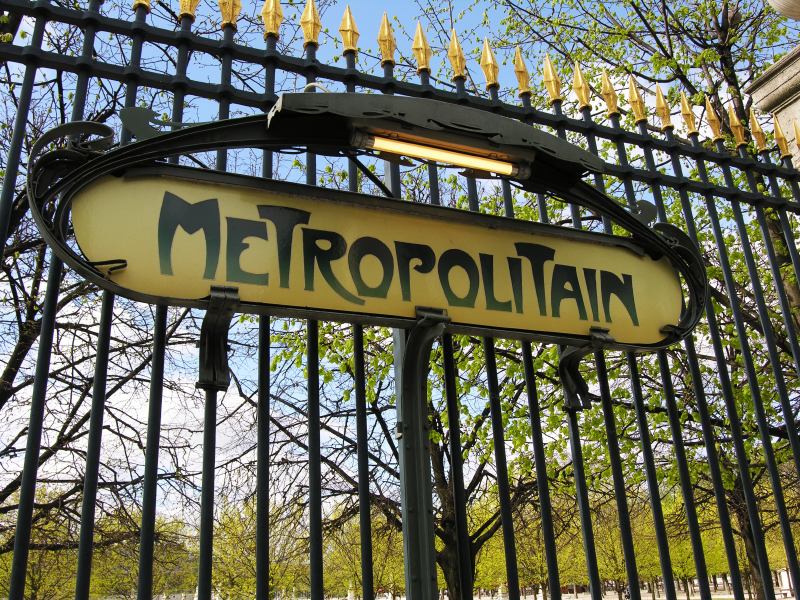
    However, many frugal travelers become confused or intimidated by public transportation systems for a variety of reasons including navigation skills and language barriers or end up spending too much money on public transportation tickets because they are unaware of other more cost-effective options. Here are some tips for making the most out of your public transportation experience as you travel through European cities. General safety tips: While using public transportation in Europe,  remain aware of pickpockets and petty thieves. They tend to prey on confused tourists in bus/subway/train terminals or at taxi stops. Along these lines, avoid carrying a wallet in an easily accessible pocket and use a purse or bag that you can hold close to yourself both when waiting for public transportation and while riding on it. Make sure that your hands are free by carrying as little luggage as possible while using public transportation. Do your best not to allow yourself to be jostled by people in crowded stations. [caption id="attachment_4953" align="alignright" width="300" caption="Paris' metro is inexpensive to use and easy to navigate once you get the hang of it. "]paris metro photo[/caption] Especially if you are traveling alone, never choose an empty car on a subway or train (this could make you especially vulnerable to pickpockets. On empty buses, sit in an aisle seat near the driver. Avoid using dim or empty entrances to subway stations or bus terminals at night. If possible, use only busy, illuminated stations. Stand back from the curb while waiting for a bus and maintain a safe distance from the track when waiting for subways and trains. Most subways have a shrill siren or tone that sounds right before the subway car doors close. Be mindful of this, but also be aware that this usually sounds for at least 10 seconds. General navigation tips: There are paper maps of public transportation systems available at most tourist centers and public transportation systems. Most subway cars and buses have small maps on the walls as well as “line maps” that just show the line you are on (so that you can verify that you are going the right direction and see when your stop will come up. Many of Europe’s subway systems are color-coded (each line is represented by a different color). Use these colors to guide you as you plan your trajectory (the colors will help when transferring lines at various stations). Numbers and names are also used to label lines. One the front of most subway cars and buses will be the name of the last stop. Use this to make sure you are going in the right direction. In any metro system, there are several stations that are bigger than others and accommodate  transfers to several different lines. Typically, the lines and directions are well marked on the walls to help you navigate as you walk through the station. General money-saving tips: If you are only going to be in a city for one or a few days, consider buying a pack of one-way transportation tickets or a day pass if it is offered. Day passes allow for unlimited travel  (usually on both subways and buses) and can save you quite a bit of money if you plan on spending all day out and about. If you are staying for longer than a week, consider buying a transportation card (in Paris this is called a Carte Orange, in Berlin it’s a Willkommen in Berlin Card). These cards will provide you with unlimited travel for the week you are there and, like the day pass, will allow you to save quite a bit of money. Some words of caution: Quite a few European cities (like Paris) have multi-zone subway systems. Different types of tickets are needed for each zone. Make sure you know what zones you will be traveling in and make sure that you purchase the correct tickets.  Subway company employees will hop on the cars from time to time to verify passenger tickets. If you do not have the correct one, be prepared to pay a fine. Throughout your travels, you’re sure to see locals who have figured out ways to avoid paying for their public transportation by stealing tickets or jumping the turn-styles. Though this may look like a good idea, I highly discourage it. I can’t tell you how many times I’ve seen clumsy Americans try to clear a turn-style, only to fall flat on their faces and be caught by the fine-giving subway employees. Best to play it safe, especially when you’re far from home.