Even if you have set a budget ahead of time, it is easy to end up spending way more money than you would have ever imagined on your vacation, especially if you’re traveling abroad.
Here are some tried and true frugal travel tips to help you enjoy your next trip without breaking the bank.
Be realistic with local currency. As soon as you exchange your money, it’s easy to feel like you have a stack of monopoly money in your hands. In addition to reminding aware that you are spending actual money, be sure to come up with a quick way to calculate the exchange rate into your currency (for example, if the exchange rate is 1.345, round that up to 1.5 and multiply every purchase by time and a half). On a related note, before you leave, research what kind of fees your bank or credit card charge for getting cash out of foreign ATMs or for foreign purchases and plan accordingly.
Travel with friends. Traveling with friends (or another couple) is a great way to cut down on lodging and other costs. Sharing a large
discounted vacation rental (condo or house) with a group of friends can end up being much cheaper than booking a hotel room alone. If you’re your rental has cooking facilities, all of you can go grocery shopping at the beginning of the trip and cook at the house most (or all) nights instead of spending money in a restaurant. And remember, it can be much more fun to travel with another couple or a group of friends!
Book a hotel with a continental breakfast (or at least a coffee machine in the room). Most hotels that offer continental breakfasts are not more expensive than their counterparts (i.e. other two-star hotels) that do not. If you have a coffee machine in your room but there is no continental breakfast, scope out the surrounding areas for options. Not having to pay for breakfast and coffee for you and your tribe can really help stretch your dollar (or allow you to spend more on meals out).
For meals and shopping, avoid “touristy” areas. Many local businesses prey on tourists’ impulses and, sadly, their confusion by hiking up prices and positioning themselves next to main tourist sites or area. So, even though that crêpe or mini Eiffel Tower may look great, resist the temptation to hand over your euros on the spot. Instead, head to a less touristy area to eat and/or shop there. Not only will it be less expensive, the products and experience will be much more authentic. Remember, picnic lunches are also an inexpensive (and fun) alternative to eating lunch in a restaurant each day. Read out post about
eating cheaply in Paris.
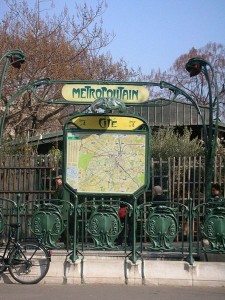
[caption id="attachment_4411" align="alignright" width="225" caption="Using public transportation is a great way spend less money while traveling."]
[/caption]
Rethink the value of souvenirs. How many times have you purchased an expensive souvenir on a trip and got it home only to think “what I am going to do with this?” That’s the funny thing about being on vacation, we see things we think we “need” to buy that we would never even consider purchasing if we saw it back home. Truth is, many souvenirs are either very expensive (not a great value) or useless (or both). Instead take home local canned goods like jellies or jams, teas and coffees. Each time you enjoy your “souvenir,” it will bring back memories of your trip (and you are sure to use it). Start thinking of your photos and your travel journal as your souvenirs. Chances are, these are the things that will be most meaningful to you years after your trip. Also, don’t feel like everyone at the office or every member of your family needs a “remembrance” of
your trip to another country. They’ll be happy just seeing your pictures and hearing your stories.
Carry a water bottle and light snacks. Having sustenance on you at all times will help you avoid buying expensive snacks and sodas because your blood sugar is low and you are “desperate.” For health reasons, it’s good to stay hydrated while you’re traveling, especially if you’re doing a lot of walking.
Know your cell phone plan. I know many friends who have accrued some major charged on their cell phone bills as a result of making calls or texting from abroad. To avoid these unexpected expenses, read through your cell phone contract or contact your carrier before hopping on the plane so that you understand what the financial implications of calling or texting from abroad will be.
Use public transportation as much as possible. Be sure to research the public transportation options in the place you’ll be staying, including reduced rate multi-day/week travel cards. If you know about and feel comfortable with your public transportation options from day one, you’ll feel less tempted to take a cab everywhere you need to go.
 [/caption]
Rethink the value of souvenirs. How many times have you purchased an expensive souvenir on a trip and got it home only to think “what I am going to do with this?” That’s the funny thing about being on vacation, we see things we think we “need” to buy that we would never even consider purchasing if we saw it back home. Truth is, many souvenirs are either very expensive (not a great value) or useless (or both). Instead take home local canned goods like jellies or jams, teas and coffees. Each time you enjoy your “souvenir,” it will bring back memories of your trip (and you are sure to use it). Start thinking of your photos and your travel journal as your souvenirs. Chances are, these are the things that will be most meaningful to you years after your trip. Also, don’t feel like everyone at the office or every member of your family needs a “remembrance” of your trip to another country. They’ll be happy just seeing your pictures and hearing your stories.
Carry a water bottle and light snacks. Having sustenance on you at all times will help you avoid buying expensive snacks and sodas because your blood sugar is low and you are “desperate.” For health reasons, it’s good to stay hydrated while you’re traveling, especially if you’re doing a lot of walking.
Know your cell phone plan. I know many friends who have accrued some major charged on their cell phone bills as a result of making calls or texting from abroad. To avoid these unexpected expenses, read through your cell phone contract or contact your carrier before hopping on the plane so that you understand what the financial implications of calling or texting from abroad will be.
Use public transportation as much as possible. Be sure to research the public transportation options in the place you’ll be staying, including reduced rate multi-day/week travel cards. If you know about and feel comfortable with your public transportation options from day one, you’ll feel less tempted to take a cab everywhere you need to go.
[/caption]
Rethink the value of souvenirs. How many times have you purchased an expensive souvenir on a trip and got it home only to think “what I am going to do with this?” That’s the funny thing about being on vacation, we see things we think we “need” to buy that we would never even consider purchasing if we saw it back home. Truth is, many souvenirs are either very expensive (not a great value) or useless (or both). Instead take home local canned goods like jellies or jams, teas and coffees. Each time you enjoy your “souvenir,” it will bring back memories of your trip (and you are sure to use it). Start thinking of your photos and your travel journal as your souvenirs. Chances are, these are the things that will be most meaningful to you years after your trip. Also, don’t feel like everyone at the office or every member of your family needs a “remembrance” of your trip to another country. They’ll be happy just seeing your pictures and hearing your stories.
Carry a water bottle and light snacks. Having sustenance on you at all times will help you avoid buying expensive snacks and sodas because your blood sugar is low and you are “desperate.” For health reasons, it’s good to stay hydrated while you’re traveling, especially if you’re doing a lot of walking.
Know your cell phone plan. I know many friends who have accrued some major charged on their cell phone bills as a result of making calls or texting from abroad. To avoid these unexpected expenses, read through your cell phone contract or contact your carrier before hopping on the plane so that you understand what the financial implications of calling or texting from abroad will be.
Use public transportation as much as possible. Be sure to research the public transportation options in the place you’ll be staying, including reduced rate multi-day/week travel cards. If you know about and feel comfortable with your public transportation options from day one, you’ll feel less tempted to take a cab everywhere you need to go.
 Making larger transactions less frequently can help to keep the price down.
Tourists should carry their passport at all times, as they will need to present it to change currency or travelers' checks. Unlike many countries, it's uncommon to pay a fee for exchanging currency. When changing money, tourists should check each note carefully. Dirty, ripped, or disintegrating notes are common, and may not be accepted as legal tender. If tourists do get saddled with these defective notes they should exchange them for new ones at Reserve Bank of India branches.
Many shopkeepers and service workers do not have a lot of change, so it's worth carrying a supply of small currency. Rs 10, 20, and 50 notes are useful, so take some of these smaller notes when changing currency.
India is a country which caters for all budgets. While luxury accommodation and fine dining restaurants will please rich travelers, those on a budget won't feel like they're missing out too much.
Making larger transactions less frequently can help to keep the price down.
Tourists should carry their passport at all times, as they will need to present it to change currency or travelers' checks. Unlike many countries, it's uncommon to pay a fee for exchanging currency. When changing money, tourists should check each note carefully. Dirty, ripped, or disintegrating notes are common, and may not be accepted as legal tender. If tourists do get saddled with these defective notes they should exchange them for new ones at Reserve Bank of India branches.
Many shopkeepers and service workers do not have a lot of change, so it's worth carrying a supply of small currency. Rs 10, 20, and 50 notes are useful, so take some of these smaller notes when changing currency.
India is a country which caters for all budgets. While luxury accommodation and fine dining restaurants will please rich travelers, those on a budget won't feel like they're missing out too much.
 Hong Kong is a tourist mecca, with visitors from around the world lured by the