FrugalMonkey Discount Travel News

Category: Trip Locations

  • Affordable Luxury at Western Australia’s Rottnest Island

    Rottnest Island is a small isle located 30 minutes from the Western Australian city of Fremantle. The beachside spot is steeped in history and rich in wildlife.

    The native Aboriginal tribe, the Noongar people, call it Wadjemup, meaning “place across the water.”


    When they settled more than 30,000 years ago, the spot was connected to the mainland. However, around 7000 years ago the raging seas saw the island break away.

    It took until 1696 for European explorers to discover this Australian paradise. Dutchman Willem de Vlamingh named the island after the rat-like quokkas he found there. Around 10,000 of the rabbit-sized marsupials live on Rottnest Island today. They are nocturnal, but you are likely to spot them as night falls. Quokkas are curious creatures and show no fear of humans. However, it is illegal for tourists to handle them in any way. The penalty is generally a $100 on-the-spot fine, although offenders may face fines of up to $1000.

    Rottnest island is relatively small, measuring just 11 kilometers long and four-and-a-half kilometres wide. That means most tourists stay for just a day, although it’s possible to book accommodation and see the surrounds at a slower pace. The island boasts around 300 self-catered holiday homes, including cottages, bungalows, and cabins. However, Rottnest island is so popular that a ballot system is used during the peak summer season. It opens on the first working day of each month for the corresponding month next year.
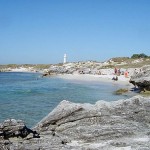
    rottnestislandIf you do snare accommodation, a stay on Rottnest is an experience to be savored. While the rooms aren’t luxurious, the peaceful way of life is a great drawcard. There are no cars, and only a few buses. Most locals and visitors walk or cycle to the island’s attractions, including beaches, golf courses, and tennis courses. Snorkeling, fishing, and diving for crayfish are all popular coastal pursuits. Volunteer guides also take tourists to some of the island’s historical sites.

    Ferries run daily from Fremantle, Perth, and Hillarys. Air taxis also operate daily between Jandakot and Rottnest Island Airport.

  • Go Green with a Cycling Vacation Through Vietnam

    biketourIf you want to see the real Vietnam, forget the tour buses and get on your bike! While the motorized excursions zoom through the countryside on the way to major tourist centers, an eco-friendly cycling journey allows you to stop and smell the paddy fields.

    As cycling is the locals main form of transportation, it’s a great way to interact with the natives. While their grasp of English may be limited, particularly in the country areas, locals are friendly and always willing to chat with tourists. Trips through rural communities allow you to meet the rice farmers and their buffalo at work in the fields, while rides through the cities let you experience Vietnamese life at a faster pace.

    Traffic in Vietnam can be daunting, so it’s important to keep your wits about you. Remember that the Vietnamese always drive on the right side of the road, so if you stay there you won’t get into trouble.

    As cycling vacations require you to carry your luggage with you, it’s clear that you’ll need to travel light. Thankfully clothing and other basics are inexpensive in Vietnam, so you can easily buy what you need along the way. In many cases, it’s actually cheaper to buy new than have your clothes laundered.

    You should make room in your travel bag for basic bicycle tools. While local repairmen will happily fix your bike, the repairs will often be below Western standards. If you’ve got the means, it’s often easier to do the job yourself.

    You can happily explore Vietnam on your own, but guided tours are also available. These expeditions generally provide bikes which are of a higher standard than many available locally. They also provide a support vehicle, which can be a welcome relief when your legs get tired. Meals and an English-speaking guide are just a couple more perks. World Expeditions runs 15-day cycling tours, which travel from Hanoi in the north to Ho Chi Minh in the south, while Grasshopper Adventures takes a slightly different route. Its 13-day adventure starts at Hanoi and weaves down to Saigon.

  • Elephant Nature Park in Chiang Mai, Thailand Treats Animals with Respect

    Chiang Mai is the largest city in Northern Thailand, so it’s hard to believe that once this mountainous location was only accessible by river or elephants.


    Today transport’s a lot easier. All the major domestic airlines, including Thai Airways and Air Asia, fly between Bangkok and Chiang Mai several times each day. Buses and trains also travel from the capital regularly. Yet the elephants’ importance to the area, known as the Rose of the North, remains.

    Since their services are no longer required for transport, the elephants of Chiang Mai lead a pampered existence at the Elephant Nature Park. Nestled around 60 kilometers from the city center, the park provides a sanctuary for these magnificent creatures.

    The park is the brainchild of Sangduen Chailert. Her special bond with elephants began when her grandfather, a traditional Thai healer, received a baby elephant from a grateful patient. Sangduen became firm friends with the latest member of the family and the rest, as they say, is history. After graduating from Chiang Mai University she moved into the elephant tourism. There she discovered the abuse and neglect the animals suffered once they became useless to trekking firms. She was determined to develop a place where elephants would be loved throughout their days. When the Elephant Nature Park opened its doors in 1995, that dream became a reality.

    elephantThe park’s work is vital in a modern Thailand where just 2000 elephants live in the wild. The park is home to more than 30 rescue elephants, ranging in age from infants to the elderly and abused. It is open to day visitors and overnight guests, who can watch the animals grazing, playing, and communicating as they do in the wild. There are no circus tricks or elephant rides here. Instead tourists enjoy a less artificial experience, bathing the animals and feeding them treats.
    One-day visits to the park cost $125 for adults and $75 for children, including transfers from Chiang Mai. For a reduced rate, you can enjoy a seven-, 14-, or 28-day volunteer experience. Around $70 a day buys you daily contact with the elephants and all meals. The park is not-for-profit, so all money raised directly supports the elephants and their upkeep.

  • How to Travel to South Korea

    Visitors to South Korea have a number of travel options to consider before embarking on a journey to the East Asian nation.


    There are no restrictions for foreign travelers visiting South Korea. In fact, most tourists won’t even need a visa to enter the country. However, all visitors should consult the visa-free list to confirm how long they can stay in South Korea without visa documentation.

    Airlines ticket prices vary depending on the time of year you wish to visit. Flights are at their most expensive in July and August, so it’s advisable to travel in other months if possible. Cathay Pacific and Malaysian Airlines fly from major New Zealand and Australian airports, while visitors from North America can fly with United Airlines and Air Canada. If you’re already in Asia you might try Air China, United, or NorthWest Airlines. Most international flights travel to Incheon, which is located approximately an hour from Seoul. Tourists can then catch connecting flights to one of the country’s six regional airports.

    South Korea airlineInternational ferries are another, less expensive option for tourists exploring Northern Asia. Ferries to Incheon leave from around 10 Chinese ports, while ferries from Russia travel to Sokcho in Gangwon-do province and ships from Japan travel to the international ferry terminal near Jungang subway station in Busan. Prices vary according to the quality of accommodation provided. The cheapest fare is likely to offer only a thin mattress in dormitory style lodging, while the most expensive tariffs might buy a small cabin with a television. Children and students often receive discounts, making ferry trips an economical traveling option for young people and families.
    Entering South Korea is generally a straightforward process, but travelers carrying more than US$10, 000 in cash and traveler’s checks are required to complete an additional form.

  • Romantic Aitutaki in Cook Islands the Ideal Vacation Spot for Honeymooners and Lovebirds

    The Cook Islands is a tropical slice of Oceania made up of 15 isles. Most tourists flock to the capital, Rarotonga, but if you have romance in mind the more peaceful Aitutaki is a much better choice.


    Couples can enjoy a little alone time at luxurious accommodation options including the Aitutaki Lagoon Resort and Spa and the five-star Pacific Resort. Both resorts are positioned right on the beach, with fine white sand and fragrant frangipani trees helping to create an idyllic island atmosphere. They also offer the kind of opulent rooms that lovebirds will struggle to leave. However if you do feel like venturing out, the resorts offer plenty of fun activities. You could immerse yourself in local culture with hula dancing classes and ukulele lessons. You could even learn to make traditional seafood dishes, or simply sit back and let the resort staff do all the work. Fishing and diving expeditions and lagoon cruises are other ways of experiencing all the island has to offer without breaking a sweat. This is a destination which encourages rest and relaxation after all.

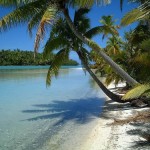
    aitutakiWith lush private rooms, long white beaches lined with coconut palms, and tranquil surrounds, Aitutaki is a natural choice for honeymooners. If you’re not hitched already, the big resorts can take care of that too. Both Aitutaki Lagoon Resort and Spa and the Pacific Resort offer wedding packages. The hotels take care of the license, celebrant, flowers, and all the trimmings, leaving you more time to relax and enjoy your special day.
    Aitutaki is a 50-minute flight from Rarotonga. The international carrier Air New Zealand flies to Rarotonga via the Kiwi cities of Auckland and Christchurch. Air Rarotonga runs daily flights between the Cook Islands capital and its secluded sister from $390 return.

  • The Lord of the Rings Fans’ Guide to Touring New Zealand

    Since the release of the Lord of the Rings trilogy, fantasy film fans have become enamored with Australia’s nearest neighbor, New Zealand.


    Movie buffs have their work cut out for them if they hope to see all the trilogy’s locations, with spots on both North and South Islands used in the three films. The best strategy is to choose your favorites, then plan your trip around them.

    Tangariro National Park will be high on most cinema lovers’ lists, as this is where the spectacular Battle of Mordor took place. With a few special effects, its peak Mount Ngauruhoe was transformed into Mount Doom. The summit is New Zealand’s most active volcano, but don’t let that scare you. The mountain hasn’t blown its top since 1977.

    If the Battle of Amon Hen was your favorite, be sure to seek out tour operator Peter Davies. He’s the only guide authorized to visit The Garden of Eden, the beech forest where this famous fight was staged.

    You can travel down the same river that Frodo did with Dart River Safaris. Their jet-boat has a little more oomph than Frodo’s canoe, but it’s a great way to see the familiar sites extending to Glenorchy.

    And that’s just for starters. If you want the works check out Lord of the Rings Tours, a company which promises “the ultimate Lord of the Rings experience.”

  • Climb Mount Fuji, the Tallest Mountain in Japan

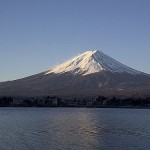
    mountfujiIn the mountainous nation of Japan one summit stands tall above the rest. At an imposing 3776 meters tall, Mount Fuji isn’t just Japan’s highest peak. The dormant volcano is also a site of great cultural and spiritual significance. It is located in Fuji-Hakona-Izu National Park, 80 kilometers west of Tokyo.

    You can see Mount Fuji from Tokyo and Yokohama on a clear day, but you’ll be lucky to strike one.


    Japan often experiences low clouds and high levels of air pollution, which can obscure the view. Visibility is best during cold weather, especially early in the morning or late in the evening.

    While it can be admired from afar, Mount Fuji’s power is best experienced up close. Unlike many spiritual sites, such as Australia’s Uluru, tourists are encouraged to climb the mountain using one of four trails. However, Japanese tradition suggests the feat should not be repeated. A local proverb reads “He who climbs Mount Fuji once is a wise man. He who climbs it twice is a fool.”

    The summit can be scaled all year round, but the official climbing season is in July and August. That’s when the journey is easiest as the mountain is completely free from snow, the weather is mild, and the huts are open. Food and drinks are available from these huts on the side of the mount, but beware. You’ll pay more for refreshments the higher you climb, so it’s advantageous to stock up early.

    As the summit is so tall, only the most committed hikers make the journey from the bottom to the top. Amateurs tend to start their journey at the fifth station, which is accessible by car. It should take between four and five hours to reach the apex from the fifth station, compared to six or eight hours if you start from the base.

    While travelers can explore Mount Fuji at their own pace, a guided tour is a great way to learn about the summit’s history and cultural significance. JGA Walking Tours and Japanican both run regular tours of Mount Fuji.

  • How To Stay Safe When Visiting India

    indianwomanA trip to India can be a rewarding experience for foreign travelers, providing they follow some simple precautions to stay safe.
    Like any country, India has its share of thieves. To ensure the security of your travel documents, keep a copy of your passport, travel tickets, visas, traveler’s checks, and any other vital information. These copies should be kept in a safe place, away from the originals. They can be referred to if any of your important documents go missing, and can speed up their replacement.

    Wallets and handbags are targets for pickpockets, so consider carrying your cash and cards in a concealed purse.


    These purses, available from most travel stores, are hidden underneath your clothing. They may be worn around your neck, fastened around your calf or ankle with Velcro, or hung from the loop of a belt.

    You can also ensure the safety of your possessions by looking out for phony porters or guides. All official service staff will be uniformed and carrying identification. Never leave your luggage or other belongings with anyone who cannot produce this identification, and of course, never leave goods unattended.

    The quality of water is a concern in many areas of India, so never drink water from an unknown source. If you are unsure, ask for some of the popular mineral waters sold in the country, such as Bisleri, Himalaya, Kinley, and Aqua Fina. These waters should always be sold in sealed bottles, and should not be consumed if the seals are broken. It’s also worth packing some water purifying tablets as an extra precaution.

    Foods are generally safe, but travelers should avoid dishes which have been sitting out in the open for any period of time, such as those at the markets. Any fruits and vegetables should be carefully washed before consumption.

    Depending on the area you visit, malaria may be a concern. Visitors can stave off the risk of infection by obtaining anti-malarial tablets from their doctor prior to travel. As mosquitoes are prevalent in many Indian centers, you should always carry an insect repellent and mosquito coils.

    If you require medical treatment in India, do not be worried. Most hotels have doctors on call, and can organize treatment from a respected medical practitioner. It is also very inexpensive to see a doctor, with consultations generally costing less than a dollar. Most towns and villages also have pharmacies and chemists for minor ailments.

    Stop and think before taking out your camera. Photography is prohibited in many areas of interest, including places of military importance, airports, railway stations, and bridges. When in doubt, it’s safer not to snap.

    Remember if you are ever in trouble while visiting India, contact your local embassy or speak to the senior inspector in charge at the closest police station.

  • Shop Up a Storm in Hong Kong

    templestreetMost visitors to Hong Kong visit the Chinese territory to do just one thing: shop until they drop!

    Harbour City Estate in Tsim Sha Tsui is a shopping mecca, with approximately 700 stores, 50 restaurants, three hotels, and two cinemas. The complex specializes in fashion with big name brands like Moschino, Gucci, Prada, Burberry, and Pringle of Scotland. It’s also home to the largest Toys ‘R’ Us store in Asia. Harbour City Estate is conveniently located adjacent to the Star ferry, bus terminal and MTR Station. There are also parking spaces available for 2000 cars.

    While the mall offers diversity, if you’re after bargains the markets are a much more appealing option.

    Here you can haggle for the best price on a great range of new and vintage wares.

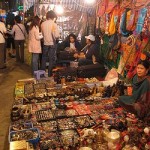
    Temple Street Night Markets are the most famous open-air markets in the territory. From dusk, stall owners begin to peddle men’s apparel, second-hand goods, local gourmet delicacies, and souvenirs. But a trip to these markets is about more than simply shopping. Fortune tellers, Cantonese opera singers, and other performers add to the vibrant atmosphere. Temple Street extends from Jordan to Yau Ma Tei in Kowloon.

    Collectors should make sure they stop by the Jade Market, which lies just a few blocks away on Kansu and Battery streets. Around 400 stalls sell everything from valuable jade jewelry and carvings to inexpensive trinkets. Jade is in important stone to the Chinese people, as it’s believed to encourage longevity and good health. The bazaar is open daily between 10 am and 5 pm. If you don’t find what you’re looking for at these markets, walk a little further to Jade Street. Jade stores operate here every day but Sundays. Jade Street is easy to find. Just look for the giant three-ton jade stone at the junction of Canton and Jordan Roads! Note – Visit JobMonkey to learn about teaching English in China for six months or a year.

    Many tourists feel Hong Kong isn’t as inexpensive as it used to be, but there are still some unique and worthwhile buys if you know where to look.

  • See Giant Pandas at China’s Zoos and Wildlife Centers

    pandaThe giant panda is one of the world’s most beloved animals, and sadly one of the most endangered. No visit to China would be complete without observing one of these real-life teddy bears.

    It’s estimated that just 2500 giant pandas roam freely in China’s mountain forests today, their numbers severely depleted through habitat loss. While your chances of spotting one in the wild are slim, some of China’s many wildlife parks showcase their national animal.

    Beijing Zoo is home to Gu Gu, a notorious giant panda who’s made international headlines for his feisty temper. Pandas may be docile by nature, but Gu Gu doesn’t take kindly to trespassers. On three separate occasions, Gu Gu has attacked visitors who’ve climbed into his enclosure.

    The zoo is served by Line 4 of the Beijing Subway.

    The Chengdu Panda Base provides a more focused panda experience. This non-profit research and breeding facility is home to more than 50 giant pandas, red pandas, and other endangered Chinese animals. The centre allows visitors to observe pandas in an area resembling their natural habitat. It takes approximately three hours to walk around the park or an hour and a half by tour bus.

    The Shaanxi Rescue and Breeding Center of Rare Wildlife offers a more hands-on experience for those willing to spend the time, and cash. This center is located in a remote area, approximately two hours from Xi’an at the foothills of the Qinling Mountains. It is home to more than 10 giant pandas who have been rescued from the wild or poachers, born in captivity, or orphaned. The center encourages breeding and reintroduces the animals into the wild. Volunteers are placed at the center for between two and four weeks. The volunteer fee includes all activities, food, accommodation, and a charitable donation to the project. International volunteers help care for the pandas and teach the staff English.

    No matter where you see one, an encounter with a giant panda is one that visitors to China never forget.