FrugalMonkey Discount Travel News

Tag: Hong Kong travel

  • Traditional Pekingese Dining at Hong Kong’s American Restaurant

    Don’t let the name of Hong Kong’s American Restaurant confuse you. This Wanchai eatery offers some of the country’s best traditional Pekingese dishes, and they don’t come with a serving of fries.

    Since opening its doors after the Second World War, American Restaurant has become a beloved institution.

    In an ever-changing dining landscape it remains unchanged, and that's just what the regular patrons love about it. There are many of those regular patrons that fill the restaurant with a happy buzz no matter the season or time of day. That makes it ideal for a celebration, but not the best choice if you're planning a romantic dinner for two. It's advisable to call in advance for a reservation, particularly if you have a large party. American Restaurant serves up the Asian equivalent of tapas, meals that are designed to be shared amongst those at your table. The dishes are affordably priced between HKD70 and 300, depending upon their size. Foreign diners should have no problem ordering as English menus are provided; the most challenging thing can be deciding what you'll have! When in doubt you can't go wrong with the barbecued Peking duck or sizzling Szechuan chili prawns. American Restaurant is located at 20 Lockhart Road, Wanchai. It's open daily from 11 am to 11 pm.

  • Dim Sum Dining – Eat Like a Local in Hong Kong

    Hong Kong offers a range of restaurants to suit all palettes, but if you want to eat like the locals make sure you try Dim Sum.

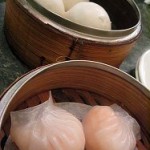
    Dim Sum dumplings in steamer baskets
    Dim Sum dumplings in steamer baskets

    Dim Sum is about more than cuisine; it’s a cultural experience which will show you the real Hong Kong. While dining in the Western world is a private affair, Dim Sum restaurants encourage diners to share large tables and make new friends. As you might imagine, the restaurants are typically noisy and a little out of control, but that only adds to the atmosphere.

    Small meat, seafood, and vegetable dishes are typically served in steamer baskets. Tiny desserts and fruits are also served as sweeteners at the end of the meal. Dim Sum is typically paired with Asian tea. When you have finished your pot, lift the lid from the kettle and rest it on the rim to tell your waiter you’d like more.

    As with any experience which steps off the tourist track, there can be a language barrier in Dim Sum restaurants.

    // <![CDATA[
    google_ad_client = "pub-5653857226981358"; /* Frugal Monkey, 336×280 */ google_ad_slot = "2061266273"; google_ad_width = 336; google_ad_height = 280;
    // ]]>

    If you do not have a Chinese-speaking friend to help you, you can always point to the food that looks tasty to communicate.

    Dim Sum restaurants generally open in the morning and trade until the middle of the afternoon. Do not be deterred by the queues around lunch time; they’re the easiest way to spot Hong Kong’s best Dim Sum restaurants. If you aren’t sure where to dine, the concierge at your hotel should point you in the right direction.

    [Image Source: Alykat/Flickr]

  • Hong Kong Dining for Less – Inexpensive Eats in Asia

    We’ve looked at how to manage your money in Hong Kong, and even how to save cash on a night out in the city.

    Now we'll turn our attention to eating well in Hong Kong for less. Hong Kong has a reputation for being one of Asia's most expensive tourist centers, but your stay doesn't have to cost the earth. You simply must learn to live like a local. There are bargains to be had by stepping off the tourist trail and exploring hole in the wall noodle shops, Chinese fast food stores, wet market food courts, and small restaurants known as "cha chan tan." While you can easily spend $200 HK ($26 US) in a hotel or Westernized restaurant, you're likely to have change from $50 HK ($6.50 US) in one of these smaller establishments. If you don't speak Cantonese, it can seem intimidating to approach these tiny eateries. However, the helpful staff will do their best to accommodate foreign travelers. Remembering basic words, including "bah fan" for steamed rice, "chow fan" for fried rice, "mein" for noodles and "cha" for tea, will prove useful.Dollar sign in a magnifying glass When this fails, you can always point to something which looks good on the menu or market stalls! Unlike the tourist frequented restaurants, these eateries will not have credit card facilities so it's important to have cash at the ready to settle the bill. You'll find these small restaurants and open-air stores in side streets and alleys throughout Hong Kong. So leave the well-trodden paths of Lan Kwai Fong and Knutsford Terrace behind and experience Hong Kong the way locals do. With all the cash you'll save, you can afford a lavish meal at one of Hong Kong's most luxurious restaurants later in your stay!

  • Escape The Hong Kong Rat Race at Secluded Kat O Chau Island

    Hong Kong is famous for its towering skyscrapers and fast pace.


    If you’re looking to escape the hustle and bustle, a trip to Kat O Chau may be in order.

    Also known as Crooked Island, this tiny isle is located in north-east Hong Kong. It’s not quite 2.5 square kilometers and home to less than 300 villagers. The ocean is the heart of Kat O Chau, with the seafood industry first class. Fresh abalone, squid, and mussels are the area’s specialties so make sure you sample them at the famous Yik Man Seafood Restaurant.

    It’s easy to pass the time wandering Kat O Chau’s streets, marveling at ancient brick houses and traditional temples. The Tin Hau Temple is especially worth a visit with its blue and green ceramic friezes. Pirates hid their treasures in island’s small grottoes hundreds of years ago, while couples throughout time have tied the knot at the Marriage Tree.

    If you enjoy diving you’ll want to pack your scuba gear. Tung O Wan beach is thought to be the best scuba diving spot in all of Hong Kong. There isn’t a lot of shade on the sand, but this secluded beach is a great spot for swimming.

    Visitor entry to Kat O Chau is restricted, so you’ll need to plan ahead. A ferry runs from Sha Tau Kok, but the non-residents will need a police permit before boarding the ferry. It may be worth the effort though, as this is the most inexpensive way to access the island.compass to hong kong

    You can also rent a boat to get yourself there. While this can be expensive for singles, it’s a good option for groups. Duk Ling, Jaspas Junk, and Aqua Luna all have boats available for charter.

    The third option is to join an organized tour. Traway Tours runs one of the most popular. Their tour price includes an English speaking tour guide, lunch, and the opportunity to visit the Tolo Channel, a Hakka village, and other sites. These tours run from September to February.
  • Hit Hong Kong’s Bars and Nightclubs on a Budget

    Hong Kong has some of the most exciting after dark entertainment on the planet, but it can get expensive to enjoy a big night out.


    But that doesn’t mean you need to spend your Asian vacation holed up in your hotel room. You just need to know where to go to enjoy Hong Kong’s nightlife on a budget.

    To entice people out through the week, most bars in Wan Chai have special ladies nights. If you’re of the female persuasion you won’t pay a door charge and you’ll enjoy free standard drinks all night. The area has a reputation for being a red light district, but you shouldn’t be bothered if traveling in a group. For your security, avoid the strip joints and opt for upmarket bars like the Agave.

    Lan Kwai Fong in central Hong Kong isn’t generally as inexpensive as Wan Chai, but if you visit the bars midweek this isn’t a concern. The popular Beijing Club slashes its regular $300 HKD entrance fee to $220 HKD for men and absolutely nothing for ladies on Wednesdays and Thursdays. If you’re planning on a big night, you may want to visit Cliq across the streets. You’ll need to pay the $200 HKD cover charge, but it always has an open bar for girls. Men enjoy the same privileges on Thursdays.

    While most drinks promotions benefit women, everyone can enjoy happy hours. Between 5 pm and 9 pm, most restaurants and bars in major Hong Kong business districts will offer discounted drinks and two-for-one deals.

    budget travel

    To ensure you’re not drinking on an empty stomach, look for cheap eats before you hit Hong Kong’s bars. Cul-De-Sac and Ebeneezer’s Kebabs & Pizzeria serve up inexpensive pizzas and kebabs, while the country’s first 24-hour breakfast diner, The Flying Pan, dishes up authentic English bacon and eggs.

  • Travelers’ Tips for Managing Money in Hong Kong

    piggybankworld-116x1161Hong Kong is a tourist mecca, with visitors from around the world lured by the bargain shopping, buzzing nightlife, and delectable cuisine. But it can be confronting at first for foreign travelers with little concept of the country’s money.
    Hong Kong may be famous for its economical shopping options, but a stay in the Asian nation can be pricey. Accommodation is a large expense, and drinking in those famous bars isn’t cheap either.


    Tourists should expect to spend roughly HK$600 a day if staying in midrange hotels and eating average meals.

    There are a few areas where tourists can save money though. Hong Kong’s transport system makes getting around affordable with its inexpensive taxis and public transport options. Hong Kong also enjoys no sales tax, adding to its allure for serious shoppers. While tipping is practiced in Hong Kong, the rules are not as strict as some countries such as the United States. There is no obligation to tip taxi drivers or bellboys, although if service is exceptional a small gratuity can be given. Most restaurants automatically add a 10% service charge, but diners may choose to add an additional tip. If a service charge is not applied, a 10% tip is customary.

    Automated Teller Machines, or ATMs, can be found almost everywhere in Hong Kong. Most are linked to international systems including Cirrus, Maestro, and Visa Electron. Some also allow Visa and MasterCard holders to withdraw money, although tourists using this service should beware of high processing fees and interest charges.

    Unlike many tourist destinations, Hong Kong has no currency controls. Visitors can enter and leave the Asian nation with as much cash as they like. Hong Kong banks generally offer the best rates for transferring foreign currencies, although travelers should be mindful of additional fees. Some banks charge non-account holders hefty commissions on each transaction. While this fee can be worthwhile if you’re converting a large quantity of money, it’s not practical for small amounts. Here a better option is a licensed moneychanger, such as Chequepoint. While these organizations do not charge a commission, their exchange rates are less attractive than the banks. These rates are clearly posted so travelers can make an informed choice. The exchange counters at airports and hotels generally give the worst exchange rates in Hong Kong.

  • Shop Up a Storm in Hong Kong

    templestreetMost visitors to Hong Kong visit the Chinese territory to do just one thing: shop until they drop!

    Harbour City Estate in Tsim Sha Tsui is a shopping mecca, with approximately 700 stores, 50 restaurants, three hotels, and two cinemas. The complex specializes in fashion with big name brands like Moschino, Gucci, Prada, Burberry, and Pringle of Scotland. It’s also home to the largest Toys ‘R’ Us store in Asia. Harbour City Estate is conveniently located adjacent to the Star ferry, bus terminal and MTR Station. There are also parking spaces available for 2000 cars.

    While the mall offers diversity, if you’re after bargains the markets are a much more appealing option.

    Here you can haggle for the best price on a great range of new and vintage wares.

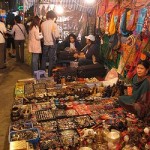
    Temple Street Night Markets are the most famous open-air markets in the territory. From dusk, stall owners begin to peddle men’s apparel, second-hand goods, local gourmet delicacies, and souvenirs. But a trip to these markets is about more than simply shopping. Fortune tellers, Cantonese opera singers, and other performers add to the vibrant atmosphere. Temple Street extends from Jordan to Yau Ma Tei in Kowloon.

    Collectors should make sure they stop by the Jade Market, which lies just a few blocks away on Kansu and Battery streets. Around 400 stalls sell everything from valuable jade jewelry and carvings to inexpensive trinkets. Jade is in important stone to the Chinese people, as it’s believed to encourage longevity and good health. The bazaar is open daily between 10 am and 5 pm. If you don’t find what you’re looking for at these markets, walk a little further to Jade Street. Jade stores operate here every day but Sundays. Jade Street is easy to find. Just look for the giant three-ton jade stone at the junction of Canton and Jordan Roads! Note – Visit JobMonkey to learn about teaching English in China for six months or a year.

    Many tourists feel Hong Kong isn’t as inexpensive as it used to be, but there are still some unique and worthwhile buys if you know where to look.