FrugalMonkey Discount Travel News

Category: Trip Locations

  • Thailand’s Tiger Temple, the Wat Pha Luang Ta Bua Yannasampanno Monastery

    Wat Pha Luang Ta Bua Yannasampanno monastery is a modest place of worship, unremarkable in many ways.

    In fact, if it were not for its unique residents you wouldn't know about this site in regional Thailand at all. But here tourists travel daily to marvel at the monks who share their lives with tigers. Buddhism is at the heart of the monastery, which is sometimes known as the Tiger Temple. However, it also acts as a wildlife sanctuary for the area's endangered and injured animals. Over time the monks have adopted peacocks, deer, horses, and now tigers. [caption id="attachment_3346" align="alignright" width="150" caption="A monk walks with tigers at Thailand's Tiger Temple"]Monk at Thailand Tiger Temple[/caption] The monastery's first tiger arrived in 1995. The cub was orphaned at the hands of poachers, and the monks quickly stepped in to raise the helpless creature. The numbers have since grown, and today the monastery is home to several adult and juvenile tigers. Visitors to the monastery can see tigers feeding, playing, and spending time with the monks. A highlight for tigers and tourists alike is bath time, which happens every day at 2 pm. It's important to remember that while the tigers have lived with the monks for many years, they are still wild animals. Guests are advised not to wear brightly colored clothes or perfumes, as these may disturb the tigers. You should also refrain from making loud noises, and never turn your back on the animals. Wat Pha Luang Ta Bua Yannasampanno monastery is a 30-minute bus or taxi ride from Kanchanaburi, a metropolitan center lying three hours from Bangkok. Tourists with an interest in meditation are invited to stay with the monks in their temple. As is Buddhist custom, there is no charge for this accommodation, although it is polite to offer a donation. These financial gifts help the monks feed their tigers and other animals.

  • Ride the Naked Bus, Stripping Travel Costs in New Zealand

    Tourists looking to travel around New Zealand on the cheap should forget about planes and hire cars. There’s a much more affordable travel option: the cheekily named Naked Bus.

    Since 2006, Naked Bus has been providing budget travel between New Zealand’s major cities and towns.

    Its initial four routes have expanded to a national network crossing the North and South Island. If you want to jump from one to the other, that's no problem either. For an additional $39 your Naked Bus trip can include the ferry ride across Cook Strait. The first seat on every service costs just one dollar, so the sooner you book the less you'll pay. Naked Passports are also available, giving tourists discounted travel on a minimum of five trips. The priciest option is the Unlimited Travel Pass, although at less than $600 for a full year's travel it’s a great option for those taking an extended stay. Naked Bus staff are also happy to book activities for their guests, including the blackwater rafting in Waitomo or bungee jumping from the Auckland Bridge. Every activity you book also reduces the price of your bus fare. Day trips are also available at discounted prices, including scenic trips to Milford Sound or whitewater rafting adventures in Rotorua. Travelers can book a Naked Bus trip through their website or by calling 0900 62533 from a cell phone in New Zealand. Booking confirmation is sent via SMS, which is then shown to the driver.

  • Amusement Parks on the Gold Coast, Australia’s Theme Park Capital

    Sydney and Melbourne may be Australia’s biggest tourist centers, but if you’re looking for theme parks you’ll need to head up north. Queensland’s Gold Coast is regarded as Australia’s amusement park capital, and there’s a good reason why.

    While Australia's largest cities are lucky to have one or two theme parks, the Gold Coast hosts five major attractions. Movie World is known as Hollywood on the Gold Coast. While it hasn't churned out nearly as many movies as its American counterpart, its film studios have been the site of many major motion pictures including House of Wax, Peter Pan, Ghost Ship, and the Scooby Doo films. Film themed rides include the Scooby Doo Spooky Coaster, thrilling Batwing Spaceshot, and family favorite Looney Tunes River Ride. The live shows at Movie World are as big a drawcard as its rides. The Hollywood Stunt Driver performances put an audience in the center of an action film complete with explosions and car chases, while the musical Looney Tunes What's Up Rock? show is a big hit with kids. Close by there is Dreamworld, a theme park for adventurous souls. Among its attractions are Australia's tallest gravity rollercoaster, the Cyclone, the reverse free-fall ride Tower of Terror, and the similarly imposing Giant Drop. Families are catered for with the children’s area Nick Central and Wiggles World for toddlers and babies. Tiger Island is one of the world's two exclusive tiger habitat exhibits. The Indonesian-themed space stages daily shows with Bengal and Sumatran tigers. More animals are on show at The Australian Wildlife Experience, a zoo with more than 800 native creatures and barnyard favorites. Next door you'll find WhiteWater World, a relatively new water park. Since opening in 2006, WhiteWater World has enticed tourists looking to beat the heat with its water slides, wave pool, and Wiggle Bay children's waterplay area. The Gold Coast's original water park is Wet'n'Wild. While it does not have as many slides as WhiteWater World, it does have Australia's largest. At 19 meters high, Mammoth Falls is a must for adrenalin junkies. During summer, Wet'n'Wild's Dive-in Movies are very popular. The Gold Coast's final major amusement park is Sea World. The aquatic themed park features rides, live shows, and animal exhibitions. While a day at the park is lots of fun, there's a more serious side to Sea World.
    Through attractions like the Dolphin Nursery Pool and Seabird Rehabilitation Aviary, the park promotes conservation and helps sick and injured wildlife recuperate. Visiting the Gold Coast's amusement parks can get pricey, so if you plan to visit a few consider a multi-pass. A range of MyFun combo tickets offer tourists discounted entry to Sea World, Wet'n'Wild, and Movie World. Similar multi-passes are also available online for Dreamworld and WhiteWater World.

  • Dining in India – More Than Curries in Spicy Asian Nation

    On arriving for your India vacation, you quickly learn that there’s more to this Asian nation’s cuisine than curry.

    Not that the Indians don’t do a mean curry. Traditionally it includes a combination of meat, poultry, fish, or vegetables, various seasonings and spices, and stir-fried Masala. Masala is a traditional Indian blend of onion, ginger, garlic, and tomatoes.

    Traditional Indian curry spices
    Traditional Indian curry spices

    But the food of India is much more diverse than this fiery dish. Each region offers its own traditional cuisine and time-honored methods of preparation. The Mughlai cuisine found in the north of the country is markedly different to the dishes you’ll see in the south. In Kashmir the Wazwan style multi-course meals are luxurious, as is the fish dish Macher Jhol found in Bengal and the soupy Dal Bati in Rajasthan.

    The strong flavors Indian cuisine is renowned for come from the country’s use of spices, seasonings, grains, fruits, leafy vegetables, and legumes. Indian recipes have been passed through the generations, and many of their ingredients were originally chosen for their medicinal properties.

    Traditional ingredients turmeric, cloves, and cardamom pods have strong antiseptic qualities, while ginger and carminative aid digestion. Indian cuisine has a reputation for being spicy, but that's just the start of the story. In actual fact, Indian food can also be categorized as sweet, salty, bitter, sour, and astringent. A well-balanced Indian meal strives to incorporate all six tastes so as not to overwhelm the palate. It does this with traditional side dishes and condiments, including chutneys, daals, and Indian pickles. Indian cuisine may seem daunting to foreign tourists, but it is an adventure to be embraced on your journey to the Asian nation.

  • Uluru, Australia’s Own Natural Outback Wonder

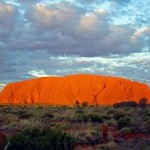
    Uluru or Ayers Rock; whatever you call it the great big rock in the Northern Territory’s Red Center is the heart of Australia’s Outback.

    Standing an imposing 318 meters high and with a circumference of 9.4 kilometers, it’s not hard to see why so many tourists make the trek to the world’s largest monolith every year. More than simply a massive rock, Uluru is a site of great religious and cultural significance.

    Uluru at sunset
    Uluru at sunset

    Many visit Uluru with dreams of scaling to the top, but tourists shouldn’t be so hasty. The Aboriginal people who originally lived there regard Uluru as a sacred site, and encourage visitors to respect this by refraining to climb. If that doesn’t convince you, there are some practical considerations to think about. Scaling Uluru is the equivalent of climbing a 95-storey building. The path is long, and in many places treacherous. More than 35 people have died during the two-hour journey, so unless you are very fit I wouldn’t even consider it. It’s also worth noting that many people are disappointed once they reach the top. After all, you’re standing on the only attraction in an otherwise deserted area.

    Many people say Uluru is best visited at sunrise or sunset. This is when the colors of the rock rapidly change in a sort of natural light show. It’s a beautiful spectacle, but if you’re hoping for a quiet moment to enjoy it you may be disappointed. Large numbers of tourists turn out to view Uluru at these times so it can become very crowded, especially during school vacation times.

    The only accommodation on site is the Ayers Rock Resort. Staying in the resort is very pricey, but its campground has fair prices.

    A less expensive alternative for travelers with a car is Curtin Springs Wayside Inn, located 85 kilometers away. Unpowered camping sites are free, although showers cost extra due to water shortages. Three-day passes to Uluru-Kata Tjuta National Park cost $25. It may disappoint busy travelers that cheaper single-day passes are not available, but there is always the option to stay longer to make the most of the money. After all, the world moves slowly in the Northern Territory so it makes sense for travelers to do the same.

  • Eco-Friendly Private Acommodation at Lamai Homestay in Rural Thailand

    Travel off the beaten path with a stay at Lamai Homestay.

    This eco-friendly guesthouse is located in Ko Pet Village, a rural rice community in the heart of north-east Thailand. This is the ideal getaway for travelers looking for privacy and peace and quiet. With just three-bedrooms, the guesthouse has space for just six visitors to bunker down. The mud-brick eco-rooms are modest, but clean. Each is comfortably furnished, and two have air-conditioning to cool the rooms in summer. There is a hot shower with a Western-style water closet located just outside the rooms. The homestay's garden grows bananas, mangos, papayas, and custard apples and visitors are invited to pick the fruits straight from the trees. As the rooms do not have their own kitchen facilities, guests are invited to use the outdoor barbeque and eat in the gardens. There is also a splashpool for resting tired feet after a long day sightseeing. The staff at Lamai Homestay encourage travelers to immerse themselves in the local community. They can arrange tours and activity packages, such as a silk spinning and weaving courses and bamboo and raffia crafts classes. Guests who prefer to observe can see local farmers working on the rice paddies or silk and cotton weavers handcrafting clothes and rugs. It's also a short trip to the majestic Khmer temples of Pimai, the archaeological site of Ban Prasat, and Khorat City. Lamai Homestay is located 90 minutes from Khon Kaen Airport. From there, travelers are encouraged to catch a train or a bus to reduce carbon emmissions. The guesthouse's staff are happy to collect guests from the train station at Bua Yai or the bus stop at Sida on their arrival.

  • Backpacker’s Guide to Vietnam – Budget Traveling Around Asia

    Backpackers hoping to enjoy the real Asia without the frills should definitely consider a trip to Vietnam.

    The country’s tourism industry is relatively new, so it offers visitors a more authentic experience than many Asian nations.

    These are also not publicized as well as they might be in other countries, so a Vietnam guidebook is a good investment for making the most of your stay. Vietnam is a very affordable destination, with one American dollar equaling approximately 18, 475 Vietnamese Dong (VND). It's easy to find meals for around 15, 000 VND, so travelers can easily eat on in Vietnam for a week for less than $20 US. The biggest temptation for travelers is shopping. While there are bargains to be had, it's easy for them add up once you get started! Vietnam has accommodation to suit all budgets, from luxury resorts to hostels. These hostels offer the best value for backpackers who don't mind forgoing some creature comforts. Hostel Vietnam is a useful website for backpackers researching hostels near their chosen destinations. Another affordable alternative is Hill Tribe living. This authentic Vietnamese experience takes travelers to remote communities to live with the locals. The basic accommodation makes the hostels look luxurious, but tours with companies like Handspan Adventure Travel offer backpackers an unparalleled cultural experience. Vietnamese people are very friendly to tourists and happy to speak English if they can.
    However, it's worth learning a few basic phrases, especially if you're planning to visit the villages. In these rural communities many people do not speak English, so some simple sentences are helpful for communicating. This website has an excellent and comprehensive guide detailing basic phrases and more specific words for food and drink, getting around, and other relevant areas. The cities should not be avoided though as they do offer plenty for tourists looking to meet other travelers. Nightclubs and cafes are ideal for meeting other people, as are internet cafes. To learn more about the best places to go, consult the staff in your hotel or hostel.

  • Bungy Jumping for Adrenalin Junkies in New Zealand

    New Zealand attracts thrill seekers from around the world keen to experience all this natural playground has to offer.

    From rock sailing to river boarding, New Zealand has plenty of adventure activities to get your blood pumping. But the granddaddy of them all is a New Zealand invention called bungy jumping. In this extreme activity, adrenalin junkies jump from a structure, such as a bridge or platform, while their feet are attached with a latex cord. The excitement comes both from the free-fall and the rebounds experienced at the bottom. [caption id="attachment_3277" align="alignright" width="130" caption="Bungy jumping in Nevis Canyon, Queenstown"]Bungy jumping in Nevis Canyon, Queenstown[/caption] While bungy jumping has become popular all around the globe, it's worth experiencing this activity where it all began. The world's first commercial bungy site, AJ Hackett Bungy, opened in Queenstown in 1988. Since then the business has expanded operations to include a location in Auckland and a variety of bungy jumping options. In Auckland you can jump off the city's main bridge, but on the original site there are many more experiences to choose from. There's the massive 134-meter Nevis Bungy set in the rugged Nevis Canyon, the Kawarau Bridge Bungy, and the only urban bungy in Queenstown known as The Ledge. In Rotorua, adventurers head to Agrodome Park for their bungy fix. This is one of New Zealand's most picturesque bungee spots, with views of Mount Ngongotaha, the Paradise Valley, and nearby Lake Rotorua. Rotorua Bungy offers solo and tandem jumps from a 43-meter tower to the Ngongotaha River below. If that doesn't give you enough of a thrill, Agrodome Park also has zorbing, jetsprinting, and a giant swing called The Swoop. Nervous jumpers shouldn't let Thrillseeker's Canyon Bungy intimate them. Located on the Waiau River near Hanmer Springs, this is New Zealand's lowest bungy site at 35 meters. There's also jet boating and rafting on site for anyone looking for another high. New Zealand bungy jumping experiences can range between $20 and $220, depending on the operator and the package's inclusions. It's common for jumpers to receive a T-shirt and certificate, while videos and action photos may also be available at an additional cost.

  • Get Married in the South Pacific – Tropical Weddings in Oceania

    The South Pacific has become a hot destination for couples wanting to get hitched and enjoy their honeymoon at the same time. Most resorts in the Oceanic region offer wedding packages, with ceremonies typically performed on the tropical locale’s beaches.south pacific wedding

    A marriage license should be obtained on arrival in the South Pacific. This is generally a simple process, but both bride and groom must ensure they have their identity documents. These include a passport, certified copies of your birth certificate and, where applicable, copies of decrees of divorce or death certificates if widowed.

    Fiji is the most popular destination for South Pacific weddings. It has numerous resorts providing wedding packages, and many even have their own chapels. If you hope to invite more than 30 guests, a large resort is the best option.

    While the atmosphere may be less personal, these hotels are able to cater for a sizable party. For something more intimate, the smaller resorts on Fiji's outskirts are more appropriate. The Cook Islands' capital, Rarotonga, offers weddings at almost every resort. The packages are varied, offering everything from a traditional wedding on a beach, to a church wedding backed by a full choir or a private ceremony on an uninhabited isle. Samoa has a fledgling wedding industry, with only a handful of resorts offering beach weddings. These include Le Vasa Resort, Siufaga Beach Resort, and Le Lagoto Resort. While the back-to-basics style may not suit flashier couples, it's ideal for those looking for something low-key and romantic. Tahiti poses the most challenges for couples, with an exhaustive amount of paperwork required before the ceremony. Thankfully resort staff will be happy to help should you get stuck. The effort is worth it though, with Tahiti offering some of the most indulgent wedding packages in the South Pacific. Traditional ceremonies and dance performances are designed to make your big day memorable. Tonga is the most conservative island in the South Pacific, and as such it does not permit beach weddings. Instead Tonga encourages couples to have a Christian ceremony in one of the island’s many churches.

  • Stay in New Caledonia for Less – Your Budget Guide to the Isle of Pines

    The picturesque charms of the Isle of Pines, the southernmost tip of New Caledonia, attract travelers from far and wide.

    But most come away from their Oceanic vacation stay with a rather hefty bill. A getaway in the location known as the Jewel of the South Pacific doesn't have to cost the earth though, if you follow our advice. Rather than bunking down at one of the area's many resorts, consider camping at Roller Bay instead. Its beachfront views are just as good as you'll find in any luxury hotel, and with each site offering water and electricity you won't feel like you're slumming it. Each site has its own thatch covered table, but if you want to make new friends you can eat in the central dining area. You can prepare your own meals, but if you'd prefer to take it easy your hosts will happily whip up breakfast or dinner on a day's notice. You'll need to travel with your own tent, but the oceanside sunsets are free. [caption id="attachment_3231" align="alignright" width="150" caption="Beautiful Upi Bay in the Isle of Pines, New Caledonia"]Beautiful Upi Bay in the Isle of Pines, New Caledonia[/caption] If you plan to make your own meals, you'll need to be organized. The area has no supermarkets or stores, so you'll need to visit the weekly markets for your fresh fruit and vegetables. Local fishermen sell seafood, and there is a bakery but you'll need to get up early. Most days all the food is sold out by 11 am, so sleeping in is discouraged! Some of the greatest activities around the Isle of Pines won't cost you a cent. The weather is ideal for swimming all year round. If you have a snorkeling mask, you can take a look at the area's ocean residents, or you could simply enjoy a walk along the sea shore. With some careful planning, you can enjoy a stay in New Caledonia for much less than you'd think.