Just as the British sent its criminals to Australia, Chinese emperors punished its lawbreakers by sending them to Sanya, on the southernmost tip of the Hainan Province. How ironic that both sets of delinquents were banished to paradise.
The beautiful beach at Sanya, China
The coastline is covered in pristine white sand bordered by sparkling blue sea. Palm trees thrive in this tropical climate, which seems more like a Hawaii vacation spot than anywhere in Asia. Perhaps it’s little wonder then that both holiday destinations are at the same latitude.
Sanya offers plenty of water activities designed to take advantage of its famous harbors and bays. Visitors can go banana boating, surfing, scuba diving, and jet skiing. Those preferring to enjoy Sanya on land can try their hand at beach volleyball or kite flying.
Sanya does not offer as many tourist attractions as many Chinese cities, but families should love the butterfly museum, the tiger and crocodile center, and the shell aquarium.
The Nanshan Temple offers a glimpse into the area's culture, while the Daxiao Dongtian, or fairy caves, have picturesque ocean views and mountain scenery.
Sanya is home to around 20 different ethnic groups which make it a food lovers paradise. Seafood and tropical fruits are plentiful, and these fresh delicacies can be found in many different dishes. Brazilian barbeques, Italian pizzas, and Cantonese and south-east Asian cuisine is all on offer from Sanya's many restaurants.
While Sanya was originally founded on fishing, today international tourism is the area's most important industry. The city is home to many of the world's largest tourist chains who offer luxury on a grand scale. This is not a holiday spot for budget travelers.
One of the newest hotels in the region is the plush Sanya Hilton Resort and Spa. Guests stay in suites overlooking the sea or local forests, and enjoy first class facilities like a spa retreat, opulent pool with its lagoon and waterfall, children's play area, and fitness zone.
Sheraton Sanya Resort has hosted Miss World competitors for the last three years. It's little wonder these international glamourpusses choose to make the Sheraton their home away from home, with its 18 and 6-hole golf courses, tennis courts, night club, and six international restaurants. Each room has beautiful views from its own private patio and the Sheraton's patented Sweet Sleeper beds.
In this world of global tourism, there are very few unspoiled areas. One spot that can boast such a title is Jiuzhaigou Valley, or Nine Village Valley as it is commonly called.
This picturesque alpine location lies in the Sichuan province, around 450 kilometers from the capital, Chengdu. Its English name comes from the nine traditional Tibetan villages scattered throughout its 240 square kilometers.
The local villagers live in harmony with the land's thick forest, 114 sparkling lakes, bubbling springs, and waterfalls. Agriculture and private vehicles are forbidden in the spot, which is protected as a World Heritage site.
As you might imagine, the Nine Village Valley is a haven for native wildlife. It's home to giant pandas, white-lipped deer, golden monkeys, and around 140 kinds of birds. There are also many beautiful species of rhododendrons and panda's favorite treats, bamboo.
The area is steeped in mythology. One story suggests that a mountain deity gave a goddess a mirror as a token of his affection for her. When the devil appeared to her she dropped the mirror, and the shattered pieces became the area's many lakes. Skeptics suggest the lakes and waterfalls were instead formed by earthquakes and landslides, but the first explanation is much more romantic!
[caption id="attachment_3011" align="alignright" width="150" caption="The colors of fall at Nine Village Valley, China"][/caption]
As agriculture is forbidden, villagers rely on tourism and government subsidies to live. Guests are encouraged to spend $3 on a photo of the locals in their traditional dress.
While Nine Village Valley is beautiful all year round, autumn is perhaps the best season to visit. Snow lingers on the mountain tops, but the red, orange, and yellow tones of fall are everywhere.
As personal vehicles are prohibited, tourists take the bus from Chengdu along the Minjiang River canyon. The journey generally takes 10 hours, although rock and mudslides in bad weather can add hours to the trip. It sounds daunting, but the unspoiled beauty of this area makes the long journey worthwhile.
While China is known for its fast-paced urban cities, that’s not all this Asian nation has to offer.
For a more relaxed experience make sure you set aside some time to boat down the Li River, or Lijiang River as it is sometimes known. Cruising from Guilin to Yangshuo is an excellent way to enjoy the beauty of the Guangxi Province.
The journey gives you a taste of a different side of China, one far removed from the vibrant metropolises of Beijing and Shanghai. You’ll drift past peasants enjoying a simpler way of life, tending their rice paddies and floating about on bamboo rafts. The scenery too is spectacular, from the stunning Karst peaks to the mysterious caves. Keep your eyes peeled for wandering water buffalo and fishing cormorants.
The 52-mile journey takes around seven to eight hours. It can be done in a day, and companies including Great Wall Tours and Yes China Tour do just that.
The Li River in Guilin, China
However other tour operators including Lychee Travel and China Odyssey Tours take a little more time and enjoy the journey at a more leisurely pace.
These longer tours generally include an overnight stopover at Yangshuo. While the center of this small town features modern restaurants and shopping opportunities, the quaint rural villages show a different side to the area. These tours also often make stops at various points of interest on the river passage, including the Elephant Trunk Hill, Yao Mountain, and Solitary Beauty Peak. While the extended tours are more expensive than day trips, they also include accommodation and more meals.
On your trip to China you must allow time to see the terracotta warriors and horses, which are regarded by many historians as the most significant archaeological discovery of the last century.
You’ll find them at the Terracotta Army Museum in Lintong, Xi’an in the Shaanxi Province. It lies 1.5 kilometers east of Emperor Qin Shi Huang’s Mausoleum. This ruler, known as China’s first emperor, commissioned the creation of this model army during his reign from 211 to 206 BC.
The life-sized figures, carved from terracotta and poised for battle, are the museum’s star attractions. Each is completely unique, with his own facial expression, hairstyle, clothes, and gestures. Many of the figures are armed with weapons of the time, including bronze swords, longbows, dagger-axes, and spears. They are arranged in faithful battle formation, recreating a real army designed to protect the emperor in the afterlife.
The Chinese Terracotta Warriors
The museum is divided into three sections or pits, which are numbered in order of their discoveries. The first pit, the largest, was opened in 1979, five years after the incredible unearthing. It houses rows of soldiers at the front, numbering around 6000, followed by impressive war chariots. The second pit was unveiled in 1994. It is home to more than a thousand warriors and almost 100 wooden chariots discovered in 1976. The third pit features the discoveries of 1976. Here you’ll see more than 7000 pottery armed soldiers, horses, and chariots carefully restored to their former glory. This large section was opened in 1989. As work is ongoing at the original site, we can only hope more treasures will be added to the collection in the years to come.
The Terracotta Army Museum is open daily from 8 am to 6 pm. Tourists should allow three hours to see the museum’s attractions. Getting to the museum is easy. Trains run from all major tourist centers to Xian Railway Station. Once there, visitors can take the #914 bus or tourist bus 5 directly to the museum.
The Great Wall of China isn’t the only giant historic site in China. In the Mount Emei Scenic Area, near the city of Leshan in the Sichuan province, you’ll find Leshan Dafo, or the Leshan Giant Buddha.
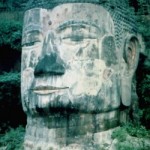
This seated stone sculpture was carved from a cliff face during the Tang Dynasty. It was the brainchild of the Chinese monk Haitong, who believed the giant religious carving would calm the area's rivers. It seems he may have been right. Today the Minjiang, Dadu, and Qingyi rivers flow gently by the Giant Buddha's feet. Skeptics may say the stone used to create the Buddha found its way into the waters, thereby altering their currents. But true believers feel it was the Buddha's religious influence that made these waters safe for ships.
The enormous size of the Buddha renders tourists awestruck. His head reaches the top of the cliffs. The smallest toenail on his eight-meter feet can easily hold a seated person. His 28-meter hands have three-meter long fingers.
But the Leshan Buddha isn't just large; it's also an impressive feat of early architecture. His coiled hair features more than 1000 buns. Hidden gutters and channels scattered behind his ears, in his arms, and the folds of his clothing carry rainwater. This mechanism, which keeps the inner parts dry, has helped protect the Leshan Buddha for thousands of years.
However, the efforts of the early craftsman couldn't save the Leshan Buddha from the modern world. Air pollution and acid rain caused sooty marks and erosion, although the site has been recently been restored.
Ferries traveling to Leshan Port to Yibin City, Luzhou City and Chongqing City all bypass the Leshan Giant Buddha site. Alternatively, tourists can catch a train from Leshan to Emei station. This is located about six miles from the Mount Emei Scenic Area.
No trip to China would be complete without visiting The Great Wall, a man-made marvel regarded as one of the great wonders of the world.
Known as Changcheng, or long wall, to the locals, the Great Wall travels for some 6700 kilometers following the southern edge of inner Mongolia. In its journey it stretches through deserts, mountains, and grasslands. It was originally built more than 2000 years ago as separate walls dividing the warring states of Yan, Zhao, and Qin. Then during the Qin Dynasty, the emperor joined the walls to fend off the invading Huns. Today some parts of the wall are in ruins, but its historical significance and sheer size ensure tourists continue to visit.
One of the best places to appreciate the wall is Mutianyu in Huairou Country. This location, 60 kilometers north-east of Beijing, is adorned by beautiful trees and shrubbery. It’s one of the most commercialized sections of the wall, but don’t let that deter you. The souvenir shops may be a little tacky, but hotels and restaurants are welcome modern-day conveniences. The popularity of this location has also seen authorities restore the wall to its former glory with original bricks. This is one of the few parts of the Great Wall which appears as it would have all those years ago.
As Mutianyu is set high in the mountains, it’s only accessible by cable car. One can take you to the top for sightseeing, while the other is for tobogganing. Both take approximately 10 minutes to reach the summit.
If you’re after more than a quick day-trip to the Great Wall, consider joining a guided tour. Many local tour companies such as World Expeditions and Kumuka Worldwide offer Great Wall expeditions of varying lengths for beginner hikers and experienced trekkers.

 [/caption]
As agriculture is forbidden, villagers rely on tourism and government subsidies to live. Guests are encouraged to spend $3 on a photo of the locals in their traditional dress.
While Nine Village Valley is beautiful all year round, autumn is perhaps the best season to visit. Snow lingers on the mountain tops, but the red, orange, and yellow tones of fall are everywhere.
As personal vehicles are prohibited, tourists take the bus from Chengdu along the Minjiang River canyon. The journey generally takes 10 hours, although rock and mudslides in bad weather can add hours to the trip. It sounds daunting, but the unspoiled beauty of this area makes the long journey worthwhile.
[/caption]
As agriculture is forbidden, villagers rely on tourism and government subsidies to live. Guests are encouraged to spend $3 on a photo of the locals in their traditional dress.
While Nine Village Valley is beautiful all year round, autumn is perhaps the best season to visit. Snow lingers on the mountain tops, but the red, orange, and yellow tones of fall are everywhere.
As personal vehicles are prohibited, tourists take the bus from Chengdu along the Minjiang River canyon. The journey generally takes 10 hours, although rock and mudslides in bad weather can add hours to the trip. It sounds daunting, but the unspoiled beauty of this area makes the long journey worthwhile.


 But the Leshan Buddha isn't just large; it's also an impressive feat of early architecture. His coiled hair features more than 1000 buns. Hidden gutters and channels scattered behind his ears, in his arms, and the folds of his clothing carry rainwater. This mechanism, which keeps the inner parts dry, has helped protect the Leshan Buddha for thousands of years.
However, the efforts of the early craftsman couldn't save the Leshan Buddha from the modern world. Air pollution and acid rain caused sooty marks and erosion, although the site has been recently been restored.
Ferries traveling to Leshan Port to Yibin City, Luzhou City and Chongqing City all bypass the Leshan Giant Buddha site. Alternatively, tourists can catch a train from Leshan to Emei station. This is located about six miles from the Mount Emei Scenic Area.
But the Leshan Buddha isn't just large; it's also an impressive feat of early architecture. His coiled hair features more than 1000 buns. Hidden gutters and channels scattered behind his ears, in his arms, and the folds of his clothing carry rainwater. This mechanism, which keeps the inner parts dry, has helped protect the Leshan Buddha for thousands of years.
However, the efforts of the early craftsman couldn't save the Leshan Buddha from the modern world. Air pollution and acid rain caused sooty marks and erosion, although the site has been recently been restored.
Ferries traveling to Leshan Port to Yibin City, Luzhou City and Chongqing City all bypass the Leshan Giant Buddha site. Alternatively, tourists can catch a train from Leshan to Emei station. This is located about six miles from the Mount Emei Scenic Area.
 As Mutianyu is set high in the mountains, it’s only accessible by cable car. One can take you to the top for sightseeing, while the other is for tobogganing. Both take approximately 10 minutes to reach the summit.