FrugalMonkey Discount Travel News

Tag: culture

  • Vegemite, Kangaroo, and Other Far Out Australian Foods

    The thought of chowing down on Vegemite, and kangaroo might turn your stomach, but when visiting Australia consider sampling these local delicacies and many more.

    At nearly 90 years old, Vegemite is an Australian institution.

    22 million jars of the thick brown spread are sold in Australia each year, but it’s often feared by foreign tourists. The key to enjoying Vegemite is to use it sparingly. Its intense, salty flavor can be overwhelming, but a thin layer on toast or crackers can taste delicious. Some restaurants also use the spread in their marinades and sauces. It complements most meats well, so don’t be scared to try some! Meat pies are another icon which has been eaten in Australia since the 1800s. They’re perfect for warming you up during a football match in winter, or for a quick meal on the run. A meat pie is made from a mix of beef mince and gravy enclosed in a flaky pastry casing. They’re traditionally served smothered in ketchup, or tomato sauce as the locals call it. Harry’s Café de Wheels has made the humble meat pie big business, but you will be able to find a meat pie at any Aussie bakery or gas station.australia travel highlight Australia is one of the few countries in the world that happily munches upon its iconic animals. Kangaroo, emu, and crocodile, commonly make their way on to restaurant menus around the country. Kangaroo is particularly popular as it's so high in protein and low in fat. With just one calorie per gram, it’s a great option for diet-conscious tourists! As it's so lean, kangaroo is best served rare as you would venison. Its flavor is somewhat like beef, although it’s a bit earthier. Surprisingly emu has a similar, beefy taste to kangaroo. It's also a nutritious choice with plenty of protein and few calories. Crocodile tastes somewhere between chicken and turkey. This white meat is similar in texture to pork, and when cooked right will be very tender. It’s also low in cholesterol, so great for those watching their weight. Australia has all of the dining options you'd find in any Western country, but where's the fun in that? Make sure you dare to be different and sample some of these unique foods during your stay Down Under.
  • How to Bargain – A Guide to Shopping in Asian Markets

    The busy markets of Asian nations like Thailand and Vietnam are a mecca for bargain shoppers, but the culture shock of bargaining can scare some foreign tourists.

    The process won’t be so daunting if you follow these simple tips. It's good to get a feel for the markets before you commit to your first purchase. Spend some time walking around, perusing the wares and watching other shoppers bargain for the best price. This will give you some sense of what items are worth, and what sellers may be willing to settle for. It's also important to choose the optimum time to shop. Many sellers may be willing to discount goods in the late afternoon, particularly if they have not had a successful day. Surprisingly the early morning can also be a good time to shop, as some marketeers may reward their first customers with some bargains. Once you've found the perfect item, make sure you keep your composure. It's best to feign disinterest and inquire about several items rather than zeroing in on the one you covet. Make your first offer very low, as the seller will typically drive this cost up before you reach an agreement. It's also advisable to bargain away from other customers if you can; a shop owner may be willing to offer a larger discount if other potential buyers don't know about it! Buying several goods from the same market stall can also be to your advantage. One tactic is to begin bargaining for one item, then ask the seller what discount you could receive if you buy more. Another is to suggest a small complimentary item could help to seal the deal. Above all, it's important to remember that those selling in the markets expect you to bargain with them. They may protest and declare that you are sending them broke, but it’s all part of the game. Hold your nerve and enjoy the rewards of this unique Asian shopping experience!

  • Dim Sum Dining – Eat Like a Local in Hong Kong

    Hong Kong offers a range of restaurants to suit all palettes, but if you want to eat like the locals make sure you try Dim Sum.

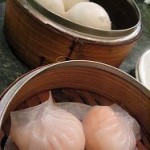
    Dim Sum dumplings in steamer baskets
    Dim Sum dumplings in steamer baskets

    Dim Sum is about more than cuisine; it’s a cultural experience which will show you the real Hong Kong. While dining in the Western world is a private affair, Dim Sum restaurants encourage diners to share large tables and make new friends. As you might imagine, the restaurants are typically noisy and a little out of control, but that only adds to the atmosphere.

    Small meat, seafood, and vegetable dishes are typically served in steamer baskets. Tiny desserts and fruits are also served as sweeteners at the end of the meal. Dim Sum is typically paired with Asian tea. When you have finished your pot, lift the lid from the kettle and rest it on the rim to tell your waiter you’d like more.

    As with any experience which steps off the tourist track, there can be a language barrier in Dim Sum restaurants.

    // <![CDATA[
    google_ad_client = "pub-5653857226981358"; /* Frugal Monkey, 336×280 */ google_ad_slot = "2061266273"; google_ad_width = 336; google_ad_height = 280;
    // ]]>

    If you do not have a Chinese-speaking friend to help you, you can always point to the food that looks tasty to communicate.

    Dim Sum restaurants generally open in the morning and trade until the middle of the afternoon. Do not be deterred by the queues around lunch time; they’re the easiest way to spot Hong Kong’s best Dim Sum restaurants. If you aren’t sure where to dine, the concierge at your hotel should point you in the right direction.

    [Image Source: Alykat/Flickr]

  • Traditional Hangi, a Pacific Underground Feast

    A hangi is a traditional meal enjoyed in the island nations of New Zealand and the South Pacific. In Samoa it is called umu, and in Fiji it’s known as lovo.

    Hangi refers both to the food eaten, the method it is cooked, and the underground oven it’s cooked in.

    At a hangi, different meats and vegetables are wrapped in leaves or aluminum foil, then placed in a pit lined with hot stones. The parcels are covered with wet cloths and earth to trap the heat inside. The dishes then steam for several hours until the vegetables are flavorsome and the meats are fall-apart tender. Chicken, beef, fish, and kumera are traditional dishes served at a hangi. Today pork, lamb, potatoes, and pumpkin are also often prepared this way. The unconventional cooking method imbues the food with a delicious earthy, smoky flavor. The decision to cook food underground may seem unusual to Westerners, but it makes sense when understanding that the native Islanders believe that the earth gives all life. As all life comes from soil, it seems right to return that life-giving food to the earth. A hangi is a communal experience, where food is shared freely amongst old friends and new ones. Traditionally a hangi was reserved for special occasions where a village came together to celebrate. All members of the family would assist in the feast, with the men preparing the underground oven and the women tending to the food. [caption id="attachment_3379" align="alignright" width="150" caption="A Maori warrior"]A Maori warrior[/caption] Today many hotels and cultural villages in tourist towns regularly serve hangi feasts. These allow visitors to experience the country's culture, and are often accompanied by traditional music and dancing. Tourists can enjoy a hangi meal at many locations throughout New Zealand and the South Pacific including Tamaki Maori Village in the New Zealand city of Rotorua, Lalati Resort in Fiji, and Princess Tui Inn (NOTE: Fire destroyed the building in late 2010) in the Samoan beachside town of Apia.

    [Image Source: Geoftheref/Flickr]

  • Unspoiled Beauty of Yap, Micronesia’s Tropical Paradise

    With so much of the Pacific now transformed by tourism, the unspoiled wonder of Yap in Micronesia is even more enticing.

    This is the kind of place which gives us a glimpse into what all of the Pacific must have been like centuries ago.

    The locals don loincloths and hibiscus skirts. They build their houses from thatch and bamboo, and exchange currency made of stone. It might sound like something from The Flinstones, but Yap's stone money is used primarily for traditional reasons. Villages might give the large donut-shaped discs, which can weigh as much as five tons, as a gift to another village. The oversized coins are also used to buy canoes or land. While many Pacific Islanders invite tourists into their villages, the Yapese people are notoriously shy. However visitors to Micronesia can learn more about their way of life at the Bechiyal Cultural Center. One of the treats you'll experience here is the Betel nut, a food that is revered by the Yapese as Westerners do coffee. The nuts are dusted with dry coral lime, wrapped up in pepper leaves, and then crunched. The nuts give a mild high which lasts approximately 10 minutes. There's no hiding that you've had some either, as your lips will turn bright red! [caption id="attachment_3350" align="alignright" width="150" caption="A giant manta ray off the coast of Yap"]manta ray off coast of Yap[/caption] As you might imagine, the ocean surrounding Yap is as clear and untouched as dry land. Scuba divers enjoy swimming in the warm waters amongst giant manta rays, tuna, dolphins, and reef fish. Ocean kayak tours can also be arranged for travelers preferring to explore the ocean while staying dry. There are several small hotels in Yap, including The Pathways Hotel, Trader's Ridge Resort, and The Manta Ray Bay Hotel, the first dedicated dive resort in Micronesia. Continental Micronesia, a subsidiary of Continental Airlines, makes regular flights to Yap International Airport.

    [Image Source: Bartek.cieslak at pl.wikipedia]

  • Sail Down The Ganges River – Indian Tour to Holy City of Varanasi

    At 2507 kilometers long The Ganges, which stretches from the Himalayas to the Bay of Bengal, is nowhere near as long as the Nile, the Amazon, or the Mississippi.  But its might comes from a much deeper place. The river is regarded as the lifeblood of India, a water source which gives the Asian nation its economic freedom, its spirituality, and its cultural identity.

    Sunrise on the Ganges River near Varanasi
    Sunrise on the Ganges River near the holy city of Varanasi

    One of the greatest ways to experience the splendor of The Ganges is to get on it. Several touring companies, including Adventure Expedition Travel and Shikhar Travels, offer sailing journeys down the river. These sailboats are not like those familiar to Western travelers. The rustic vessels are propelled by the sail if weather permits, or bamboo poles when conditions are still. A canvas awning offers crude shelter from the elements, and there is room for just a small number of passengers and their luggage.

    The sailing expeditions travel to the holy city of Varanasi.

    The sacred city is home to ghats, a row of stone steps along the Indian coast. Tourists can see many Hindus here bathing, practicing meditation and yoga, making offerings to the gods, and cremating the dead. It's thought that anyone who dies in Varanasi will travel straight to heaven. To truly experience Varanasi, tourists should take a walk around the Old Town, or Vishwanatha Khanda. This area's shrines and temples, stalls and shops, are a hive of activity all year round. For their own comfort, tourists are advised against traveling to The Ganges in the middle of the year. In June temperatures soar as high as 39 ºC, while July is the area's wettest month.

  • Unspoiled Paradise of Nine Village Valley, China

    In this world of global tourism, there are very few unspoiled areas. One spot that can boast such a title is Jiuzhaigou Valley, or Nine Village Valley as it is commonly called.

    This picturesque alpine location lies in the Sichuan province, around 450 kilometers from the capital, Chengdu. Its English name comes from the nine traditional Tibetan villages scattered throughout its 240 square kilometers. The local villagers live in harmony with the land's thick forest, 114 sparkling lakes, bubbling springs, and waterfalls. Agriculture and private vehicles are forbidden in the spot, which is protected as a World Heritage site. As you might imagine, the Nine Village Valley is a haven for native wildlife. It's home to giant pandas, white-lipped deer, golden monkeys, and around 140 kinds of birds. There are also many beautiful species of rhododendrons and panda's favorite treats, bamboo. The area is steeped in mythology. One story suggests that a mountain deity gave a goddess a mirror as a token of his affection for her. When the devil appeared to her she dropped the mirror, and the shattered pieces became the area's many lakes. Skeptics suggest the lakes and waterfalls were instead formed by earthquakes and landslides, but the first explanation is much more romantic! [caption id="attachment_3011" align="alignright" width="150" caption="The colors of fall at Nine Village Valley, China"]The colors of fall at Nine Village Valley, China[/caption] As agriculture is forbidden, villagers rely on tourism and government subsidies to live. Guests are encouraged to spend $3 on a photo of the locals in their traditional dress. While Nine Village Valley is beautiful all year round, autumn is perhaps the best season to visit. Snow lingers on the mountain tops, but the red, orange, and yellow tones of fall are everywhere. As personal vehicles are prohibited, tourists take the bus from Chengdu along the Minjiang River canyon. The journey generally takes 10 hours, although rock and mudslides in bad weather can add hours to the trip. It sounds daunting, but the unspoiled beauty of this area makes the long journey worthwhile.

  • The Other Mexican Vacation: Mexico City

    Learn about Mexico City as a premier travel spot for vacationers of all shapes and sizes.

    When most people thing about a vacation in Mexico, they think about the beaches of Cabo San Lucas, sunsets in Puerto Vallarta, dinners in Mazatlan or snorkeling in Cancun.


    While these popular Mexican vacation ideals can be the perfect get away during the cold winter months in the States, think about checking out FRUGALMONKEY’s section on Mexican travel and learn about the wealth of culture and experiences that will take you beyond traditional beach tourism in Mexico. Mexico’s rich culture and history with the United States makes it one of the most vibrant countries in the world. With its proximity to the US and with its popularity among tourists, travel into Mexico is popular and frequent – so flight prices are available that won’t break even the most modest budget.

    It’s funny to think that Mexico City could possibly be overlooked because of its size (it is currently the most populated city in the world), but it often is among travelers. While it doesn’t offer the white sandy beaches that some of its other cities do, it is a great vacation spot for families, young people and independent travelers. With hundreds of museums, parks, restaurants and what seems like a festival every other day, it’s a great place for any visitor looking for a closer cultural look at Mexico.


    Traveling to Mexico City also has a wealth of activities, sporting events and even amusement parks to enjoy. While the city’s size may seem daunting to some, the neighborhoods are charmingly separated into perfect day-trips, each with its own feel and with something different to offer. Also, the city’s population is large because, like many Latin American large cities and Capitals, it includes the surrounding provinces as a part of the city population. So, if the sheer size of it all is daunting, never fear – the city is actually quite manageable.

    Mexico City offers large variety of accommodations, amenities and places to visit, meaning that for any budget, there is a vacation that meets your needs in Mexico City. So, on your way out to the beach consider spending a few days in Mexico’s ‘other’ city, and what is considered the heart of the country to millions.

    \