FrugalMonkey Discount Travel News

Category: Trip Locations

  • Tips for Taking Road Trips Across the U.S.

    Road trips are a fun and economical way to discover the U.S. However, up until about 5 years ago, I’d always dismissed them in favor of cheaper travel in other countries.

    It wasn't until a French friend shared his dream of one day driving from New York to Los Angeles that I thought: “Hey, I want to do that, too!” I discovered that there are many things I don’t about the U.S. and many places I’d like to visit. So, now I set out on at least one road trip per year to learn more about the diverse country in which I live. What I’ve found during my multiple cross-country road trips is: (1) They are always more fun than I anticipated they’d be; (2) It’s easy to be frugal if you stick to a budget; (3) The trips rarely go as planned. Spring is almost here, so now is the time to start planning your late spring/summer adventures. Here are some tips for making the most out of your road trip:
    • Have a general idea of your itinerary before setting out on your journey. When planning your itinerary, be realistic in terms of time. If you only have 1 week of vacation time, perhaps you just want to explore a small part of the U.S. (after all, you have the rest of your life to make it to the other states!).
    • Always budget more time than you think you’ll need. When I go on a road trip, I typically alternate long driving days with sightseeing days. It’s important to remember that your driving days may take longer than you think due to unforeseen circumstances.
    • Take along a GPS or maps. It’s important to have access to maps for every region you’ll be traveling to. Even if you MapQuest it all before leaving, you may want to take a detour, etc. that will require knowledge of an alternate route. Stopping to ask for directions takes time, so it’s best to be self-sufficient in this regard.
    • Check the weather often while on the road. I once spent several days dodging tornados in the region where I was traveling. In order to stay safe, I checked the weather multiple times per day.
    • If possible, bring your own source of Internet access. Smart phones and tablets now make it easier than ever to stay connected without lugging around a computer. Having Internet access is important for checking weather, finding information about various locations (tourist information, lodging, etc.), and staying in touch with those back home.
    • Have a general plan for lodging. Camping is the most frugal option, but there are plenty of cheap motels throughout the U.S., too. I always try to spend at least one night with a friend while I’m on the road. Keep in mind that, due to unforeseen circumstances, your accommodation plans could change.
    • Set a trip budget. Before you leave, it’s important to have an idea of about how much you’ll be spending. AAA offers some good discounts, so if you are a member be sure to take advantage of them. If you don’t have a plan for roadside assistance, be sure to budget in an extra cushion for flat tires and whatnot. Save money on food by bringing a cooler and making sandwiches for lunch instead of shelling out for fast food.
    • Pack an emergency kit. Be on the safe side an pack an emergency kit with first aid supplies, blankets, extra water and dry food, a flashlight, etc. It’s best to be prepared because you never know what can happen on the road.
    • Traveling with kids? Stay flexible. If you’re going on a road trip with kids, there are a variety of things to consider. Remember that, depending on the ages and personalities of your kids, you may not be able to get quite as far as you had planned each day. The important thing is that everyone stays safe and happy - you want your kids to remember this as a good experience, right?
    • Enjoy the unexpected. One of the best things about road trips are the pleasant unexpected opportunities/events that arise. Relish in an impromptu hike, stop for a live rodeo you hadn’t planned on attending, enjoy a relaxing picnic with your travel partners. It’s all part of the experience.

  • Chiang Mai’s Best Temples – See Buddhist Wats in Thailand

    The allure of Thailand’s markets and elephant parks is irresistible to tourists, but if you want to learn about the heart of this Asian nation you’ll need to travel to its temples, known as wats.

    These are hundreds of wats around the popular tourist town of Chiang Mai, and as their Buddhist residents want for little they're often free to visit. It may seem strange to visit a temple in ruins, but Wat Chedi Luang's rich history makes it worth a look. King Saen Muang Ma built the wat in 1391 to hold his father's ashes. His successors expanded the building, which eventually housed the holy Emerald Buddha. Earthquakes and Burmese invasion destroyed the wat, but it is still an active place of worship. It's inspiring to see the monks in their saffron robes continuing on despite Wat Chedi Luang's decay. Some parts have been reconstructed, but the historic ruins are arguably more beautiful. Right next door you'll find the smaller Wat Pan Tao. It has a subtler charm than the rest of Thailand's temples, but its wooden structure makes it unique. Lay people are invited to pray in the wooden wiharn, a relatively recent addition moved to temple grounds in 1875. Look for the gorgeous wooding carvings of peacocks and mythical creatures over the main doorway, and the flags and artifacts displayed inside. [caption id="attachment_5271" align="alignright" width="150" caption="Wat Chiang Man"]Wat Chiang Man[/caption] Nestled in the Doi Suthep Mountain to the west of Chiang Mai you'll find the wat which shares the summit's name. It's worth climbing the hundreds of steps to Wat Doi Suthep to see the multiple images of Buddha and feel the energy of the faithful followers. However if you're feeling particularly lazy you can always catch the cable car! If you only see one temple in Chiang Mai, make sure it's Wat Chiang Man. It was built in 1292, making it the oldest in the district. Its Lanna-style architecture has held up remarkably well over the years. The carved elephants which surround the main building and the ornate red roofs on the newer structures are particularly impressive. Remember though that wats are not simply tourist attractions; they are there to serve the local Buddhist community. You should respect local custom by wearing modest clothes and being quiet and reverential while on wat grounds.

    [Image Source: Cindy Andrie/Flickr]

  • Paris’ Less Expensive Arrondissements (Neighborhoods)

    Have Paris’ notoriously high lodging and food costs prevented you from planning a trip to the City of Lights? There are plenty of ways to plan a cost-effective trip to Paris.

    Since Lodging can be one of the major components of one’s budget, the key to planning a reasonably priced trip to Paris is avoiding the well-known or touristy areas. The city of Paris is divided into 20 arrondissements (administrative districts that each have their own unique character). As a general rule, arrondissements that are near the Seine (the river that divides Paris into two sections – the Right Bank and the Left Bank) are pricey in terms of lodging, shopping and food. However, as you move further out from the river, lodging becomes much more affordable. Here are suggestions for four arrondissements that offer great prices on lodging, food and shopping and provide visitors with a more “authentically Parisian” experience than some of the more touristy areas. Remember: Paris’ public transportation, including its famous metro, is excellent. Just because you stay in an area doesn’t mean you have to spend all of your time there. However, I’ve had some of my best Parisian experiences in these charming residential areas, away from the frenetic touristy energy that exists as you move closer to the Seine. [caption id="attachment_5250" align="alignright" width="300" caption="The city of Paris is divided into 20 arrondissements (administrative districts) that spiral like a snail shell around the Seine River."]Paris arrondissements photo[/caption] The 12th Arrondissement The 12th arrondissement is located on the Right Bank and is one of the largest arrondissements in Paris. It is famous for the expansive Bois de Vincennes, an urban green space, Place de la Bastille, a square commemorating the Storming of the Bastille and the French Revolution and the Opera de la Bastille, the second largest opera house in Paris. It is also home to Gare de Lyon train station. It is home to mostly young professionals. Metro stops: Picpus, Reuilly-Diderot,  Porte Dorée, Bercy and Bastille are the most commonly used metro stops in the 12th arrondissement. The 11th Arrondissement Located on the Right Bank, Paris’ well-populated 11th arrondissement is home to a wide array of Parisians. The area is best known for the fashionable Faubourg Saint-Antoine, an area characterized by cafés, restaurants, and nightlife, boutiques and galleries. Rue Oberkampf is characterized by its gritty Parisian charm. This is the place to go to bump elbows with locals in funky, casual eating and drinking establishments. Metro stops: Ledru-Rollin, Bastille, Belleville and Oberkampf are some of the largest and mostly commonly used metro stops in the 11th arrondissement. The 10th Arrondissement Located on the Right Bank, the working class 10th arrondissement is best known for the Canal St. Martin and the vibrant restaurants and cafés that line this narrow waterway. In recent years, the 10th has recently welcomed an array of  bars and nightclubs that made the area an “off the beaten path” hotspot. The 10th is also home to two of Paris’ major train stations, Gare de l’est and Gare du Nord. Spending time in this multicultural neighborhood will definitely make you feel like you’re in the “real” Paris. Metro stops: Gare du Nord, Gare de l’est, Barbes- Rochechouart, Belleville, Bonne Nouvelle, Republique and Stalingrad are some of the largest and mostly commonly used metro stops in the 10th arrondissement. The 13th Arrondissement Located on the Left Bank, the 13th arrondissement is still experiencing growth in it’s population, which is largely comprised of Asian immigrants. This is the place to go to find fresh, inexpensive Asian cuisine and a variety of unique souvenirs. Popular with students, the 13ieme is known for its relaxed vibe, numerous public parks, and wide array of eateries. Metro stops: Gobelins, Place d'Italie, Nationale, Tolbiac, Olympiades and Porte de Choisy are the most commonly used metro stops in the 13th arrondissement.

  • Free Observatories in Tokyo – Sky-High Views of Japan’s Capital

    With its endless stream of traffic and buzzing shopping arcades, it’s easy to feel lost in Tokyo. So why not rise above it?

    The capital of Japan has several free observatories which allow you to best appreciate the city skyline and its surrounds. The Tokyo Metropolitan Government Building has observatories on the north and south ends of the 45th floor. Make sure you visit on a clear day to admire Japan's most famous summit, Mount Fuji. You'll find another free observatory on the 47th floor of Seiroka Tower. From here you can look down at the manicured Seiroka Garden, and the Sumida River. You can see the Sumida River from a different perspective from the Caretta Shiodome. This waterway and the Hamarikyu Garden are the highlights of the vistas from the 46th and 47th floor lookouts. The Caretta Shiodome has more than views on its side though, with a theater, shops, and eateries all there to entertain. Most tourists visit the Shinjuku NS Building to dine at the famous restaurants on the 29th and 30th floors. While the view from your table is no doubt impressive, you can see the Shibuya area better from the building's free observatory. [caption id="attachment_3767" align="alignright" width="150" caption="Map of Japan"]Japan travel map picture[/caption] Tokyo even has observatories inside its transport hubs! Before you set sail, make sure you visit the observatory inside the Harumi Passenger Boat Terminal. It offers great views of Tokyo Bay and the Rainbow Bridge, and as it's a distance from the metro stations it rarely gets too crowded. You'll even find a couple of free observatories inside Haneda Airport! The travel hub is popular with tourists, as it's much closer to Tokyo than Narita. If you fly in, make sure you take the time to check out the impressive views from the first and second terminals.


  • See Art for Free at National Gallery of Victoria

    The National Gallery of Victoria is so full of art, it needed two campuses in Melbourne to house it all.

    The NGV International and its sister site, the Ian Potter Centre, are home to a stunning array of international and Australian pieces. The National Gallery of Victoria on St Kilda Road opened with a modest collection in 1968. Today it's doubled in size and been rechristened NGV International. The new moniker reflects its focus on art from around the globe. There are more than 60, 000 pieces from artists in America, Europe, Asia, and Oceania, making NGV International's collection arguably the largest assortment of international art in Australia. Stroll across the Princess Bridge and you'll reach Federation Square and the Ian Potter Center. It was named after the late Sir Ian Potter, a prominent Melbourne businessman and long time supporter of the arts. It's thought that the site is the world's first major gallery exclusively celebrating Australia's contribution to the global art scene. Indigenous art from William Barak and Emily Kngwarreye, colonial pieces from Frederick McCubbin and Tom Roberts, and modern works from Sidney Nolan, Arthur Boyd, and John Perceval are amongst more than 20, 000 Australian artworks housed here. Admission to The National Gallery of Victoria is free, although some additional charges may apply for traveling exhibitions. The campuses open daily from 10 am to 5 pm, although NGV International closes on Mondays, and the Ian Potter Center closes on Tuesdays. Both sites are closed on Christmas Day and Good Friday, and open from 1 pm on Anzac Day.

  • Get Around on the Cheap: Ten Best U.S. Cities for Public Transportation

    Whether we’re talking about airfare or cab fare, transportation costs can eat up a large part of one’s travel budget.

    Of course, western Europe is known for its highly accessible and inexpensive public transportation systems. But we’ve got plenty of bragging rights in the U.S., too. If you’re looking to cut down on transportation costs once you reach your destination, check out these ten best U.S. cities for public transportation. You may be surprised by some of them! Phoenix, Arizona Phoenix is now home to a state-of-the-art light-rail line that opened in January 2009. It started with a 20-mile line and has consistently grown since then. The definition of clean, modern, hassle-free transportation within an area that can only be described as urban sprawl. Denver, Colorado Another sprawling area, Denver boasts one of the leading transit systems in the West. An intricate network of light rail and buses connects the city, with the downtown Union Station as the hub. Over the past two years, rail and bus lines have been spread out into the suburbs. Los Angeles, California Over the past two decades, Los Angeles has spent well over 11 billion dollars to improve the city’s public transportation, including the streamlined Metro Rapid bus line and an expansive rail system that radiates out from the train station downtown. And car-loving Angelinos seem to be taking to the relatively new options for public transportation; the city’s ridership ranks among the top in the country. San Francisco, California San Francisco is home to a variety of public transportation options including a light rail and the city’s quintessential cable cars. The extended metropolitan area of San Francisco, Oakland and Berkeley is served by Bay Area Rapid Transit (BART) subway system. [caption id="attachment_5229" align="alignright" width="300" caption="San Francisco's BART is one of the most expansive and efficient public transportation systems in the U.S."][/caption] Salt Lake City, Utah Salt Lake City has poured a large amount of its financial resources into improving and expanding the Utah Transit Authority’s light rail system (TRAX). TRAX connects downtown to the surrounding suburbs, serving  over 1.7 million people. New York, New York This one’s a no-brainer. The Big Apple has one of the most efficient public transportation systems in the country (the subway as well as a bus system). The city’s average weekday ridership of public transportation is over 8.4 million. St. Louis, Missouri St. Louis’ MetroLink light-rail system has changed the face of public transportation in the city. Small business in both the Missouri and Illinois parts of the greater metro area have thrived thanks to this efficient transportation system. Grand Rapids, Michigan Talk about eco-friendly, the transit system in Grand Rapids (The Rapid) has a LEED-Certified central terminal. The creation of this efficient system has also helped the local economy. The Rapid doesn’t yet extend out into the suburbs, so for the time being there is a shuttle that transports riders to and from the nearest stop. Minneapolis, Minnesota Historically, the Twin Cities have not been known for their public transportation options. However, that reputation has shifted over the past few years. The city’s new light rail system already connects part of Minneapolis to the airport and Mall of America, and  a new light rail line connecting Minneapolis and St. Paul’s downtown areas is under construction and is expected to be completed by 2014. Honolulu, Hawaii Honolulu does not have an urban rail system, but it makes up for it with TheBus system, Oahu’s primary mode of public transit. Honolulu is currently making plans  to expand its transit options with an elevated rail system connecting the city to western Oahu.

  • See Sydney on the Cheap – Budget Australia Travel Tips

    After watching Oprah Winfrey and her ultimate viewers climb the Harbour Bridge and take in the Botanic Gardens, travelers around the world are dying to do the same.

    But it's worth pausing before booking your flight to Sydney. Australia is a long way from anywhere, so getting there isn't cheap. The New South Wales capital is also one of the most expensive for tourists in the world. But don't let that deter you from your dream vacation Down Under. With a little insider knowledge, it's possible to have a great time without spending a small fortune. You can save a bit on those airfares and accommodation with some careful planning. While the idea of spending summer days on Bondi Beach sounds glamorous, many tourists don't realize how hot and humid the weather gets between November and February. These months are Sydney's peak travel season, so visit outside these times and you'll enjoy discounts and a more pleasant climate. Sydney caters for all kinds of travelers, with accommodation options from backpacker hostels to plush five-star hotels. The well-kept hostels are ideal for anyone satisfied with a clean place to sleep and little else. Serviced apartments with laundries and kitchens are also a great option for travelers looking to cut costs while enjoying a little more luxury. Sydney's restaurants are pricier than you’ll find in New South Wales' country towns, but they're more affordable than those in Paris or New York. Avoid the big restaurants on Sundays and public holidays, as they'll often tack on a 10% service charge. For cheap eats, enjoy Sydney's multicultural influences in Chinatown, Cabramatta, and Leichardt. The city's best seafood can be found at the Sydney Fish Market, where it's served up straight from the boat at a number of casual and affordable cafes. While hopping cabs can be pricy, Sydney's public transport system is cheap and easy to navigate. Multi-fare passes can be used on the city's trains, buses, and ferries to help you save. Australia piggy bankAnd if you're staying in the CBD, you can just hop on the free city shuttle! It's possible to see much of Sydney with the family without paying a cent. Most of the city's museums and national parks offer free entry, and there's usually a free festival celebrating something on weekends. While it's pricy to climb the Harbour Bridge as Oprah did, it's free to stroll the pedestrian walkway across it. The views aren't quite as spectacular, but your wallet will feel a lot fuller. Once the sun sets you can head to bars like The Sandringham, The Lansdowne, and The Beach Road to enjoy some free live music. Just be prepared to pay for the beers!
  • Save Money in Beijing – Budget Travel Tips for Chinese Capital

    Beijing has long been regarded as one of the world’s most expensive vacation destinations, but the tide is turning.

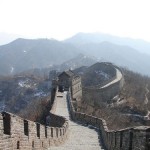
    When the city hosted the Olympic Games in 2008, a host of mid-priced accommodation options opened up to meet tourist demand. With the knowledge of these hotels in hands, and a little bit of local knowledge, a stay in the Chinese capital need not break the bank. The Hai Dian district is close to Beijing's university, so its accommodation is affordable for the youth that frequent the area. The Friendship Hotel and Xin Xing Hotel have all the leisure and business features you'd hope for at moderate rates. The Beijing Xin Ze Hotel is another affordable option that's both clean and conveniently located. Travelers will also not be disappointed staying in Dong Cheng, as historical sites are close at hand and the train station nearby. While there are some expensive accommodation options in this district, you'll save money staying at the hostels and hotels north of Tiananmen Square. The City Central International Youth Hostel is another great option for budget travelers who value location. Beijing's restaurants are not as expensive as in many Asian tourist areas, so don't be afraid to frequent them. In fact, choosing cheap food from Chinese street vendors could expose you to illness, so it often pays to indulge in well-cooked restaurant meals. Beijing's public transport system can be difficult for foreigners to navigate unless they're familiar with the language. To ensure you get where you want to go and back again, ask your hotel concierge to write your destination on the back of a business card. You can then simply present this to a taxi driver on your way out, and do the same on the return journey. You'll certainly want to travel to some of the historical sites near the capital, as they're amongst the world's best. No trip to China would be complete without seeing The Great Wall. The most convenient viewing area from Beijing in Badaling Pass, located about 55 miles away. It's a very touristy spot to see The Wall, but also a beautiful part of this monument. It's worth spending the money for a cable car ride, as it will save your legs and provide an excellent aerial photo opportunity. [caption id="attachment_2731" align="alignright" width="150" caption="The Great Wall of China"]The Great Wall of China photo[/caption] The Forbidden City is also not to be missed, so don’t stress about the small entrance fee. It's easily forgotten once you're inside the majestic palace. Commoners were not permitted to enter the grounds for five centuries, so consider yourself lucky to visit! Tiananmen Square may be one of Beijing's greatest free attractions. Once it was a place of protest and civil unrest, but today this paved park is brimming with life. Spend time watching Chinese children flying elaborate kites, and help them with their English if they approach you. This place is all about simple pleasures, so lap them up without spending a cent!

  • Chinese Treasures at Shanghai Museum – Free Display of Asian Artifacts

    The Shanghai Museum houses one of the most exciting and largest collections of artifacts in China, and best of all, entry is free.

    The museum is a wonderful place for tourists to immerse themselves in Chinese culture, thanks to the stunning displays of calligraphy, and porcelain, bronze, and jade artworks. It’s easy to spend at least half a day exploring all four floors of this treasure trove, although parents may find they have trouble keeping children interested for that long.

    While the building is stroller-friendly, it doesn't have the kid-friendly exhibitions we see in so many of the world's museum. If you have little ones, prepare for a few complaints. The audio tour costs a few yuan, but it's an investment worth making to get the most from your visit. The tour will highlight some of the most important artifacts on display and detail the background of these key pieces. While you're thinking about additional costs, traveling exhibitions often stop at the museum. These are also affordable at around 20 yuan, but don't feel pressured to see them, particularly if your time or budget is limited. The permanent collection is certainly vast enough to occupy frugal travelers. The Shanghai Museum is located at #201 Renmin Avenue in Shanghai, at the southern end of People's Square. You can take the subway to People's Square and follow the signs, or tell your taxi driver to take you to "Shanghai boh-oo-gwan." It opens daily between 9 am and 5 pm.

  • See Sydney’s Historic Buildings for Less with Travel Through Time Pass

    Sydney is one of Australia’s oldest cities, so it’s no surprise to learn it’s home to some of the country’s most historic buildings.

    //

    You can see these sites for less with the Historic Houses Trust Ticket Through Time.

    This discounted admission pass allows travelers to visit all 12 museums overseen by the trust. These include the Hyde Park Barracks, Governor’s House, and the Museum of Sydney. You won’t need to rush through them either, as the pass gives tourists three months to appreciate the ancient architecture, stroll about the meticulous gardens, and discover the stories of these prominent sites.

    The passes cost $30 for adults, $15 for children and concession card holders, and $60 for families visiting Sydney. With most buildings charging between $8 and $10 for individual adult admissions, those savings can add up quickly.

    Sydney's Government House
    Sydney's Government House

    But it’s worth visiting the Historic Houses Trust website and planning your visit first. The Mint and Government House are both free to visit, so if you don’t want to see much more than these you’ll come out ahead by buying individual passes.

    The package is a great idea for history buffs though, or anyone wanting to learn more about what makes Sydney the city it is today. Buy your Ticket Through Time from any Historic Houses Trust building except Government House.

    [Image Source: Neal Jennings/Flickr]