If you’re a regular traveler, it will come as no shock whatsoever that what used come standard for the price of airfare (from in-flight meals to checked bags), is now considered “extra.”
Category: Trip Planning
-
How to Avoid Spending Money on Airline “Extras”
Even though paying $30 (or more) for a checked bag may not seem like a big deal when you’re just trying to get to your destination, these costs can add up over time (especially if you’re traveling with a family). Here are some tips for reducing your airline “extras” fees without sacrificing comfort and convenience. The “Great Luggage Debacle” To check or not to check? That is the question for many airline passengers these days. If the airline assesses a fee for checked baggage, my general advice is don’t do it. However, there are some ways to get around this fee. Delta card holders receive one free checked bag for each person on the reservation. For example, last year my mother booked a flight for herself, my sister and me. Even though my sister and I were not Delta card members, we were allowed to check our bags for free as well. If you do decide to check a bag, make sure it is under the maximum weight limit (typically 44 pounds) so that you are not assessed extra fees. Of course, the easiest way to get around the luggage fees is to pack everything you need in a carry-on. You are allowed to bring both a carry-on and a personal item (purse, laptop, etc.) on most major carriers. The standard carry-on maximum size is 45", in the form of a 22" x 14" x 9" bag. Some airlines allow up to as much as 55" (this is rare). For weight and size restrinctions, always check with your specific carrier before you begin packing. Afraid you can’t fit all you need in a carry-on? Follow these simple guidelines for packing light (and “security friendly”) and you’ll be good to go. 1. Plan out what you will wear each day to avoid overpacking on clothes. Remember that you can rewear most things. Also, check to see if there will be laundry facilities where you are staying (this way, you can pack half as much and do laundry half-way through the trip). Be realistic about shoes. One comfy pair and one nice pair is typically all you’ll need. 2. Make sure to put all liquid in 3 oz. (or less) containers. This will both allow you to get through security with no issues and will force you to pack lighter. 3. Remember that sharp objects may cause problems when you go through security. Keep in mind that if you buy bulky souvenirs on your trip, it’s a good idea to have them shipped back home (which often ends up being cheaper and safer than bringing them to the airport). Bon Appétit! Let’s face it, airline food is not exactly synonymous with fine dining, so why are paying for food you won’t even enjoy that much? Instead for forking out your vacation money on in-flight meals, plan ahead. Most major airports have a variety of dining and food-to-go options. Either eat a good meal before you get on the plane, or grab a sandwich and beverage (after you go through security, of course) to enjoy mid-flight. And don’t forget about the snacks. Young travelers in particular stay happier with healthy snacks like dried fruit and trail mix to munch on during the flight. Follow these simple words of advice and you could end up saving hundreds of dollars by not purchasing airline "extras" throughout the 2011 traveling year. -
Sleep for Cheap: The Key to Finding Inexpensive Lodging Options
One of the major expenses while traveling is typically lodging. Even “reasonably” priced hotels can cost upwards of $200 per night. Luckily, finding inexpensive lodging is not as difficult as one might think – you just have to know where to look. Here are some suggestions to consider for your next trip.
Housing Swap If you are traveling with your family or a group, a housing swap can be both economical and very convenient. The basic idea is that you trade houses with someone in another location. Typically, the involved parties draw up a contract that covers use of particular items (cars, appliances, etc.), cleaning fees and damage policies. As traveling families become more budget conscious, this option has become much more popular. There are several websites you can use to facilitate the swap. For starters, check out: http://www.homeexchange.com/ (specializes in international house swaps) http://www.homeforswap.com/ (specializes in both U.S. and international house swaps) http://www.digsville.com/ (has lots of great and affordable listings for U.S. and abroad) CouchSurfing [caption id="attachment_4802" align="alignright" width="300" caption="Laguna Beach Vacation Rental Condos"] [/caption]
The term was coined by the non-profit group by the same name that connects frugal travelers in over 230 countries. CouchSurfing (www.couchsurfing.org) members host one another (for free) in their homes. According to CouchSurfers I know, these stays provide the opportunity for rich cultural exchanges and they have made connections with individuals living all over the world (who have offered to put them up whenever they’d like). Think if it kind of like a study abroad “homestay” for adults. Though most CouchSurfers are single people or couples, there are opportunities for families to CouchSurf together as well.
Hostels
During my backpacking through Europe years, I got to know the Euro hostel scene quite well. Hostels are typically very casual hotels where you can rent a bed in a shared room (some also offer private rooms) and use the shared shower and bathroom facilities. Hostel qualities range from hotel-like to downright shabby and prices can vary from the equivalent of $10USD per night to $80USD per night. Some offer a continental breakfast (included in the price). One of the fun things about staying in a hostel is the variety of people you’ll meet—they are inherently more social places than most hotels.
There are many hostels that do not allow children, so make sure you check first if you are traveling with youngsters. Finding out about hostels is much more convenient now than it was when I was “hosteling it” ten years ago. There are a variety of websites that provide international hostel listings and ratings. Check these ones out to start with:
http://www.hostels.com/
http://www.hostelworld.com/
http://www.hostelbookers.com/
Vacation Rentals
Though typically more expensive than the options listed above, vacation rentals often offer more bang for the buck, especially if you’re traveling with a family or group. With the international real estate market on the fritz, more and more home and condo owners are renting out their properties to make ends meet. This typically translates to great properties for reasonable prices. If you’re traveling with a group of friends, consider renting a house and splitting the price. The savings you’ll see will be amazing. There are many sites online that will help you find a vacation rental in the area you’ll be traveling in a price range that that works into your travel budget. Start by visiting theses ones:
http://www.vacationrentals.com/
http://www.homeaway.com/
http://www.vrbo.com/
[/caption]
The term was coined by the non-profit group by the same name that connects frugal travelers in over 230 countries. CouchSurfing (www.couchsurfing.org) members host one another (for free) in their homes. According to CouchSurfers I know, these stays provide the opportunity for rich cultural exchanges and they have made connections with individuals living all over the world (who have offered to put them up whenever they’d like). Think if it kind of like a study abroad “homestay” for adults. Though most CouchSurfers are single people or couples, there are opportunities for families to CouchSurf together as well.
Hostels
During my backpacking through Europe years, I got to know the Euro hostel scene quite well. Hostels are typically very casual hotels where you can rent a bed in a shared room (some also offer private rooms) and use the shared shower and bathroom facilities. Hostel qualities range from hotel-like to downright shabby and prices can vary from the equivalent of $10USD per night to $80USD per night. Some offer a continental breakfast (included in the price). One of the fun things about staying in a hostel is the variety of people you’ll meet—they are inherently more social places than most hotels.
There are many hostels that do not allow children, so make sure you check first if you are traveling with youngsters. Finding out about hostels is much more convenient now than it was when I was “hosteling it” ten years ago. There are a variety of websites that provide international hostel listings and ratings. Check these ones out to start with:
http://www.hostels.com/
http://www.hostelworld.com/
http://www.hostelbookers.com/
Vacation Rentals
Though typically more expensive than the options listed above, vacation rentals often offer more bang for the buck, especially if you’re traveling with a family or group. With the international real estate market on the fritz, more and more home and condo owners are renting out their properties to make ends meet. This typically translates to great properties for reasonable prices. If you’re traveling with a group of friends, consider renting a house and splitting the price. The savings you’ll see will be amazing. There are many sites online that will help you find a vacation rental in the area you’ll be traveling in a price range that that works into your travel budget. Start by visiting theses ones:
http://www.vacationrentals.com/
http://www.homeaway.com/
http://www.vrbo.com/
-
New Year’s Eve Celebrations Around the World
Where will you ring in 2011? From fireworks at the Eiffel Tower to watching the ball drop in Times Square, the opportunities for revelry are endless (admittedly, most involve champagne and fireworks).
Celebrating the beginning of another year in another country is an experience you will never forget. Here are some top global New Year’s Eve celebrations to consider (as well as the expressions you’ll need to really get into the spirit!): Brazil Head to Copacabana Beach for one of the most impressive New Year’s Eve fireworks displays in the world. Dress in white (as is the Brazilian custom) and get to the beach early to enjoy the crowded revelry (and to find a place to watch the fireworks from). (“Happy New Year” in Portuguese is “Feliz Ano Novo.”) China Solana Blue Harbor Shopping Park in Beijing hosts rock concerts and fireworks display on New Year’s Eve. Be ready for massive crowds. (“Happy New Year” in Chinese is “Xin Nian Hao.”) Denmark Copenhagen City Hall is definitely where you should be when the clock strikes midnight. Celebrate with the Danes while watching an impressive fireworks display. (“Happy New Year” in Danish is “Godt Nytår.”) France Parisians pack into the Champs-de-Mars (the large grassy area across from the Eiffel Tower) to witness a remarkable fireworks show (timed to music) when the clock strikes twelve. Bundle up or have some champagne to help you stay warm. (“Happy New Year” in French is “Bonne Année.”) Scotland Edinburgh’s Princes street is the place to be on New Year’s Eve. Have a drink (or several) in one of the many pubs and eateries in this area and then stumble out onto the street before midnight to witness the celebratory cannon shot followed by a fireworks display. Portugal Funchal Harbor on the island of Madeira (just off the coast of Portugal) hosts one of the world’s largest fireworks displays (it’s mentioned in the Guinness Book of World Records). (“Happy New Year” in Portuguese is “Feliz Ano Novo.”) Indonesia Head to the Statue of Welcome fountain to watch fireworks during New Year celebrations in Jakarta. (“Happy New Year” in Indonesian is “Selamat Tahun Baru.”) [caption id="attachment_4781" align="alignright" width="300" caption="New Year's Even Fireworks over the Sydney Opera House (Australia)"]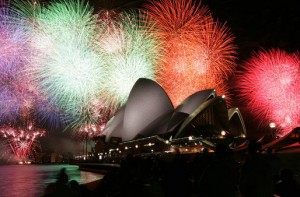 [/caption]
Germany
The famous Brandenburg Gate is where you should go to see the most impressive fireworks display in Germany. (“Happy New Year” in German is “Ein Gutes Neues Jahr.”)
Taiwan
Have you ever seen fireworks explode off the top of a skyscraper? This is what you can expect to experience on New Year’s Even in Taipei City. They set off fireworks from the world's tallest completed skyscraper, Taipei 101. (“Happy New Year” in Chinese is “Xin Nian Hao.”)
Singapore
Head to Singapore’s financial district to watch fireworks and welcome the New Year in style. (You’ll be understood with “Happy New Year” in Singapore, but if you want to give it a whirl in Malay, it’s “Selamat Tahun Baru.”)
Australia
Fireworks explode each New Year’s at midnight over the Sydney Harbor Bridge and Opera House. A spectacular sight.
Don’t have the funds to jet off to an exotic locale for New Year’s Eve? Not to worry. You can still have an international experience (and shout the new expressions you learned) from the comfort of your own home. CNN and several other cable channels cover New Year’s celebrations from around the world.
Happy 2011!
[/caption]
Germany
The famous Brandenburg Gate is where you should go to see the most impressive fireworks display in Germany. (“Happy New Year” in German is “Ein Gutes Neues Jahr.”)
Taiwan
Have you ever seen fireworks explode off the top of a skyscraper? This is what you can expect to experience on New Year’s Even in Taipei City. They set off fireworks from the world's tallest completed skyscraper, Taipei 101. (“Happy New Year” in Chinese is “Xin Nian Hao.”)
Singapore
Head to Singapore’s financial district to watch fireworks and welcome the New Year in style. (You’ll be understood with “Happy New Year” in Singapore, but if you want to give it a whirl in Malay, it’s “Selamat Tahun Baru.”)
Australia
Fireworks explode each New Year’s at midnight over the Sydney Harbor Bridge and Opera House. A spectacular sight.
Don’t have the funds to jet off to an exotic locale for New Year’s Eve? Not to worry. You can still have an international experience (and shout the new expressions you learned) from the comfort of your own home. CNN and several other cable channels cover New Year’s celebrations from around the world.
Happy 2011!
-
What to Do in Historic Downtown Honolulu
Just a few miles from the throngs of tourists in Waikiki is a more urban, budget-friendly part of Honolulu.
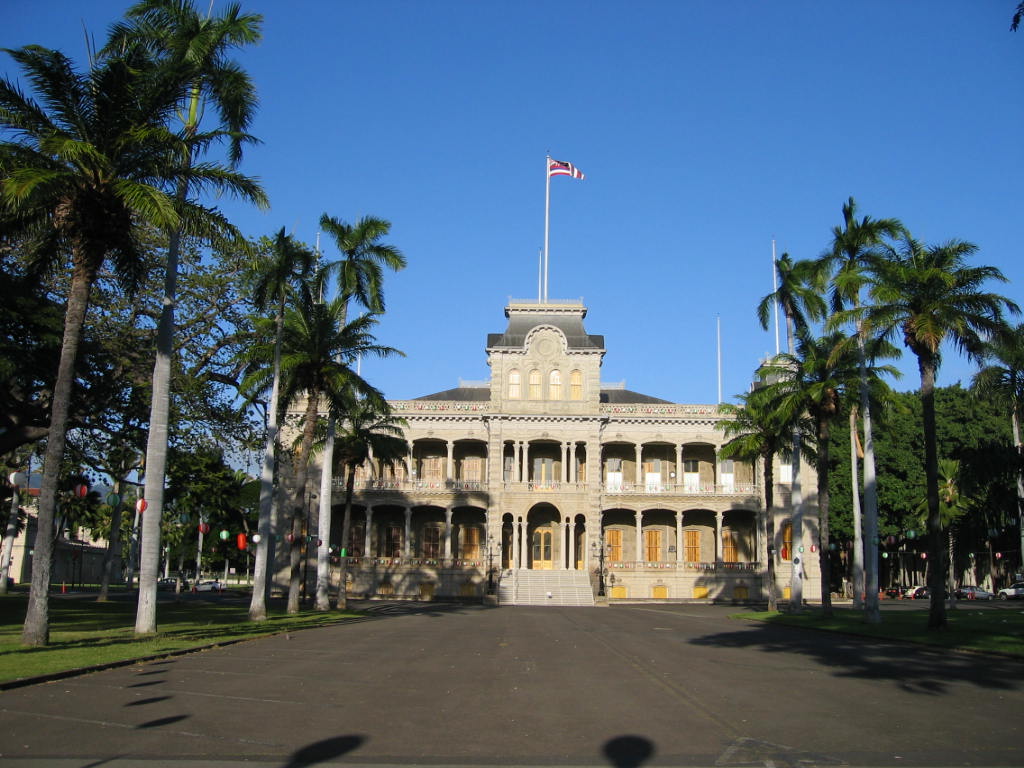
Whether you choose to spend an afternoon soaking in the unique history of the Honolulu waterfront, walking around downtown and taking in all of the public art or heading over to Chinatown to take in the ethnic eateries, flower stalls, fresh produce vendors, dish and housewares shops, you’re sure to experience a side of Hawaiian life. If you don’t have a rental car, it’s still easy to get downtown (even if you do have a rental car, I suggest taking public transportation downtown - it’s much easier). Most hotels offer shuttle buses downtown. You can also take a city bus (schedules available at concierge desks and tourist information centers). Shopping In general, the further one gets from Waikiki, the more reasonable the prices will be. Prices in downtown Honolulu tend to be much better than those in the tourist shops along the beach. You’re also more likely to get a better quality product and have a better selection of cheap souvenirs. If you're going to take a trip to Hawaii, then don't miss one of the most famous sights in downtown Honolulu - the Aloha Tower Marketplace. Surrounding the tower you’ll find an eclectic array of shops and eateries. There is a small jewelry district here that sells gold Hawaiian jewelry charms for much less (and a better selection) than you’d find them in Waikiki. Unique and inexpensive souvenirs can also be found in Chinatown. If you’re in the market for traditional Hawaiian souvenirs (artificial leis, macadamia nuts, Kona coffee, muumuus and shirts), head to one of the Hilo Hatties outposts in downtown Honolulu. Eating [caption id="attachment_4759" align="alignright" width="300" caption="The Historic Iolani Palace"]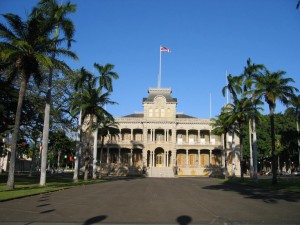 [/caption]
If you’re looking for a quick bite to eat, there are some commercial options (chains, etc.) around Aloha Tower. Chinatown has some of the best fresh Asian food (both street food and sit-down restaurants) in the city. There are quite a few “foodie-friendly” Asian fusion restaurants of note in downtown Honolulu, including Indigo, Zen Shu, Alan Wong, Roy’s, Hiroshi Eurasian Tapas, Duc’s Bistro and Chef Mavro.
Museums and Cultural Sites
The Hawaii Maritime Center allows visitors to discover Hawaii’s fascinating ocean history, featuring exhibits on ancient Polynesian voyagers, rough and tumble whalers, and the luxurious cruise liners of the 1920s and ‘30s.
The beautiful and famous Iolani Palace is located on King’s Street. It holds the distinction of being the only royal palace standing on American soil. The palace was the royal residence of Hawaii’s last two monarchs. Guided tours are available 5 days a week. While you’re in the area, head across the street to tour the Iolani Barracks (also called Halekoa or “house of warriors”). It was built in 1870 and housed 80 members of the Royal Guard (before the overthrow of the monarchy).
The Mission Museum is located on Punchbowl Street and is located on the site where the first American Protestant missionaries established their headquarters in 1820. Most of the buildings are original, and represent the oldest Western-style buildings in Hawaii. Here you can see a variety of artifacts – furniture, books, quilts, clothing, etc. - from these missionaries.
There are several lovely churches in downtown Honolulu, including St. Andrew’s Episcopal Cathedral, Cathedral of our Lady of Peace, and Kawaiaha'o Church, each representing different architectural styles.
Ho'ohoihoi k' ho'omahana! (Enjoy your trip!)
[/caption]
If you’re looking for a quick bite to eat, there are some commercial options (chains, etc.) around Aloha Tower. Chinatown has some of the best fresh Asian food (both street food and sit-down restaurants) in the city. There are quite a few “foodie-friendly” Asian fusion restaurants of note in downtown Honolulu, including Indigo, Zen Shu, Alan Wong, Roy’s, Hiroshi Eurasian Tapas, Duc’s Bistro and Chef Mavro.
Museums and Cultural Sites
The Hawaii Maritime Center allows visitors to discover Hawaii’s fascinating ocean history, featuring exhibits on ancient Polynesian voyagers, rough and tumble whalers, and the luxurious cruise liners of the 1920s and ‘30s.
The beautiful and famous Iolani Palace is located on King’s Street. It holds the distinction of being the only royal palace standing on American soil. The palace was the royal residence of Hawaii’s last two monarchs. Guided tours are available 5 days a week. While you’re in the area, head across the street to tour the Iolani Barracks (also called Halekoa or “house of warriors”). It was built in 1870 and housed 80 members of the Royal Guard (before the overthrow of the monarchy).
The Mission Museum is located on Punchbowl Street and is located on the site where the first American Protestant missionaries established their headquarters in 1820. Most of the buildings are original, and represent the oldest Western-style buildings in Hawaii. Here you can see a variety of artifacts – furniture, books, quilts, clothing, etc. - from these missionaries.
There are several lovely churches in downtown Honolulu, including St. Andrew’s Episcopal Cathedral, Cathedral of our Lady of Peace, and Kawaiaha'o Church, each representing different architectural styles.
Ho'ohoihoi k' ho'omahana! (Enjoy your trip!)
-
Travel – Inspired Holiday Gifts
Looking for great gift ideas for the world traveler in your life? Or perhaps you can’t afford to take a big trip this year and are looking to live vicariously.
Here are some of the top travel- inspired holiday gifts for 2010. Travel Books If you are you in the market for original, sophisticated travel books, look no further. The Taschen book company, headed up by Dr. Angelika Taschen, has a reputation for publishing gorgeous tomes with large glossy photos and well-written content. As far as I’m concerned, these are the ultimate coffee table books for any traveler. Be sure to browse their website for tempting books in a variety of prices points about nearly every location on the globe. Here are my suggestions of Taschen books that are sure to please travelers on your holiday gift list (they also make great treats for yourself and can scratch the travel itch): Taschen's Paris by Angelika Taschen (2008) This beautiful hardcover volume is full of Dr. Angelika Taschen’s personal Parisian favorites - hotels, boutiques, restaurants, bars, cafés, and more. Berlin by Hans Christian Adams (2007) This 672-page photographic journey into the city's history is both comprehensive and aesthetically pleasing. I purchased my copy as a remembrance of my incredible time in Berlin. African Interiors by Dr. Angelika Taschen and Deidi Von Schaewen is a two-volume set of traditional and contemporary African home, hotels and restaurant interiors. I own it and page through it often while fantasizing about my eventual trip to African someday. Great Escapes Mediterranean by Christiane Reiter and Angelika Taschen Part of Angelika Taschen’s Great Escapes series, this book is full of the very best images of hotels and beaches in Greece, France and Italy. Of course, guidebooks-- such as those published by TimeOut, Fodor’s, Lonely Planet, Moon, or the independent British publisher, VICE-- are always good options, as are foodie travel narratives like those by Anthony Bourdain. Electronics Of course, mobile devices like Androids, iPads, iPhones, iPods, etc. are all the rage for tech-savvy travelers. Though the initial investment is not exactly conducive to most frugal travelers budgets, the long- term payout can be great. With time and money saving iPhone apps (that range from $0.99-$5.99), these devices can be a traveler’s best friend. World-travelers used to long layovers and flights will also love the mobile reader options on all of these. It is now possible to download an Amazon Kindle app on to any one of these devices (that allows you to transfer all of your books over should you choose to change mobile devices in the future-- a great way to protect your investment). Remember that with internet access, you’ll also be able to check out your favorite travel blogs for posts and travel tips while you’re on the road. Magazine Subscriptions Magazine subscriptions are the gifts that keep on giving…all year long. Of course, there are the usual glossy suspects that appeal to world travelers (Condé Nast Traveler, Travel and Leisure, National Geographic Traveler, etc.). May I suggest these two publications as alternatives. They are magazines geared toward “the rest of us” - those who can’t afford (or perhaps don’t want) to indulge in 5-star hotels and $10,000 cruises. Both focus on cultural content and “off the beaten path” travel accounts. Afar Magazine: This magazine is dedicated to covering stories on adventure travel, philanthropic travel and really digs into cultural content. It doesn’t hurt that the photos and layout are breathtaking. Pology: Each issue of this world cultures magazine is chalk full of impassioned travel vignettes, poetry and photo-essays. -
Surfing France and Spain on a Budget
There are many surfers out there who dream of “surfing the world,” yet perhaps think they can’t afford it.
To them I say “think again.” With some savvy financial planning and research, it’s possible to take yourself in a surf tour of Western Europe without breaking the bank. Here are some renowned surf spots in France and Spain to consider: Mediterranean Coast (Toulon and Marseilles), France Located in the southwestern part of France, the nearby major cities of Toulon and Marseilles offer some great surf breaks. Major surf championships are hosted in this area each year. It is relatively affordable to stay in either one of these cities. Like most large European cities, there are a variety of lodging options in various price points. There are several hostels in both Marseilles and Toulon, as well as a variety of 1-2 start hotels. It should come as no surprise that many surfers are also fans of couch surfing. I’ve known several people who have had great experiences with this frugal travel practice. Boards can be rented (if you don’t want to ship your own) and supplies purchased at one of several surf shops in the area, including Freestyle Surf Shop in St. Cyr sur Mer, Aloha Surf Shop in Toulon or Massilia Surf Shop in Marseilles. Biarritz (and surrounding areas), France Biarritz is located on France’s western coast (on the Atlantic Ocean). In 1957, surfers from California who were traveling through Europe first discovered the impressive waves of Biarritz and surrounding towns like Saint-Raphael and Saint Jean de Luz. Biarritz’s first surf club was established in 1959, making surfing became a large part of the local culture. [caption id="attachment_4724" align="alignright" width="300" caption="Surf School in Biarritz"] [/caption]
Today, Biarritz is considered one of the unofficial “surf capitals” of Europe. It is possible to rent a board right on Biarritz's main beach, and there are special areas designated for surfers (away from the swimming and lounging crowd). The international Biarritz Surf Festival takes place here each July. Tens of thousands of visitors flock here to witness the big names of longboard surfing do their thing. There are also surf shops located in Saint-Raphael and Saint Jean de Luz that offer rentals and lessons. Because Biarritz is also an upscale tourist area, finding discount deals on travel related expenses (i.e., lodging) is a bit more difficult than in the other areas mentioned in this post, but definitely not impossible. Check out Surf Hostel Bed and Breakfast, for example.
Mundaka, Spain
The small fishing village of Mundaka (located in Spain’s Basque region) is very popular surf spot. Situated on the Bay of Biscay, Mundaka welcomes some of the largest waves in all of Europe. The surf season lasts from September-February and the water is packed with experienced surfers during this time. Mundaka hosts the Billabong Pro competition each December.
Unlike Marseilles and Biarriz (which are both easily accessible by train), Mundaka is a bit harder to get to. It is about 25 miles from the city of Bilbao (the nearest large city). There are also several (inexpensive buses a day that go from both Bilbao and Bermeo to Mudaka.
There are several lodging options in Mundaka for surfers on a budget. The Portuondo campground (00 34 94 687 67 00 www.campingportuondo.com) is located near the cemetery on your way in to town. There are three inexpensive hotels in town: Hotel Mundaka (00 34 94 687 67 00), Hotel El Puerto (00 34 94 687 67 25), Hotel Atalaya (00 34 94 687 68 88). There are also a variety of pensiones in the nearby town of Guernika.
Enjoy planning (and going on) your more affordable European surf adventure!
[/caption]
Today, Biarritz is considered one of the unofficial “surf capitals” of Europe. It is possible to rent a board right on Biarritz's main beach, and there are special areas designated for surfers (away from the swimming and lounging crowd). The international Biarritz Surf Festival takes place here each July. Tens of thousands of visitors flock here to witness the big names of longboard surfing do their thing. There are also surf shops located in Saint-Raphael and Saint Jean de Luz that offer rentals and lessons. Because Biarritz is also an upscale tourist area, finding discount deals on travel related expenses (i.e., lodging) is a bit more difficult than in the other areas mentioned in this post, but definitely not impossible. Check out Surf Hostel Bed and Breakfast, for example.
Mundaka, Spain
The small fishing village of Mundaka (located in Spain’s Basque region) is very popular surf spot. Situated on the Bay of Biscay, Mundaka welcomes some of the largest waves in all of Europe. The surf season lasts from September-February and the water is packed with experienced surfers during this time. Mundaka hosts the Billabong Pro competition each December.
Unlike Marseilles and Biarriz (which are both easily accessible by train), Mundaka is a bit harder to get to. It is about 25 miles from the city of Bilbao (the nearest large city). There are also several (inexpensive buses a day that go from both Bilbao and Bermeo to Mudaka.
There are several lodging options in Mundaka for surfers on a budget. The Portuondo campground (00 34 94 687 67 00 www.campingportuondo.com) is located near the cemetery on your way in to town. There are three inexpensive hotels in town: Hotel Mundaka (00 34 94 687 67 00), Hotel El Puerto (00 34 94 687 67 25), Hotel Atalaya (00 34 94 687 68 88). There are also a variety of pensiones in the nearby town of Guernika.
Enjoy planning (and going on) your more affordable European surf adventure!
-
Money-Saving Tips for Traveling with Kids
Family vacations are fun, but they can also be quite expensive. Whether it’s a camping trip or a week-long Disney cruise, one thing is constant: you typically end up spending more than you expected. Here are some tips for making your family trip memorable without breaking the bank.
- Develop a reasonable budget and stick to it. Reasonable is the word here. Developing your budget will take a bit of research to find out how much you can realistically survive on (and still have fun) while traveling with kids. For example, if you’re hoping to eat cheaply in Paris, research the median price for lunch in a casual restaurant (and don't forget about less expensive options like grabbing a baguette and cheese for lunch). This will give you a starting point for figuring out your daily food budget. If you’re going on an all-inclusive vacation (like a cruise), plan a budget for the things you can control (like souvenirs, extras, tours, etc.). Knowing how much these things will cost (or at least approximately) will ease your mind and help you plan better and stay within your budget. Depending on the ages of your children, you may want to include them in your budget planning as well. Web-savvy kids (there aren’t many who aren’t anymore) can help you by researching options for eating and things to do. This process can be very fun, and teaches your kids about the importance of budgeting and trip planning.
- Be smart about purchasing souvenirs. Although it may be tempting to buy out the souvenir shop for your kids, resist. Help them cultivate the art of sophisticated and meaningful souvenirs early on. Photos, journals (even young kids can do this) and small cultural mementos will mean much more to them in the long run than expensive toys and souvenirs. You may want to set a souvenir budget for each child. This can make it easier to say the all important word “no.”
- If possible, rent a place with a kitchen. Let’s face it, eating out can be expensive (and tiresome, especially if you’re traveling with picky eaters). Renting a place to stay with a kitchen gives you the option of cooking your own meals (and saving money). Get your kids in on the action. You can shop groceries together at the local market (this shopping experience can be new and exciting, especially if you go to an open-air market) and prepare food together. Even if your kids don’t usually cook at home, encourage them to do so during your trip. After all, trips are about experiencing new things.
- Consider participating in a “home exchange.” Housing swaps (when you trade your house with someone who lives in another place) are a great way to save money on accommodations. It’s even better if the family you’re swapping with has kids around the same age as yours. Ask them for ideas for frugal kid-friendly activities nearby. In some programs, you can even swap cars. If your “swap partners” have a vehicle that accommodates your entire family, then you can avoid the costs of renting a large vehicle to haul everyone around in.
- Choose your “experiences” wisely. Depending on your kids’ ages and energy levels, packing your days full with museum visits, tours and cultural performances might qualify as going overboard. While you may remember your afternoon at the Louvre as an enlightening cultural experience, your kids may not remember the experience quite as fondly. Remember that while the purpose of a vacation is to discover new things, it’s also to spend time together as a family. Having a picnic, hanging out by the pool, having an ice cream cone or simply taking a walk together are all inexpensive ways to spend quality time while on vacation.
-
Meaningful Souvenirs for Travelers on a Budget
No matter how good of an idea the bronze mini Eiffel Tower or the mass-produced oil painting of the Leaning Tower of Pisa may seem at the time, you’ll most likely ending up stowing it away in a closet as soon as you get home from your trip.
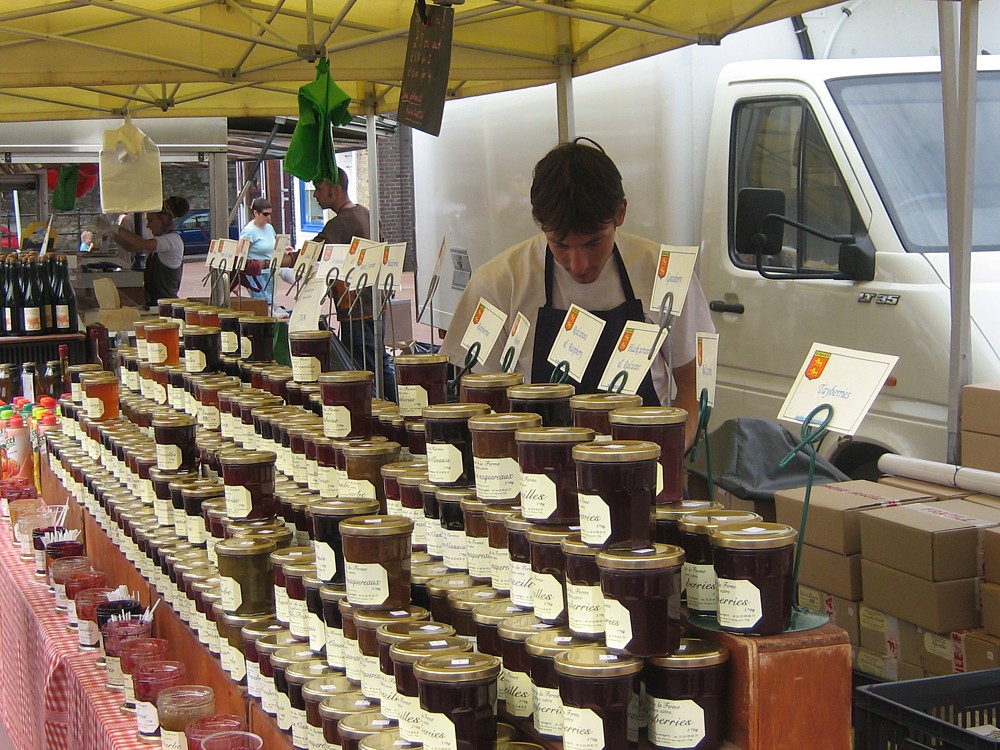
That’s not to say that one should never purchase a souvenir while traveling, it’s just that the money spent on souvenirs can usually be better spent elsewhere. Souvenir vendors tend to take advantage of the “I’m on vacation” mentality or currency confusion and push products on wide-eyed travelers. Heaven knows I, like many other travelers, have fallen prey to souvenir impulse buys many times during my travels. It’s true, buying one or two special items can be a great way to relive a trip or share your adventure with others, but there’s a way to do this that is both meaningful and friendly on the budget. Here are some ideas: [caption id="attachment_4643" align="alignright" width="300" caption="An open-air market is a great place to find inexpensive, meaningful souvenirs. "] [/caption]
- A picture is worth a thousand words, especially when it comes to travel. Take pictures, lots of them. Photograph sights, monuments, people, textures, happening, food…anything you want to remember. You may even want to invest in a good camera (like a digital SLR) to take high-quality photos. When you get home, you can have them printed on photo paper or canvas and hang them on your wall as constant reminders of your grand adventure. Hands down, my best souvenirs are the pictures I’ve taken and the journals I’ve written during my travels.
- Write it down. Even if you aren’t “a writer,” a journal can be a fantastic way to immortalize travel memories. Of course it’s important to write about important things you saw and did on your travels, but don’t forget about the everyday sensations, emotions and images you experienced on your trip. Use the five senses as a guideline—what did you see, hear, taste, feel and smell on your trip? Details like this will help your memories jump off the page and come alive when you reread them. You could even get creative and combine your photography (or artistic) and writing skills into a multimedia travel book.
- Paper goods. Not only are they light and extremely packable, but paper goods like postcards, travel guides/magazines, and photography books are great souvenirs. My grandmother buys one nice book (either a coffee table book or a book written by a local author) about each location she visits. Her personal library now reflects her life’s adventures. She enjoys rereading the books and reliving her travels.
- Local handicrafts. And by handicrafts I mean real, hand-made (as opposed to mass-produced) items. You can find handmade tablecloths, soaps, etc. and other goods for reasonable prices at open-air markets throughout Europe.
- Food. Yes, they may be temporary, but edible souvenirs can help you get out of your “post-trip blues” by providing an instant gustatory reminder of your wonderful voyage. They also make great and affordable gifts for foodies back home. Just make sure you don’t attempt to bring cheese, yogurt, milk, fruit or vegetables on the plane (you’ll have a problem with customs). Canned foods, jellies, wine, liquors or candies tend to travel well. You could even have them shipped if you don’t want to fuss with them in your luggage.
-
Tips for Saving Money on Holiday Travel
Yes, it’s that time of year again. Time to start thinking about all of the (often costly) details that come with holiday travel.
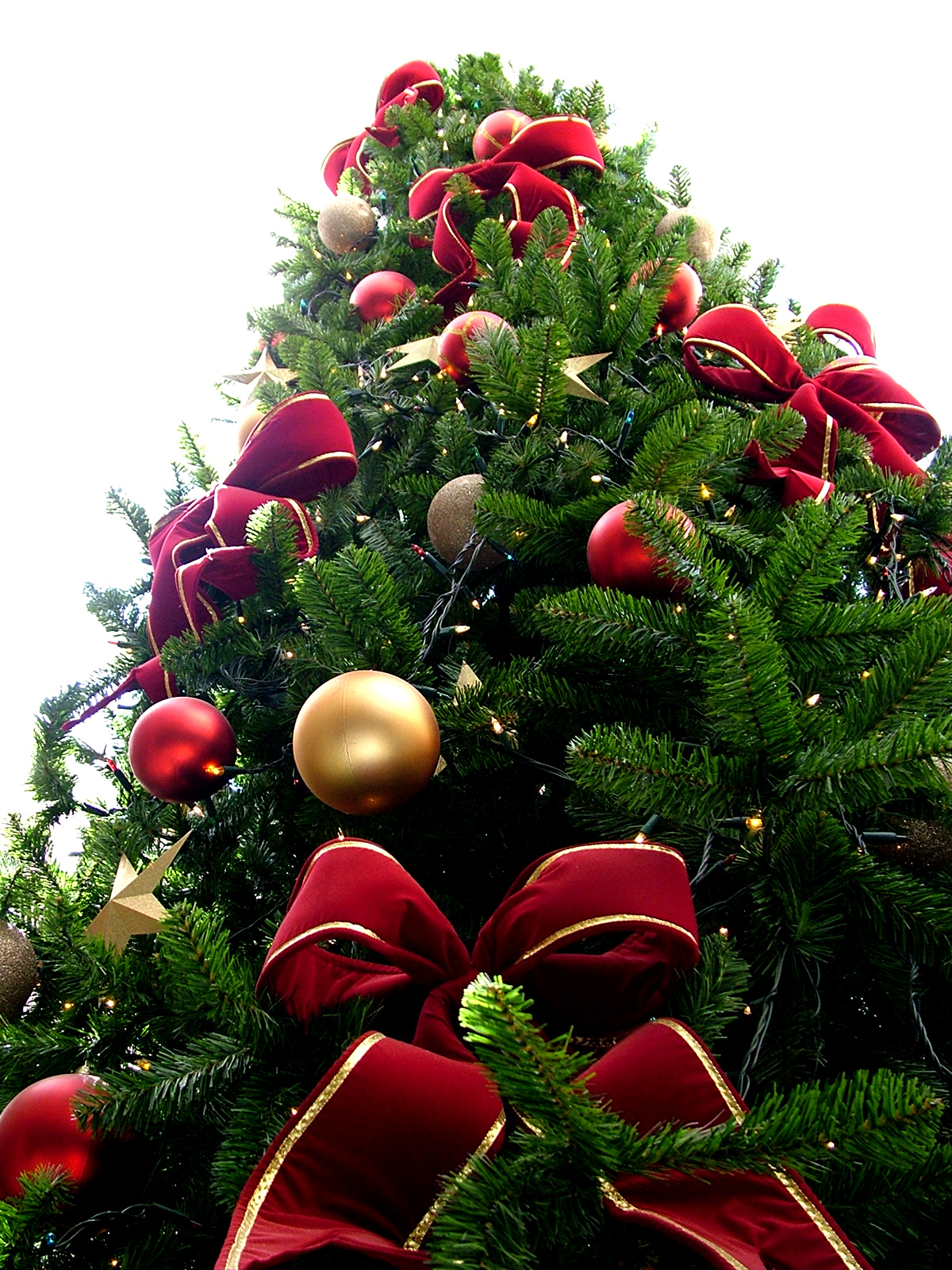
For a variety of reasons, it’s true that the holidays are simultaneously one of the most joyful, stressful and costly times of year. Here are some tips for keeping holiday travel costs low, which will inevitably help to decrease stress and hopefully increase your holiday joy. Start planning your travel early. Whether you’re flying, driving or taking a train, make sure to start planning your travel early. There are several advantages to doing this. The more you research, the better fares you’ll be able to find. Use these travel deal websites to get you started. See if you can redeem any of your frequent flyer miles for holiday travel (you never know). Also, remember that lots of people ask for time off from work over the holidays. Getting your request for time off early will improve the changes of getting your vacation days (instead of having to take unpaid vacation - which just adds insult to the injury of holiday expenses). Holiday travel tip: When booking flights, make sure you leave enough time for transfers (which make take longer due to increased holiday travel traffic). [caption id="attachment_4627" align="alignright" width="225" caption="Going home for the holidays? Here are some tips to help you get there on the cheap."]
 [/caption]
Get creative. Airlines tend to increase prices over the holidays, so get creative in your trip planning. Could you take a few days off on either side of the holiday? This may improve your chances of finding a better airfare. Staying in one location from Christmas through the New Year holiday (if you can swing it) will obviously be cheaper than hopping on a plane for both holidays. Think about moving your holiday celebration by several days or so. Perhaps you could celebrate Christmas on Dec. 22th instead of Dec 25th - your chances of finding affordable airfare will be greater. Holiday travel tip: Book your flight for late or early in the day, not during peak hours. Though waking up early (or staying up late at night) might sound painful, the payoffs are pretty great (shorter lines, less people to deal with, perhaps even more room on the plane).
Pack light. Especially if you’re only leaving for a long weekend, try to pack everything you can in your carry-on. This way you can avoid having to pay fees to check your bag. Make sure that your carryon meets the size and weight requirements of the carrier you’ll be flying as well as security requirements (less than 3 oz. bottles of liquid, etc.).
An additional perk of just bringing a carry-on is not having to worry about losing your bag or having to wait for it at baggage claim (which allows you to get to the celebration faster). Holiday travel tip: In order to pack lighter, think over your clothing for each day carefully. Remember, pants and sweaters can be worn more than once. Rethink your holiday travel habits. Do you always rent a car when you go visit your family? Perhaps you could forgo this luxury this year. A family member could pick you up from and drop you off at the airport. Perhaps someone you know has a car you could borrow for an afternoon or two when you’re in town. Or if the place you’re going has reliable public transportation, that’s even better. Do you tend to bring a lot of gifts for family and friends when you travel? Perhaps it’s time to rethink this as well. After all, it’s miserable to try to figure out how to pack all of those gifts in a carry-on. Holiday travel tip: Consider shipping larger items to your destination in advance, or buy small no-fuss items like gift cards for your loved ones. Even better, consider donating to a charity in the name of your friends and family members or doing something special together (a homemade meal, a movie outing with nieces and nephews) while you’re in town. After all, your presence is the best holiday present to those who care about you.
[/caption]
Get creative. Airlines tend to increase prices over the holidays, so get creative in your trip planning. Could you take a few days off on either side of the holiday? This may improve your chances of finding a better airfare. Staying in one location from Christmas through the New Year holiday (if you can swing it) will obviously be cheaper than hopping on a plane for both holidays. Think about moving your holiday celebration by several days or so. Perhaps you could celebrate Christmas on Dec. 22th instead of Dec 25th - your chances of finding affordable airfare will be greater. Holiday travel tip: Book your flight for late or early in the day, not during peak hours. Though waking up early (or staying up late at night) might sound painful, the payoffs are pretty great (shorter lines, less people to deal with, perhaps even more room on the plane).
Pack light. Especially if you’re only leaving for a long weekend, try to pack everything you can in your carry-on. This way you can avoid having to pay fees to check your bag. Make sure that your carryon meets the size and weight requirements of the carrier you’ll be flying as well as security requirements (less than 3 oz. bottles of liquid, etc.).
An additional perk of just bringing a carry-on is not having to worry about losing your bag or having to wait for it at baggage claim (which allows you to get to the celebration faster). Holiday travel tip: In order to pack lighter, think over your clothing for each day carefully. Remember, pants and sweaters can be worn more than once. Rethink your holiday travel habits. Do you always rent a car when you go visit your family? Perhaps you could forgo this luxury this year. A family member could pick you up from and drop you off at the airport. Perhaps someone you know has a car you could borrow for an afternoon or two when you’re in town. Or if the place you’re going has reliable public transportation, that’s even better. Do you tend to bring a lot of gifts for family and friends when you travel? Perhaps it’s time to rethink this as well. After all, it’s miserable to try to figure out how to pack all of those gifts in a carry-on. Holiday travel tip: Consider shipping larger items to your destination in advance, or buy small no-fuss items like gift cards for your loved ones. Even better, consider donating to a charity in the name of your friends and family members or doing something special together (a homemade meal, a movie outing with nieces and nephews) while you’re in town. After all, your presence is the best holiday present to those who care about you.
-
Museum Deals and Public Art: Minneapolis and Chicago
Chicago, IL
The Art Institute of Chicago (http://www.artic.edu/aic/)
Frugal art lovers can get into one of the nation’s premier art centers for free on Thursdays (admission is usually $18 for adults, $12 for students). Are you a Bank of America credit card holder? If so, you can get in for free whenever you like. Simply show them your card at the ticket counter to receive your complimentary ticket. The Art Institute of Chicago also has reciprocity with other large museums around the country. If you are a member of another museum, check on their website to see if you can get free admission that way.
Highlights: Marc Chagall’s America Windows The Asian Collection The New Modern Wing Millenium Park (http://www.millenniumpark.org/) While you’re in the vicinity, stroll across the street to Millenium Park to take in the interesting public sculptures and installation pieces. The outdoor concert venue designed by Frank Gehry is definitely worth a peek as well (sometimes the concerts performed here are free, check the website for concert schedules and more information). The best part? It costs nothing to take a walk around Millenium Park. Highlights: Crown Fountain interactive sculpture by Jaume Plensa Cloud Gate (fondly referred to as “The Bean”) reflective sculpture by Anish Kapoor Minneapolis, MN [caption id="attachment_4590" align="alignright" width="300" caption="Spoonbridge and Cherry in the Minneapolis Sculpture Garden"]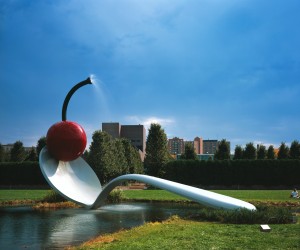 [/caption]
Walker Art Center (www.walkerart.org)
Admission to the world- renowned Walker Arts Center, a contemporary arts institution committed to interdisciplinary programming is free on Thursdays (the galleries stay open until 9:00pm). On the first Saturday of each month, the Walker hosts “First Free Saturday.” Not only is admission to the galleries free that day, there is also quite a bit of free programming and activities for kids and families throughout the museum.
In addition to its extensive permanent collection and expertly-curated internationally touring shows, the Walker also hosts lecture, performing arts and film series throughout the year, some of which are free as well. See the calendar on the website for more information. The Walker Art Center also has reciprocity with other large museums around the country. If you are a member of another museum, check on their website to see if you can get free admission that way.
Highlights:
Dan Flavin’s mimimalist sculptures featuring a unique use of light
Several paintings by Andy Warhol
A large collection representing the Italian Arte Povera movement
The Minneapolis Sculpture Garden
The open-air sculpture garden across the street from the Walker Art Center is one of the most frequently visited spots in Minneapolis. This impressive collection of public art (featuring the famous “Spoonbridge and Cherry” that has become somewhat of a symbol for Minneapolis) is free and open to the public. For schedules and events see www.walkerart.org
Highlights:
Spoonbridge and Cherry by Claes Oldenburg and Coosje van Bruggen
Frank Gehry’s massive Standing Glass Fish in the conservatory
Minneapolis Institute of Art (www.artsmia.org)
One of the Twin Cities' most impressive arts institutions, the MIA houses a large collection of visual arts from various cultures and time periods. The MIA is particularly known for its extensive collection of Asian art (a large part of it donated by the local Dayton family), period rooms, and regular rotating shows. The admission for the museum itself is free (special shows may require a purchased ticket) and there is a variety of free educational programming (lectures, tours, classes, etc.) for children and adults. Once a month, the MIA hosts a family day with lots of free activities for kids.
Highlights:
The Asian collection
The period rooms (go between October and January to see them decorated for the holidays—a real treat)
The newly revamped modernist collection
[/caption]
Walker Art Center (www.walkerart.org)
Admission to the world- renowned Walker Arts Center, a contemporary arts institution committed to interdisciplinary programming is free on Thursdays (the galleries stay open until 9:00pm). On the first Saturday of each month, the Walker hosts “First Free Saturday.” Not only is admission to the galleries free that day, there is also quite a bit of free programming and activities for kids and families throughout the museum.
In addition to its extensive permanent collection and expertly-curated internationally touring shows, the Walker also hosts lecture, performing arts and film series throughout the year, some of which are free as well. See the calendar on the website for more information. The Walker Art Center also has reciprocity with other large museums around the country. If you are a member of another museum, check on their website to see if you can get free admission that way.
Highlights:
Dan Flavin’s mimimalist sculptures featuring a unique use of light
Several paintings by Andy Warhol
A large collection representing the Italian Arte Povera movement
The Minneapolis Sculpture Garden
The open-air sculpture garden across the street from the Walker Art Center is one of the most frequently visited spots in Minneapolis. This impressive collection of public art (featuring the famous “Spoonbridge and Cherry” that has become somewhat of a symbol for Minneapolis) is free and open to the public. For schedules and events see www.walkerart.org
Highlights:
Spoonbridge and Cherry by Claes Oldenburg and Coosje van Bruggen
Frank Gehry’s massive Standing Glass Fish in the conservatory
Minneapolis Institute of Art (www.artsmia.org)
One of the Twin Cities' most impressive arts institutions, the MIA houses a large collection of visual arts from various cultures and time periods. The MIA is particularly known for its extensive collection of Asian art (a large part of it donated by the local Dayton family), period rooms, and regular rotating shows. The admission for the museum itself is free (special shows may require a purchased ticket) and there is a variety of free educational programming (lectures, tours, classes, etc.) for children and adults. Once a month, the MIA hosts a family day with lots of free activities for kids.
Highlights:
The Asian collection
The period rooms (go between October and January to see them decorated for the holidays—a real treat)
The newly revamped modernist collection