The wonderful wineries of Australia and New Zealand are a must see for any tourist traveling to the Southern Hemisphere.
Category: Australia
-
Wine Travel Tips – How to Transport Wine from Australia and New Zealand
Most tourists will want to take a bottle or two home as a souvenir of their stay, but it can be confusing to know how to transport this precious cargo. By following these simple tips, you can guarantee that your wine will arrive home in the same condition it left the vineyard. If you're traveling in a hire car, the natural instinct of most drivers is to store the wine in the trunk. However, this area of the car can get very hot and cause the wine to spoil. A much better option is to keep the wine inside the car for the air conditioning to cool it. Just as you shouldn't store wine in the boot, you shouldn't store wine in the sun. Wine left in a parked car will also become overheated, so once your day of wine tasting is done make sure you take your purchases into your hotel. Ideally your wine should not roll about your vehicle. This movement can interfere with the natural aging process. If buying a small quantity of wine, ask the winemaker whether he can spare a box. This will generally have partitions inside so bottles sit securely and do not clink together. As you visit other wineries, you can then put your new purchases inside the same box. If your car isn't full, you could even secure the box in place with a seatbelt. While it's tempting to toast to your return home, it's much better to wait. Just as we suffer jet lag, wine experiences a kind of travel "bottle shock." It will taste much better once it's had a few days to recover. -
Australia’s Best Nudist Resorts – Bare All on Vacation Down Under
When most of us think about stripping on vacation, we imagine spending days on the beaches of Spain or Brazil. But these countries definitely don’t have the market cornered, with resorts all over Australia catering for holiday makers who dare to bare all. If it’s a beachside vacation you had in mind, consider Taylorwood Resort in the Whitsundays.
//This Queensland resort is set on 12 hectares of secluded beach and parklands. It’s the only nudist resort in the famous Whitsundays region, and caters exclusively for couples. If you’ve never gone nude before, don’t worry. First-timers are encouraged, and the resort’s relaxed and friendly staff will help put you at ease.
The natural bushlands on the outskirts of Port Macquarie are home to Twin Falls Resort. So named for the gorgeous waterfalls you’ll find on the rainforest trails, this New South Wales resort is about getting back to nature in more ways than one! This 40-hectare property offers a range of accommodation options from unpowered camp sites to comfortable rooms in the homestead.
Further down south in Central Victoria you’ll find Jajarawong Naturist Retreat. This is a clothing optional resort with an emphasis on luxury. There are just five cottages and eight campsites so it never gets too crowded. You’re encouraged to socialize with the other guests in the bar or on the bushwalking trails, or you can take it easy in the hot tub and sauna.
Nestled between the South Australian coastal towns of Robe and Beachport you’ll find Sunland Holiday Village. This is a relatively simple resort with 45 caravan sites on offer. But it’s worth doing without a few luxuries when you can wake up and walk just a few steps to the legal nude beach!
Western Australia has Sunseekers Inc Nudist Club in Hovea. It’s one of Australia’s oldest naturist resorts, and a great option for families looking to get away together. Unlike so many nudist resorts there’s plenty to entertain the kids including a tennis court and playground equipped with a cubby house and trampoline.
The Top End Naturist Recreation Retreat in the Northern Territory is another family-friendly option for nudist holidaymakers. The 40-hectare bushland property near Berry Springs has stacks of activities for families to enjoy together, including Minten, minigolf, table tennis, and a life-sized checkerboard. Popular national parks Kakadu and Litchfield are close by, and the Territory Wildlife Park is a short drive up the road. Accommodation is fairly basic, ranging from camp sites to cabins, but the excellent location makes up for it.
But that’s just the tip of the proverbial iceberg. Consult the Australian Nudist Federation to learn of more Aussie resorts and accommodation options which welcome naturists with open, and bare, arms.
-
Staying Safe in Australia – Tips for Dealing with Deadly Wildlife Down Under
Australia has a reputation as a dangerous destination, with creepy crawlies and biting monsters around every corner.
But you needn’t worry about the snakes, spiders, sharks and other nasties Down Under if you follow some simple advice. Australia is home to the ten deadliest snakes in the world, including the fierce snake, commonbrown, and taipan. If you’re visiting Australia’s cities though, such as Perth, the only place you'll come across them in the zoo. If you're venturing into Australia's rural areas though, make sure you always wear closed shoes. As Australia's snakes are timid, they are likely to slither away from harm once they hear your footsteps. If you do see a snake though, it’s important to stay still. They will only attack if they feel threatened, so wait until they pass before continuing your journey. Spiders are less of a concern in Australia, with only the funnelweb and redback varieties considered dangerous. However, all Australian spiders have venom and are capable of giving a nasty bite! To ensure you're not a victim, always shake your shoes before putting them on. Covered footwear is advisable when walking outside, particularly at night. Don't leave towels and clothes on the floor, as spiders are known to settle inside them. [caption id="attachment_3396" align="alignright" width="150" caption="A fierce snake, the deadliest snake in the world"] [/caption]
Do not let the risk of a shark attack stop you from enjoying Australia's beautiful beaches. Most major beaches have shark nets installed to prevent swimmers from coming face to face with these ocean predators. By sticking to patrolled areas, and obeying instructions from the lifeguards, you are likely to stay safe.
Crocodiles are also not a threat in most parts of Australia. While salties and freshwater crocs are common in the Northern Territory and the northernmost tip of Queensland, they do not live in Australia's most common tourist areas. Crocodile habitats in these locations are often signposted, but when in doubt tourists should resist the urge for a dip. Public beaches and waterholes are the best places to cool off up north.
As a rule, Australia's animals should be admired from a safe distance. While some spiders, snakes, and other creatures are not dangerous it’s best to err on the side of caution. Attacks and injuries from Australia’s native wildlife are rare. However, if you are in trouble call the emergency services number 000 from any phone immediately.
[/caption]
Do not let the risk of a shark attack stop you from enjoying Australia's beautiful beaches. Most major beaches have shark nets installed to prevent swimmers from coming face to face with these ocean predators. By sticking to patrolled areas, and obeying instructions from the lifeguards, you are likely to stay safe.
Crocodiles are also not a threat in most parts of Australia. While salties and freshwater crocs are common in the Northern Territory and the northernmost tip of Queensland, they do not live in Australia's most common tourist areas. Crocodile habitats in these locations are often signposted, but when in doubt tourists should resist the urge for a dip. Public beaches and waterholes are the best places to cool off up north.
As a rule, Australia's animals should be admired from a safe distance. While some spiders, snakes, and other creatures are not dangerous it’s best to err on the side of caution. Attacks and injuries from Australia’s native wildlife are rare. However, if you are in trouble call the emergency services number 000 from any phone immediately.
-
Amusement Parks on the Gold Coast, Australia’s Theme Park Capital
Sydney and Melbourne may be Australia’s biggest tourist centers, but if you’re looking for theme parks you’ll need to head up north. Queensland’s Gold Coast is regarded as Australia’s amusement park capital, and there’s a good reason why.
While Australia's largest cities are lucky to have one or two theme parks, the Gold Coast hosts five major attractions. Movie World is known as Hollywood on the Gold Coast. While it hasn't churned out nearly as many movies as its American counterpart, its film studios have been the site of many major motion pictures including House of Wax, Peter Pan, Ghost Ship, and the Scooby Doo films. Film themed rides include the Scooby Doo Spooky Coaster, thrilling Batwing Spaceshot, and family favorite Looney Tunes River Ride. The live shows at Movie World are as big a drawcard as its rides. The Hollywood Stunt Driver performances put an audience in the center of an action film complete with explosions and car chases, while the musical Looney Tunes What's Up Rock? show is a big hit with kids. Close by there is Dreamworld, a theme park for adventurous souls. Among its attractions are Australia's tallest gravity rollercoaster, the Cyclone, the reverse free-fall ride Tower of Terror, and the similarly imposing Giant Drop. Families are catered for with the children’s area Nick Central and Wiggles World for toddlers and babies. Tiger Island is one of the world's two exclusive tiger habitat exhibits. The Indonesian-themed space stages daily shows with Bengal and Sumatran tigers. More animals are on show at The Australian Wildlife Experience, a zoo with more than 800 native creatures and barnyard favorites. Next door you'll find WhiteWater World, a relatively new water park. Since opening in 2006, WhiteWater World has enticed tourists looking to beat the heat with its water slides, wave pool, and Wiggle Bay children's waterplay area. The Gold Coast's original water park is Wet'n'Wild. While it does not have as many slides as WhiteWater World, it does have Australia's largest. At 19 meters high, Mammoth Falls is a must for adrenalin junkies. During summer, Wet'n'Wild's Dive-in Movies are very popular. The Gold Coast's final major amusement park is Sea World. The aquatic themed park features rides, live shows, and animal exhibitions. While a day at the park is lots of fun, there's a more serious side to Sea World.Through attractions like the Dolphin Nursery Pool and Seabird Rehabilitation Aviary, the park promotes conservation and helps sick and injured wildlife recuperate. Visiting the Gold Coast's amusement parks can get pricey, so if you plan to visit a few consider a multi-pass. A range of MyFun combo tickets offer tourists discounted entry to Sea World, Wet'n'Wild, and Movie World. Similar multi-passes are also available online for Dreamworld and WhiteWater World. -
Uluru, Australia’s Own Natural Outback Wonder
Uluru or Ayers Rock; whatever you call it the great big rock in the Northern Territory’s Red Center is the heart of Australia’s Outback.
Standing an imposing 318 meters high and with a circumference of 9.4 kilometers, it’s not hard to see why so many tourists make the trek to the world’s largest monolith every year. More than simply a massive rock, Uluru is a site of great religious and cultural significance.
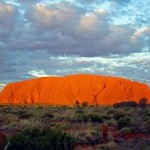
Uluru at sunset Many visit Uluru with dreams of scaling to the top, but tourists shouldn’t be so hasty. The Aboriginal people who originally lived there regard Uluru as a sacred site, and encourage visitors to respect this by refraining to climb. If that doesn’t convince you, there are some practical considerations to think about. Scaling Uluru is the equivalent of climbing a 95-storey building. The path is long, and in many places treacherous. More than 35 people have died during the two-hour journey, so unless you are very fit I wouldn’t even consider it. It’s also worth noting that many people are disappointed once they reach the top. After all, you’re standing on the only attraction in an otherwise deserted area.
Many people say Uluru is best visited at sunrise or sunset. This is when the colors of the rock rapidly change in a sort of natural light show. It’s a beautiful spectacle, but if you’re hoping for a quiet moment to enjoy it you may be disappointed. Large numbers of tourists turn out to view Uluru at these times so it can become very crowded, especially during school vacation times.
The only accommodation on site is the Ayers Rock Resort. Staying in the resort is very pricey, but its campground has fair prices.
A less expensive alternative for travelers with a car is Curtin Springs Wayside Inn, located 85 kilometers away. Unpowered camping sites are free, although showers cost extra due to water shortages. Three-day passes to Uluru-Kata Tjuta National Park cost $25. It may disappoint busy travelers that cheaper single-day passes are not available, but there is always the option to stay longer to make the most of the money. After all, the world moves slowly in the Northern Territory so it makes sense for travelers to do the same. -
Australia’s Best Diving Vacations – More to Oz Than the Great Barrier Reef
If you’re a seasoned diver, or looking to become one, there’s no better place to stretch your sea legs than Australia.
The jewel of this island nation is the Great Barrier Reef, but there are plenty of other marine havens to explore. Newcomers might like to venture out with Ocean Spirit Cruises. Their one-day Great Barrier Reef Sail and Dive Trip allows guests to snorkel or take an introductory dive at Oyster or Arlington Reef. From there you'll head to Upolu Cay, which offers sheltered conditions and a sandy bottom for novices. More experienced divers may want to try the three-night Yalonga Wreck and Great Barrier Reef dive trip from Adrenalin Dive. You'll need open water certification and at least six logged dives with deep dive training to participate, but it's worth getting involved. The Yalonga wreck site is known around the world for attracting some of the biggest fish in the reef. Further south there's Indepth Scuba, which has dive centers in Canberra and Batemans Bay. [caption id="attachment_3227" align="alignright" width="150" caption="A starfish on coral in the Great Barrier Reef"] [/caption]
It offers a diverse range of PADI courses, including wreck diving, Nitrox diving, and deep cavern diving.
To the west, look to Dolphin Dive Fremantle. This Western Australia dive shop runs diving and snorkeling trips to idyllic Rottnest Island. This nature reserve has deep crevices, caverns, and caves for divers to explore. Keep your eyes peeled for the wildlife too: in spring you’ll likely spot humpback whales, while gray nurse sharks like to visit the Western waters in fall.
[/caption]
It offers a diverse range of PADI courses, including wreck diving, Nitrox diving, and deep cavern diving.
To the west, look to Dolphin Dive Fremantle. This Western Australia dive shop runs diving and snorkeling trips to idyllic Rottnest Island. This nature reserve has deep crevices, caverns, and caves for divers to explore. Keep your eyes peeled for the wildlife too: in spring you’ll likely spot humpback whales, while gray nurse sharks like to visit the Western waters in fall.
-
Drive Down The Great Ocean Road in Victoria, One of Australia’s Natural Wonders
If you want to enjoy a driving vacation in Australia, there’s no better stretch of coastline to explore than the Great Ocean Road. The Victorian passage stretches from Geelong to Warnambool.
This scenic road is actually the world’s largest war memorial. It took diggers 16 years to build the 241-kilometer road in memory of their fallen comrades. There was no modern technology at that time, with the serviceman relying on picks, shovels, dynamite and sheer will to achieve the feat.

The Twelve Apostles, one of the highlights on The Great Ocean Road The winding road passes 25 beaches, 13 waterfalls, several shipwrecks, eight lighthouses, and many charming small towns. These attractions help drivers break up their journey, with opportunities to stretch one’s legs, take a dip, and enjoy coffee and cake at a roadside café.
Don’t miss the Great Ocean Walk, a 91-kilometer bush walking trail through the Great Otway and Port Campbell National Parks. There is stunning coastal scenery, sheltered beaches, and heathland, and an abundance of local wildlife. Keep your eyes peeled for kangaroos, echidnas, koalas, wallabies, and several native species of bird life.
Port Campbell National Park’s great feature is The Twelve Apostles, a collection of imposing limestone stacks which rise dramatically from the Great Southern Ocean. The waves have seen several of the Apostles collapse, but those remaining are no less impressive.
The Apostles are best seen at sunrise and sunset, when their colors change from dark in shadow to brilliant yellow against the sun. The road from Moonlight Head to Port Fairy is nicknamed The Shipwreck Coast after the many ships which came to grief negotiating the brutal Bass Strait. Road signs and plaques detail the history of around 50 boats that met tragic ends. The Great Ocean Road is best experienced in short bursts, so it's worth exploring accommodation in the area. For something unusual, it's hard to beat the aptly named Pole House in Fairhaven or the historic Cape Otway Lighthouse cottage. Port Fairy also has several B&Bs, while the beachfront accommodation options of Lorne and Apollo Bay are ideal for couples looking for luxury. -
Meet Crocs and Snakes in Australia on the Spectacular Jumping Crocodile Cruise
The Northern Territory is a place that’s not for the faint of heart. It’s an Australian stereotype come to life, with scorching sun, the unforgiving deserts of The Outback, and nasties lurking around every corner.
If the snakes don't get you, the crocs just might. If that thought doesn't terrify you, you might be a good candidate for a trip on the Spectacular Jumping Crocodile Cruise. The boat takes a leisurely trip down the Adelaide River, which is home to more than 80, 000 saltwater crocs, or salties as they're known in these parts. These man-eaters can measure up to six meters, and when they jump out of the water you'll be able to take all of that length in. But don't be scared. They're more interested in the raw buffalo meat the tour operators dangle from the long feeding sticks than you. If you're game, the crew will even let you give the crocs their tucker. Spectacular Jumping Crocodile Cruises has two boats: the 8.7 meters Wildcat, and the double-decker Northern Adventurer, which measures a massive 18.2 meters. The cruises' hosts are incredibly knowledgeable about the area's native wildlife, which also includes bats, snakes, and the enormous kites. These birds, with their awe-inspiring wingspans, will happily swoop in on the crocs' buffalo, and often get away with it too. That's one brave bird! [caption id="attachment_3021" align="alignright" width="150" caption="A saltwater crocodile jumping for food in the Northern Territory, Australia"] [/caption]
Speaking of those snakes, you can meet some of those too. Spectacular Jumping Crocodile Cruises has a large collection of pythons which they'll happily pass around to any brave guests. If you do hope to handle a snake make sure you're not wearing sunblock, perfume, or insect repellent. These products can offend the snakes' delicate sense of smell, and you really don't want to do that!
Spectacular Jumping Crocodile Cruises cost $35 for adults and $20 for kids, including complimentary tea and coffee. Discounted family, group, and senior passes are also available. The cruises last for one hour and leave at 9 am, 11 am, 1 pm, and 3 pm every day.
[/caption]
Speaking of those snakes, you can meet some of those too. Spectacular Jumping Crocodile Cruises has a large collection of pythons which they'll happily pass around to any brave guests. If you do hope to handle a snake make sure you're not wearing sunblock, perfume, or insect repellent. These products can offend the snakes' delicate sense of smell, and you really don't want to do that!
Spectacular Jumping Crocodile Cruises cost $35 for adults and $20 for kids, including complimentary tea and coffee. Discounted family, group, and senior passes are also available. The cruises last for one hour and leave at 9 am, 11 am, 1 pm, and 3 pm every day.
-
See Koalas in Australia – Best Zoos and Wildlife Parks to Meet Cutest Australians
Australia is home to a host of weird and wonderful creatures, including the iconic kangaroo, the duck-billed platypus, and the spiky echidna.
But few animals inspire such passion from tourists as the cute and cuddly koala.
They might look like real-life teddies, but koalas aren’t actually bears at all. Instead they are marsupials, just like kangaroos, wallabies, and Australian possums. While they live all along Australia’s east coast, from the tip of Queensland to the bottom of Victoria, few tourists will ever spot one in the wild. Koalas are nocturnal creatures, so they sleep high in the tree tops during the day and become active only after night falls. So the best way for tourists to see a koala is to visit one of Australia’s nature parks and zoos.
The Koala Park Sanctuary in Sydney’s western suburbs was established in the 1920s to protect koalas from the lucrative fur trade of the time. While koalas are now protected, the park’s work is still vital to the survival of this endangered animal. The park’s rainforest, eucalyptus trees, and native gardens look to mimic the koalas natural habitats, allowing visitors to observe these creatures behaving as they would in the wild. Guests can cuddle, pat, and get their photo taken with the koalas at the park’s feeding sessions, which happen four times a day.
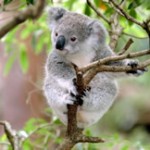
Australia's cutest resident, the koala
On the other side of Australia there’s the Cohunu Wildlife Park, located 40 minutes from Western Australia’s capital city, Perth. When the park opened in 1982 there were just four koalas. Today there are more than 25, and with an average of four joeys born each year the population continues to grow. Visitors can cuddle a koala and get a souvenir photo taken to show their friends. All proceeds from the photos go back into the park’s koala research program.While Steve Irwin was more famous for wrestling crocs than cuddling koalas, his Australian Zoo in Beerwah, Queensland has more than 20 of the cute creatures. With names like Chanel, Alexia, and Mishka, you can bet these are some pampered koalas! At the zoo’s daily koala show, visitors can learn all about the way these creatures live in the wild and the ones that make the zoo home.
-
Australia’s Best Shiraz at South Australia’s Wine Capital, The Barossa Valley
Australians are wine pioneers, inventing the wine cask or wine-in-a-box and the innovative screw-cap lid. While the land Down Under has many wine regions to explore, few have the allure of South Australia’s Barossa Valley. The Barossa is located around 60 kilometers northeast of the South Australian capital of Adelaide.

A vineyard in the Barossa Valley, South Australia The region is famous for shiraz, or syrah as it’s called in many parts of Europe and The United States. Here the red wine is bold and earthy, full of flavor yet surprisingly elegant and complex. Wine buffs may come for the shiraz, but they shouldn’t dismiss the region’s other wines. The area also produces excellent grenache and cabernet sauvignon, white varieties including riesling and semillon, and even some fortified dessert wines.
The Barossa Valley is home to around 50 wineries, so it’s ambitious for tourists to see them all.
Big names like Jacob’s Creek, Penfolds, Wolf Blass, and Yalumba entice tourists, but the smaller boutiques are often more enticing. They’re less crowded, so guests generally enjoy a more personalized wine tasting experience. While they often have a smaller range of wines to taste, these wines tend to be perfected by the winemakers. Jenke Vineyards, Rockford, Vine Crest, and Rosenvale Wines have some of the area’s best.
Most Barossa Valley wineries encourage travelers to stop by and sample wines at their cellar door. Complimentary wine tastings are conducted by vineyard staff or the wine makers themselves who are eager to share their knowledge of the wine varieties. Feel free to ask any questions you have to make the most of your wine tasting experience.
The best way to see the Barossa Valley’s wineries is to join an organized wine tour. Groups including Groovy Grape Getaways, For Wine or Reason (call: 0438 388 883), and Alfie’s Wine Tours will take care of the transport, leaving you to enjoy the day’s tasting. Many tours will collect you from your accommodation and return you to your hotel at the end of the day. Wine tours typically include stops at four or five of the region’s wineries, some of the area’s other attractions, and a restaurant or winery for lunch.
If you do hope to take a self-guided tour, ensure you are mindful of Australian drink driving laws. It is illegal for drivers to have a blood alcohol level above 0.05, which is equivalent to two standard alcohol drinks. You may be fined and have your license revoked if you exceed this limit. For that reason, it’s smart to leave the car at home if you hope to enjoy some of Barossa Valley’s finest wines.