FrugalMonkey Discount Travel News

Category: Japan

  • Weather in Japan – The Best Times to Visit Asia

    Japan experiences four distinct seasons, including very cold winters and hot and steamy summers.

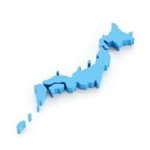
    Knowing what to expect at different points in the year will help you plan your Japanese getaway. Winter in Japan typically lasts between December and February. If it's skiing and other alpine sports you're after, traveling to Northern Japan or the Sea of Japan coast during these months is a must. To enjoy a milder winter consider staying in the south. With spring's arrival in March, Japan's weather begins to warm and the famous cherry blossoms begin to bloom. However, this is a slow and gradual process so you'll still need to carry some cold weather clothes when traveling from March to May. Light coats and sweaters can help you cope with cold snaps and chilly nights without taking up too much space in a suitcase. Note - ever consider a job in Japan teaching English? If so, check our partner site JobMonkey! Japan enjoys summer from June to August. The season typically starts with a month or so of rain, known as tsuyu, before the weather clears. To escape the dreary weather consider holidaying on the island of Hokkaido, the only place in Japan immune to the tsuyu. Once the rainy season is over Japan's summer weather is often not much more pleasant, with the temperatures soaring as high as the humidity. You'll find the most comfortable conditions in the mountains and Hokkaido.japan map It's advisable to avoid Japan in September when typhoon season is at its peak. Wild weather along the coasts of Okinawa, Shikoku, and Kyushu can affect all of Japan. The good news is that once the typhoons clear, they leave perfect fall conditions. In October and November the weather is temperate, and the landscape is ablaze with the rich earthy colors of autumn. Just as you would in spring, it's advisable to bring light jackets and sweaters to wear on cooler fall days.

  • Managing Money in Japan – The Yen and You

    The official currency of Japan is the yen. It is pronounced like the letter n, with no y sound. The yen is roughly equivalent to one US cent. The yen is available in ¥1, ¥5, ¥10, ¥50, ¥100 and ¥500 coins and ¥1000, ¥2000, ¥5000 and ¥10, 000 banknotes.japanese yen

    While Japan has many automatic teller machines, most will only accept cards issued in the country. However the nation’s post offices have ATMs which accept most foreign bank cards. These include cards belonging to the Visa, Plus, MasterCard, Cirrus American Express, Maestro, and Diners Club networks. If your bank card is not accepted by the post office ATMs, it can be very difficult to get cash in Japan. For this reason, tourists with cards outside these networks should bring cash or travelers checks to Japan.

    Most postal ATMs are available from 9am to 5 pm on weekdays and from 9 am to noon on Saturdays. As they are unavailable on Sundays and public holidays, tourists are advised to ensure they have always carry adequate cash.


    While postal ATMs have Japanese instructions by default, international visitors can press the “English Guidance” button on the touch screen for an English translation.

    Travelers can also access some international ATMs in large tourist areas like Tokyo, Kyoto, and Osaka, as well as the major airports of Narita and Kansai. International cards are also accepted by the ATMs at Citibank branches.

    Visitors should not rely on credit cards as their primary source of money. While most major department stores, high-end restaurants, and luxury hotels accept cards, many Japanese businesses do not. Visa is the most widely accepted credit card in Japan, followed by MasterCard, Amex, and Diners Club.

    Tourists can exchange their money and travelers checks for yen at Japan’s banks, post offices, and discount ticket shops. The discount ticket shops tend to have the best exchange rates. They are located around Japan’s major train stations. Most currencies are easily exchanged, except for the New Taiwan dollar and the won of Korea. Travelers holding this currency are advised to change it before arriving in Japan.

    When managing money in Japan, it’s worth noting that the country has a consumer tax of 5%. Luxury hotels and restaurants have an additional service charge attached, which may be between 10 and 15%.
  • Volcanic Wonder at Mount Aso, Japan

    Japan has a reputation as the world’s technological center. But many tourists to the Asian nation are just as impressed with the country’s natural wonders. One of the most magnificent is the caldera of Mount Aso.

    Caldera of Mount Aso
    The caldera of Mount Aso at Kyshu, Japan

    You’ll find this active volcano at the heart of the island of Kyushu. Its caldera is one of the largest in the world, measuring 25 kilometers across. In fact, the caldera contains the town of Aso and several more volcanic peaks. These include Nakadake, an awe-inspiring active crater. Tourists are warned that the crater’s gases can be intense, so people with respiratory complaints including asthma shouldn’t visit. At some times the crater may be closed to the public altogether due to these poisonous fumes.

    But that shouldn’t discourage tourists, as there is plenty more to see. The grassy plains of Kusasenri-ga-hama are not far from Nakadake.


    You can enjoy this rural setting on horseback, with riding tours running from early March to mid December. Kusasenri-ga-hama is also home to the Aso Volcano Museum which details the area’s history.

    Komezuka is a small volcanic cone on the northern side of Nakadake. There are easy walking trails, although none take you right to the summit’s apex. Most visitors will be happy with the views they get from the top of the paths though.

    The Nakadake Crater is a 30 to 40 minute bus ride from JR Aso train station. Buses run regularly every, with one leaving every one or two hours. The buses travel to Asosan Nishi Station, where travelers can connect with a ropeway for a short ride. If you’d rather stretch your legs, it takes 30 minutes to walk from the station to the crater. The crater is also accessible by car, although drivers will need to pay a toll as they near Nakadake. A parking lot is located conveniently beside the site.

  • Customs and Etiquette for Visiting Japanese Temples and Shrines

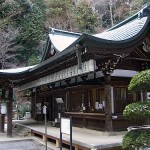
    japanshrineAs a tourist traveling to Japan, you should be mindful of local customs and etiquette, especially when visiting the nation’s temples and shrines.

    When visiting these religious sites behave calmly and respectfully. You may show your respect at a temple by tossing a coin into the offering box and saying a short prayer.

    Shrines also have offering boxes, but the practice here is slightly different. After donating you should take two deep bows, clap twice, take another bow, and say a quick prayer. If the shrine has a gong, strike it before praying to get the attention of the kami, or Shinto gods.

    It may seem strange to Western audiences, but it is important to appear pure when visiting a shrine.


    The Japanese consider guests tainted if they are unwell, have an open wound, or are mourning the loss of a loved one.

    To ensure cleanliness, guests engage in a purification ritual. A purification fountain is typically located at the shrine’s entrance. Fill one of the ladles provided with fresh water and rinse both hands. Then move some water into a cupped hand and rinse your mouth. Once your mouth is cleansed of impurities, spit the water out next to the fountain. It’s impolite to drink directly from the ladle and swallow the water.

    Cleanliness is also important at temples. You may need to remove your shoes before entering. Some temples have shelves at the entrance for footwear. Otherwise you should carry your shoes in a plastic bag. Remember to wear good socks in case it’s necessary to remove your shoes.

    Photography is usually permitted on temple grounds and at shrines. Many temples however forbid photography indoors.  In any case, you should look for signs stating the rules before taking out your camera.

  • Climb Mount Fuji, the Tallest Mountain in Japan

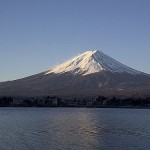
    mountfujiIn the mountainous nation of Japan one summit stands tall above the rest. At an imposing 3776 meters tall, Mount Fuji isn’t just Japan’s highest peak. The dormant volcano is also a site of great cultural and spiritual significance. It is located in Fuji-Hakona-Izu National Park, 80 kilometers west of Tokyo.

    You can see Mount Fuji from Tokyo and Yokohama on a clear day, but you’ll be lucky to strike one.


    Japan often experiences low clouds and high levels of air pollution, which can obscure the view. Visibility is best during cold weather, especially early in the morning or late in the evening.

    While it can be admired from afar, Mount Fuji’s power is best experienced up close. Unlike many spiritual sites, such as Australia’s Uluru, tourists are encouraged to climb the mountain using one of four trails. However, Japanese tradition suggests the feat should not be repeated. A local proverb reads “He who climbs Mount Fuji once is a wise man. He who climbs it twice is a fool.”

    The summit can be scaled all year round, but the official climbing season is in July and August. That’s when the journey is easiest as the mountain is completely free from snow, the weather is mild, and the huts are open. Food and drinks are available from these huts on the side of the mount, but beware. You’ll pay more for refreshments the higher you climb, so it’s advantageous to stock up early.

    As the summit is so tall, only the most committed hikers make the journey from the bottom to the top. Amateurs tend to start their journey at the fifth station, which is accessible by car. It should take between four and five hours to reach the apex from the fifth station, compared to six or eight hours if you start from the base.

    While travelers can explore Mount Fuji at their own pace, a guided tour is a great way to learn about the summit’s history and cultural significance. JGA Walking Tours and Japanican both run regular tours of Mount Fuji.